ALL NEWS

PRODUCTION AND PROCESSING Africa UEMOA attempts to respond to soaring fertiliser prices The Ministers of Agriculture and Trade of the West African Economic and Monetary Union (UEMOA) met in Cotonou, Benin in December to discuss the soaring price of fertilisers and their availability. This is a situation faced by most countries in the world, but which is more acute in sub-Saharan Africa, where the rate of dependence on imports of both phosphorus and nitrogen is around 70%, and in a… +
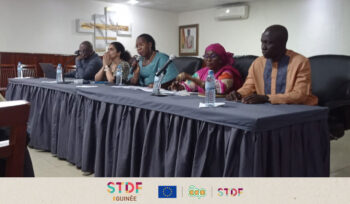
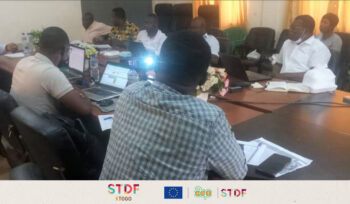
On 3 February, the 5th meeting of the Steering Committee (COPIL) of the project “Improvement of the sanitary and phytosanitary quality of Penja pepper in Cameroon to facilitate access to international markets” (STDF/PG/593) was held to discuss the project’sfinal year. This year’s programme, validated at the COPIL meeting, focuses on training for the various trades involved in Penja pepper; awareness-raising on good storage and transport practices for distributors; the purchase of equipment; and the creation of awareness-raising information on SPS… +
FOOD SYSTEMS AND POLICY Trade relations between the European Union and Africa: forging new partnerships On 10 January, in the context of the French Presidency of the Council of the European Union and ahead of the European Union-African Union Summit scheduled for February 2022, Franck Riester, French Minister Delegate for Foreign Trade and Economic Attractiveness, held an international ministerial conference dedicated to the prospects of the European trade partnership with Africa. The overhaul of the partnership between the European Union… +
Dear friends of COLEACP, On behalf of COLEACP and the team, we are pleased to send you our best wishes for 2022, and especially we wish you and your loved ones very good health. We are approaching this new year with cautious optimism, while launching an appeal to the whole COLEACP family to continue to mobilise our individual and collective efforts, which contribute to building a fairer and more sustainable agri-food system. In an international context that – due to… +
Dr Chagema Kedera, NExT Kenya Programme Coordinator, received the trophy from Avocado Society of Kenya CEO Mr Ernest Muthomi. COLEACP’s programme activities in Kenya recently resulted in the award for “best development partner” at the 2021 Kenya Avocado Industry Excellence Awards (KAEA) held on 10 December at the Safari Park Hotel, Nairobi. The KAEA, now in its second edition and becoming a national ritual, is an initiative of the Avocado Society of Kenya. The awards acknowledge and recognise contributions to… +
In August 2021, COLEACP issued a Flash Info advising of a public consultation by the European Commission on proposed amendments to the EU plant health legislation. The resulting amendments have now been incorporated into the new Commission Implementing Regulation (EU) 2021/2285, published on 14th December 2021. These amendments concern the listing of pests, prohibitions and requirements for the introduction into, and movement within the European Union of plants, plant products and other objects (amending Regulation (EU) 2019/2072). They will apply… +
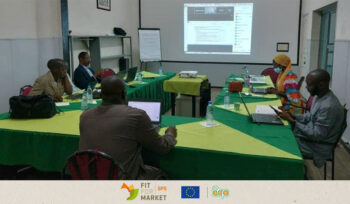
12 January saw the launch of a project to support the development of a “Regional Guide to Good Practices for Mango in West Africa”. The development of the Guide is being organised as part of COLEACP’s partnership with the ECOWAS SyRIMAO project, “Innovative Regional Fruit Fly Management System Project in West Africa”, via the EU-funded Fit For Market SPS programme. The January workshop brought together more than 60 participants, stakeholders in the mango sector from the public sector (competent authorities)… +
A week-long workshop was held in early January in Kribi, bringing together the private and public sectors involved in the mango value chain (fresh and dried), to discuss the implementation of COLEACP’s Rapid SPS Assessment Tool (R-SAT). The tool and its roll-out are supported by the Fit For Market SPS programme, continuing COLEACP’s activities in support of Cameroon’s horticultural sector and Department of Regulation and Quality Control of Agricultural Products and Inputs (DRCQ). R-SAT supports Competent Authorities to assess the… +
Key points Since our latest news in December 2021, we are highlighting some significant changes affecting five active substances (acequinocyl, Bacillus subtilis strain IAB/BS03, emamectin, flutolanil, and imazamox) used in crop protection (Reg. (EU) 2021/2202). In particular, emamectin is important and widely used in ACP horticulture. The latest changes involve an increase in MRLs for peaches and kiwi fruits. The new Maximum Residue Limit (MRL) for peaches is 0.15 mg/kg (previously 0.03 mg/kg) and for kiwis the new MRL is… +
In November–December 2021, COLEACP was capacity building with mango production/processing companies in Casamance, focusing on market requirements. The training, part of COLEACP’s contribution to the UNIDO project “Inclusive and sustainable industrial development for job creation in Senegal and Ethiopia”, aimed to identify the opportunities and obstacles for local, regional and international markets, and the costs of accessing them. The training will enable support structures and companies to better understand the: economic models of local, regional and export markets, their differences,… +
COLEACP, through its Fit For Market SPS programme, was a partner in the second edition of the Organic and Local Organic Fair organised by the Association Nationale pour l’Agriculture Biologique au TOGO (ANA-Bio TOGO) and partners. The aim was to promote the production and consumption of organic products. From 9 to 11 December 2021 in Notsè, Togo, visitors and exhibitors gathered in a friendly atmosphere to experience conferences, presentations and tastings of certified organic products. The event was also the… +
Inspectors of Togo’s Plant Protection Directorate (DPV) took part in training on implementing official controls during November 2021. This distance learning via the COLEACP e-Learning Platform, part of the Project for the Strengthening of the National Phytosanitary Control and Certification System for Fruits and Vegetables in Togo, aimed at reinforcing the capacity of 20 DPV inspectors to carry out official control activities of plants and other regulated products. The aim was to train participants to the procedures and instructions established… +
In November 2021, two collective training sessions were organised in Penja and Loum (Cameroon) on good practices for processing and drying Penja pepper. The training sessions for processing/quality managers aimed to bring the quality of Penja pepper in line with international market requirements for SPS measures without altering its traditional quality. Trainings, which is part of the “project to improve the sanitary and phytosanitary quality of Penja pepper in order to facilitate its access to international markets” (STDF/PG/593), enabled participants… +
COLEACP’s Market Intelligence Service publishes the market profile for “Processed pineapple from Guinea”. This profile identifies market opportunities for three processed pineapple products (dried pineapple, pineapple juice and pineapple syrup) on the Guinean, West African and European markets. It is available in English (here) and French (here) for programme partners beneficiaries and COLEACP members. The market profile for “Mango from Burkina Faso” was produced as part of the collaboration between COLEACP and VCA4D1, which carries out agricultural value chain analyses… +
Fit For Market, “plus” mitigating the impacts of the COVID-19 pandemic by strengthening the sustainability of the ACP horticultural sector From 2022 COLEACP will implement a new EU/OACPS-funded programme that builds on 20 years’ achievements to confront the unprecedented challenges – and opportunities – faced by ACP horticultural value chains today. This new five-year, €25 million programme – “Fit For Market+ : Mitigating the impacts of the COVID-19 pandemic by strengthening the sustainability of the ACP horticultural sector” – will… +
“Strengthening the phytosanitary monitoring and certification system for Togo’s fruit and vegetable sector” From 26 to 29 October, supervisors of the Institute for Technical Advice and Support in Togo participated in a training course on Health Quality Management. The training was organised through the Standards and Trade Development Facility (STDF) project-375 to strengthen Togo’s SPS system. STDF is a global partnership facilitating safe trade, sustainable economic growth, poverty reduction and food security. STDF works in developing countries to promote better… +
On 10 December, COLEACP attended the Kenya Avocado Excellence Awards (KAEA) as a shortlisted nominee under the category of “best development partner”. COLEACP is in good company in the category, alongside MARKUP (the EU-EAC Market Access Upgrade Programme); the Government of Kenya’s National Agricultural and Rural Inclusive Growth Project (NARIGP); and the independent, nonprofit research institute RTI International. The nominations in all the categories can be viewed here. The KAEA, now in its second edition and becoming a national ritual,… +
On 27 August, 40 representative of member companies of the Association of Producers, Processors and Exporters of Vegetables and Fruit of Togo (APROTELF) met in Lomé. Those attending the meeting included representatives of horticultural companies, the Plant Protection Directorate and GIZ/ProDRA (the German Development Agency’s Rural Development Programme). Participants discussed the status of fruit and vegetable exports from Togo. The country primarily exports pineapples, leafy green vegetables and some other local products to Europe. Togo’s fruit and vegetable exports to… +
Covid-19 Europe EU countries move to restrict air travel from southern Africa over new COVID variant Concerns over a new COVID-19 variant detected in South Africa have prompted fresh travel restrictions in Italy and Germany on as Brussels considers EU-wide flight restrictions. The EC will propose to suspend air travel from southern Africa amid concerns over the variant, EC President Ursula Von der Leyen said. Germany and Italy have already announced measures to restrict air travel from the region. Rome… +
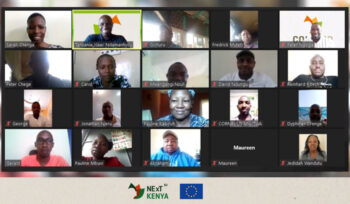
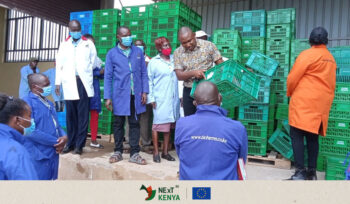
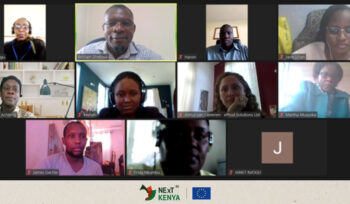
Due to the high demand for locally available technical expertise, NExT Kenya has launched a training-of-trainers cycle to build the capacities of a new group of Kenyan experts in COLEACP’s training methodology. The training-of-trainers will focus on learning and communication techniques on crop protection decision-making, scouting, application of control methods, and Field Training Workshops – a specific method to pass on key messages to workers and small-scale farmers. The training consists of preparation through an online learning platform, followed by… +
Key points Famoxadone is no longer approved within the European Union (EU) as of September 2021. EU approval was not renewed for acrinathrin, prochloraz and indoxacarb and will expire at the end of December 2021. The EU has also notified the World Trade Organization (WTO) of its intention to adapt the conditions of approval of sulfoxaflor. How will ACP producers/exporters be affected? Non-renewal means that these PPPs can no longer be legally used within EU countries. This also has an… +
On 29 October COLEACP met with representatives of two banana producers’ associations, Banelino and Adobanano, and a citrus producers’ association, Sosbiolim, in the region of Mao, to better understand their needs and to review priorities for action. The Dominican Republic is the world’s largest producer of organic bananas: 55% of all organic bananas are grown in the country, and 95% of them are exported to the EU. The experiences of the country’s banana producers – their methods, processes and results… +
UK Border Operating Model updated The UK has delayed border checks on goods coming from the EU until next year, citing supply chain issues. On 18 November the UK Government updated its Border Operating Model. The report The Border with the European Union: Importing and Exporting Goods sets out the revised timetable, and provides a Navigation Guide to what’s new or has changed (pp. 8–11). The main points to note are: Full customs declarations and controls will be introduced on… +
The Kenyan avocado sector Kenya is one of the fastest growing fresh produce exporters in the world – and avocado is the world’s fastest growing fruit in popularity. Global avocado production increased by 72% in the past 10 years (FAOSTAT). In 2019, Kenya produced an estimated 365,000 metric tonnes of avocado, which represents a 100% increase compared to 2016 (FAOSTAT). The majority of Kenyan avocados are grown by small-scale farmers who each manage 10–200 trees. Kenyan export volumes of avocados… +