ALL NEWS

The Caribbean Agricultural Health and Food Safety Agency (CAHFSA) has agreed a customised action plan for the implementation of Fit For Market SPS programme support. The main aims of the action plan are to strengthen the agency’s organisation and governance; provide capacity building for its members and staff, including in COLEACP’s Rapid SPS Assessment Tool (R-SAT); and share expertise in facilitating intra-regional trade through networking and engagement with the private sector. In September 2021, a strategic review webinar with CAHFSA’s… +
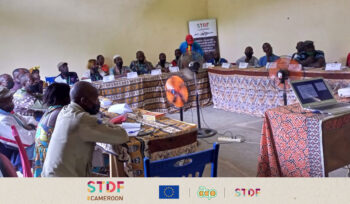
On 16 March, the Steering Committee of the project “Strengthening the phytosanitary monitoring and certification system in Guinea” (STDF/PG/498) was held to discuss the programming of activities for the last year. This meeting provided an opportunity to share the progress of the project activities: on the drafting of the good practice guide on potatoes as well as the training on the implementation of a methodology for the constitution of the list of harmful organisms in Guinea. This meeting also allowed… +
The Fruit Logistica and Macfrut trade shows are opening their doors soon! Be ready to meet up again face-to-face, in Berlin or in Rimini. To help ACP horticultural companies prepare for their visits to Fruit Logistica and Macfrut, group training sessions are currently being organised under the Fit For Market SPS and NExT Kenya programmes. The training is structured around online sessions and individual coaching sessions to help put the knowledge acquired into practice. On completing these training sessions, company… +
In March and April, 13 Kenyan experts have been taking part in training on Digital Learning Tools, provided through the NExT Kenya programe. The training is delivered through short live sessions and self-paced learning on COLEACP’s e-learning platform. The participants have diverse expertise in areas including food safety, commercial negotiation, human resource management, GLOBALG.A.P. standards, social standards, and crop protection, and are all involved in providing digital training. This training is implemented by COLEACP through the NExT Kenya (New Export… +
Staff of Kenyan companies have been taking part in training on claims handling, provided through the NExT Kenya programe. The aim is to build the capacity of company managers and staff in charge of trade negotiations and customer contracts , within small and medium-sized horticultural exporting companies (SMEs). Also taking part will be staff of the Fresh Produce Consortium of Kenya, who assist the association’s members in dealing with claims. Up to 16 staff from 10 different organisations took part.… +
In February, 19 staff of Kenyan avocado exporters took part in training on commercial fruit quality management, with a focus on good harvest and post-harvest practices. The participants were technical and extension staff responsible for avocado quality control within their companies. The focus on the first day was on best practices in setting up an orchard, avocado growing, and at farm, packhouse and logistical levels. The training incorporated two field visits on the second and third days: one to a… +
Equatorial Hortifresh Limited (EHL) is based in Eldoret, #Kenya and specialises in the sustainable sourcing and sale of passion fruit. EHL is currently receiving #e-coaching support on the management of human resources, costsand cashflow, among other business-related areas. This follows the successful completion in July 2021 of the online “Business Survival Bootcamp” by the company’s Technical Lead, who also doubles up as the Chief Agronomist. The #Bootcamp provided MSMEs with practical tools to plan and manage the challenges resulting from… +
In November 2021, when most Kenyan horticultural MSMEs were planning to conduct performance appraisals for their employees, training on Human Resources Performance Management was organised through the NExT Kenya programme to build the capacity of company directors, senior management staff, HR staff and mid-level managers responsible for conducting performance appraisals. Following the successful completion of the training and an impact evaluation, staff of Equator Kenya Limited who took part in the training described the impact on their current activities: “The… +
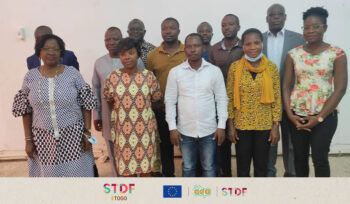
A workshop on “Analysis of survey data and hazards” took place in February 2022 in Tsévié, in the premises of the Regional Directorate of Agriculture, Livestock and Rural Development. The workshop contributed to the development of a Good Practice Guide for leafy vegetables in Togo, and resulted in a draft guide that will be submitted to stakeholders for validation. It brought together the members of the Technical Working Group for the Good Practice Guide, made up of three COLEACP experts,… +
In March a hybrid workshop was held in Dakar. Experts and representatives of National Plant Protection Organisations (NPPOs) from Senegal and Guinea attended in person, while participants from Burkina Faso and Côte d’Ivoire took part remotely. The workshop aimed to: take stock of the situation in participating countries regarding the establishment and updating of their national lists of regulated pests promote the sharing of experiences and good practices between experts and NPPO managers of the different countries agree on a… +
En 2021, Proxifresh Rwanda a passé avec succès l’audit GLOBALG.A.P. et a reçu la certification. L’entreprise est spécialisée dans l’exportation de haricots verts, d’oignons de printemps et de pois mangetout du Rwanda, et avait atteint un volume total de 460 tonnes en 2021 malgré les défis logistiques rencontrés en raison de la crise mondiale de la Covid-19. Pour réaliser son ambition d’augmenter ses exportations et de répondre aux exigences du marché européen, l’un des principaux objectifs de l’entreprise pour 2021… +
COLEACP Training Project Officer Sami Chauvet shares his experience of capacity building in waste reduction and valorisation using the example of the mango sector. Good waste management in the mango industry can lead to increased profits as well as the reduction of waste. This requires the identification of mango losses and waste by production and packing station managers. View the introductory video (in French) here In a typical training session, a team of local experts first provide distance learning on… +
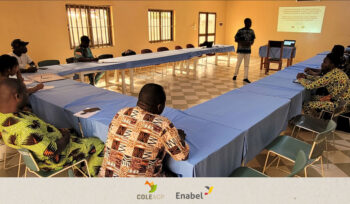
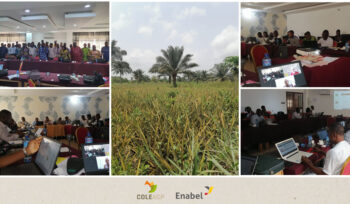
On 23 February, COLEACP organised a workshop in Cotonou to launch the project “Support to the agroecological transition of the pineapple sector in Benin”, within the framework of the DEFIA Programme (Development of Entrepreneurship in the Pineapple Sector) managed and financed by Enabel, the Belgian development agency. This 18-month project aims to enable operators in the pineapple value chain in Benin to begin a gradual transition to agroecology, while meeting the requirements of local, regional and international markets. The workshop,… +
Celebrate women in the agrifood sector! Worldwide, about a third of established businesses are women owned and managed.1 Sub-Saharan Africa has of the highest rates of women’s entrepreneurs.2 Latin America and the Caribbean region show a high rate of women entrepreneurs involved in high-growth activity and manufacturing and transportation sector, half of them being under the age of 35.3 Women are a significant entrepreneurial force as owners of farms, input supply stores, service delivery businesses, and processing and export firms… +
In January a training course on good agricultural practices was organised through the Fit For Market SPS programme for 14 small agri-food entrepreneurs and producers in Ghana who are part of The Food Bridge’s network. The training was co-facilitated by two Ghana-based trainers, Mark Tutu Sarpong and Benjamin H.K. Atidjah, and was conducted entirely remotely. It consisted of several short live Zoom sessions, as well as practical exercises and case studies prepared by the trainers to illustrate the technical content,… +
In early February, the Fit For Market SPS programme held its first training of trainers on “Training and Communication Skills” for the Pacific. Phase 1 of the training focuses on mastering teaching methods, and phase 2 is devoted to digital tools and specific skills needed for distance learning. Four Fijian experts participated in Phase 1. To put the learning into practice, due to the COVID-19 health measures, the training was hybrid: Fijian facilitator Aftaniwa Tawake and the three Fijian trainers/trainees… +
The Fit For Market SPS programme has produced a series of plant health guides that give a clear explanation of what needs to be done in order to ensure that exports are in compliance with EU phytosanitary requirements. They explain the information that needs to be provided, and actions to be taken at all stages, from production to export, by producers and exporters as well the national authorities and inspection services. The new Commission Implementing Regulation (EU) 2021/2285, which will… +
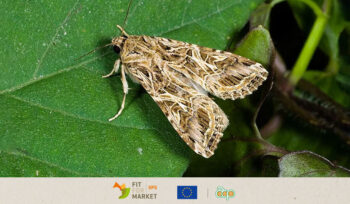
The EU has introduced new legislation to amend plant health rules covering False Codling Moth (FCM, Thaumatotibia leucotreta). The new draft regulation has been submitted to the WTO for a feedback period, period until the 11th April 2022. The date of implementation is not yet known. FCM is listed as a priority pest under EU plant health regulations ((EU) 2019/1702). Unfortunately, as this pest has been intercepted on several host plants in recent months during EU border controls, stricter rules… +
On 25 January, COLEACP’s Research & Innovation department held a videoconference, to introduce the department’s range of activities and services. Regulatory monitoring tools: You can follow events at European and international levels via interactive dashboards and online databases, to support monitoring of regulations and rapid adaptation to changes (MRLs, PPP approvals, TRACES, RASFF, and e-GAP) Field trials to find new alternatives to control priority pests: How are trial activities scheduled? Learn about the 18 trials implemented since 2019, and our… +
Farm Fare Produce is a family-owned horticultural business supplying fresh vegetables mostly to retailers and supermarkets. With an interest in reaching the export market, the has been working to have its food safety management system certified by GLOBALG.A.P. option 1 to meet marketrequirements. The Fit For Market programme has been supporting Farm Fare Produce in the certification process, from an initial assessment of their existing food safety management system, identifiction and implementation of corrective measures, training of the quality management… +
A workshop was held at the beginning of February in Madagascar, bringing together private and public stakeholders involve in the “dry grain” sector, to discuss the implementation of COLEACP’s Rapid SPS Assessment Tool (R-SAT).… +
Belgian company Kasana Fruits sources dried, organic-certified fruits and nuts produced in Africa (mainly Uganda and Burkina Faso) by local farming cooperatives. The company’s socially responsible business model supports farming and educational programmes in these countries. To build a more inclusive and reliable pineapple supply chain, Kasana Fruits has successfully brought together 58 Ugandan pineapple producers into a farmers’ cooperative. This cooperative, which supplies most of Kasana’s pineapples and bananas, is supported by The Refugee Next Door (RND), a non-profit… +
Processed pineapples (Guinea), mango (Burkina Faso), and off-season fruit and vegetables (Mali) Processed pineapples in Guinea This market profile focuses on the market opportunities for a selection of three processed pineapple products (dried pineapple, juices and syrups) in the Guinean, West African and European markets. Despite the decline in African pineapple exports to the EU due to strong competition with the MD2 variety from Costa Rica, pineapple is one of the priority commodities in Guinea’s agricultural sector recovery programme, for… +
Highlighting dynamic young people in agriculture, and developments in sustainable production COLEACP’s most viewed news stories last year featured environmental sustainability training, organic regulation, agripreneurs, and incubator training for young technical managers in Togo. These activities are supported by the EU-funded Fit For Market and Fit For Market SPS programmes, and the STDF project in Togo, part of a suite of programmes implemented by COLEACP.   Launch of group distance training on Environmental Sustainability Management A new training series under… +