ALL NEWS

A crucial time for the global environment This time of year is associated with the major international summits for the protection of the environment – and this year they are even more crucial. The first part of the 15th Conference of the Parties of the UN Convention on Biological Diversity (COP15) has just ended with the adoption of the Kunming Declaration outlining the ambitions of the signatory states in terms of nature protection. The aim of COP15 is to reach… +
The European Union’s DeSIRA programme is working towards the Development of Smart Innovation through Research in Agriculture. Launched in June 2021 with funding from the European Commission (DG INTPA), the DeSIRA-LIFT project, “Leveraging the DeSIRA initiative for agri-food systems transformation”, aims to support the programme’s current and future activities in order to enhance its impacts. The EC funding is €6,500,000 for a duration of 3 years (June 2021–May 2024). The specific objectives of DeSIRA-LIFT are: Supporting country-based DeSIRA project actors… +
Sustainability – environmental, social and economic – is key to COLEACP’s mission. Our members are encouraged to sign up to our Sustainability Charter, and to regularly complete our Sustainability Self-Assessment System, which was initially supported by the Fit For Market programme (FFM). The system enables producers and agribusinesses to monitor their evolving impacts in all three areas and demonstrate their progress to current and potential customers, and other interested parties. By utilising the system, businesses can: Strive for continuous improvement… +
For over 10 years, COLEACP has been part of a coalition of organisations, including Oxfam, the Fair Trade Advocacy Office and the International Federation of Organic Agriculture Movements (IFOAM-EU), lobbying the EU to tackle unfair trading practices (UTPs) in agricultural supply chains. We advocated strongly for new legal provisions to extend beyond the EU to also protect third country suppliers. The groundbreaking EU Directive 2019/633 on Unfair Trading Practices in Business Relationships between Businesses in the Agricultural and Food Supply… +
Agriculture in the Pacific region has suffered during the pandemic due to its close relationship with tourism. COLEACP’s regional relay in Fiji, Mereia Volavola, describes the impact: “The Covid19 pandemic seriously affected the businesses in the Pacific, especially the tourism and agriculture sectors. As the international borders closed, the tourism industry collapsed and the demand and export supply for agricultural produce fell. Shipments via airlines and ships were drastically affected as the number of flights and ships reduced and cost… +
During September and October COLEACP collaborated with partners to present four online events, supported by the Fit For Market programme. With OECD: Fruit and Vegetables Industry Series: Session no. 1 On 14 September the OECD Fruit and Vegetables Scheme and COLEACP launched the Fruit and Vegetables Industry Series to highlight the significance of the sector in the context of the United Nations International Year of Fruit and Vegetables (#IYVF2021). The first joint session, with 220 participants, focused on “The fruit… +
The first 2021 Caribbean AgTech Investment Summit explored the opportunities for agricultural technology companies in the Caribbean, welcoming over 500 registrants from 60 countries around the world. Introducing the event, Dr Irfaan Ali, President of Guyana, spoke of the Caribbean Community (CARICOM) e-agricultural strategy “to improve producers’ competitiveness, incorporate greater climate smart technologies in the production process, increasing intra-regional trade and improving market infrastructure and connectivity, especially for small producers” (Caribbean Export News, 6 October). This is a key part… +
From 5–7 October COLEACP, partner-beneficiaries from programmes and members took part in the trade fair Fruit Attraction 2021. The B2B event was a hybrid – both in-person and online – for the first time in 2021, presenting opportunities for more ACP horticultural businesses to take part. Exhibitors participated in-person with a stand, online through the LIVEConnect platform, or through a combination. This year the online platform LIVEConnect will remain open to bring the fruit and vegetable community together all year… +
Through the Fit For Market SPS programme and within the context of the Covid-19 action plan, COLEACP’s Market Intelligence service has been working with the Association of Exporters of Agricultural Products of Suriname (Vereniging van Exporteurs van Agrarische Producten in Suriname, VEAPS), a professional association representing the country’s farmers and exporters of horticultural products. This collaboration is taking place in a context where Suriname’s exports have been suffering from a lack of competitiveness and logistics, constituting a bottleneck to export… +
Dr Chagema Kedera, NExT Kenya Programme Coordinator, presented a webinar organised by CABI on “Phytosanitary Awareness: IPPC contracting parties’ obligations and phytosanitary measures for market access” to over 70 participants. The presentation covers the obligations of contracting parties to the International Plant Protection Convention (IPPC); the functions of National Plant Protection Organisations (NPPOs); International Standards for Phytosanitary Measures (ISPMs); and the IPPC Market Access Guide. You can view the webinar here: The video also explains COLEACP’s Rapid SPS Assessment Tool… +
Surivit, a Surinamese company specialising in fruit and cassava processing, produces cassava flour, baby porridge, cassava pancake mixes and cassava flakes both for local use in Suriname and for export markets. Surivit works closely with women’s cooperative Wi! Uma fu Sranan (WUFS – “We the women of Suriname”), an organisation that aims to improve the living standards of female producers. Surivit has the ambition to professionalise as a social enterprise, with the aim of generating a significant positive impact on… +
To celebrate World Food Day (16 October) and the International Day of Rural Women (15 October), COLEACP joins the United Nations in celebrating the unsung contribution of ACP women entrepreneurs to our food system. Women are a significant entrepreneurial force as owners of farms, input supply stores, service delivery businesses, and processing and export firms whose contributions to local, national, and global economies have significant impact on poverty reduction, employment creation and wellbeing of rural communities and society at large.… +
Did you know? “Rural women make up a quarter of the world’s population and work as farmers, entrepreneurs or agricultural workers” United Nations. To celebrate the International Day of Rural Women (15 October) and World Food Day (16 October), COLEACP joins the UN in celebrating the resilience of rural women in the wake of Covid-19. The pandemic has affected most sectors, and many are still struggling to recover. Agriculture is no exception, especially the women in this sector. According to… +
COLEACP’s training on ‘Implementation of Official Controls’ in Suriname took place between 12 August and 3 September 2021. An eager group of 19 employees from the Suriname Ministry of Agriculture undertook this practical training. The focus was on the importance of international standards for phytosanitary measures in relation to mandates for phytosanitary control; phytosanitary inspection; the types of official controls; and organisation and procedures for official controls. To end on a high note, Ing. Parmanand Sewdien, Minister of the Ministry… +
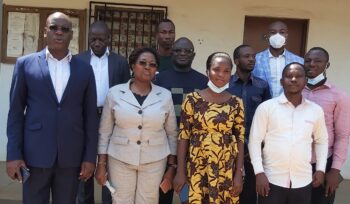
The first meeting of the working group for the implementation of the Rapid SPS Assessment Tool (R-SAT) in Cameroon took place on 30 September 2021 in Yaoundé, where a timetable and next steps were agreed upon. R-SAT has been developed by COLEACP to assist competent authorities, in consultation with key public and private sector stakeholders, to assess the status and functioning of SPS systems. COLEACP would like to thank the Director of the Department of Regulation and Quality Control of… +
Since the collapse of the pineapple market in Côte d’Ivoire, producers have seen their earnings drop considerably. To improve the income of the country’s producers and all stakeholders in the value chain, the SCOPACI-SCOOPS cooperative, created in 2015, obtained certification in 2019 for organic farming, GLOBALG.A.P. (a set of standards for Good Agricultural Practices; with the support of COLEACP’s Fit For Market programme) and GLOBALG.A.P. Risk Assessment on Social Practice (GRASP). Also through its Fit For Market programme, COLEACP supported… +
Extension staff of Interveg Ltd undertook the second phase of a training programme on “Bookkeeping and Cost–Benefit Calculations” in July 2021, at their premises in Export Processing Zone (EPZ) Athi River. The focus of this second session was on accounts operation. The first phase of the training was held in April 2021. At the end of the training, the participants are able to: identify production-related expenditures (by type and nature) and revenues of the French bean crop for an average… +
COLEACP organised a remote training course on “GLOBALG.A.P. Standard (Modalities and Checklist)” for partner companies of the NExT Kenya programme from 26 July to 27 August 2021. The training was directed toward companies/cooperatives that are either in the process of implementing GLOBALG.A.P. standards (a set of standards for Good Agricultural Practices) for the first time or are already managing the standards and need a refresher course for existing staff or training for new staff. The target audience for this four-week… +
COLEACP organised a remote training course on “COVID-19” for partner companies of the NExT Kenya programme in July 2021. The target audience for this two-week digital training included quality and production managers of Kenyan horticultural SMEs. The training aimed at ensuring that people working throughout the value chain, from the field to the market, are able to work in complete safety in the context of the pandemic, thus allowing them to maintain a sufficient level of food production and affordable… +
COLEACP organised a remote training course on “Food Safety Quality Management System” for partner companies of the NExT Kenya programme from 26 July to 27 August 2021. The target audience for this four-week digital training included technical staff (quality managers, packhouse managers and internal auditors) in charge of compliance within horticultural production companies and producer groups. The training was directed toward staff in exporters’ associations that assist their member companies with the implementation of food safety standards. At the end… +
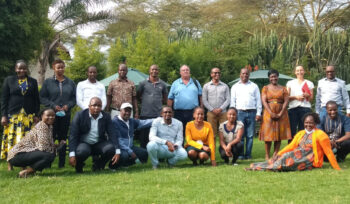
The public-private National Horticulture Taskforce has been strengthened to enable it to take a more active role in providing an enabling environment and consultative guidance to the horticultural sector in Kenya. Private-sector members of the taskforce are drawn from various organisations, including the Fresh Produce Exporters Association of Kenya (FPEAK), the Fresh Produce Consortium of Kenya (FPC Kenya), the Kenya Flower Council (KFC), and the Agrochemicals Association of Kenya (AAK). The government presence in the taskforce includes representation from the… +
UK: Revised timetable for introducing border controls The UK Government has announced a revised timetable for pre-notification and checks on plants and plant products for imports from the EU to Great Britain. The key points are: Full customs declarations and controls will be introduced on 1 January 2022 as previously announced. Exporters will no longer be able to defer customs declarations after 1 January 2022 unless they are authorised to do so. Safety and security declarations on imports will be… +
On 22 September, the EU Delegation in Uganda organised a trialogue between the Government of Uganda, the Ugandan private sector and the European Union to discuss “Challenges and opportunities for Ugandan horticultural exports to Europe”. Europeans hold Ugandan products in high regard, but some issues regarding standards and quality have led to increased controls at EU borders for products coming from Uganda. This represents a great loss for the Government and for the private sector. The meeting identified and discussed… +
There is still a chance for African organic suppliers to take part in the Organic Africa Pavilion at BioFach, which is happening in Nuremberg, Germany from 15 to 18 February 2022. The deadline for applications has been extended to 30 September 2021. How can you take part? You can choose from different levels of service: Full Service Stand – Attend the fair yourself, with a stand in the Pavilion plus marketing package from ProFound (poster, flyers, video). A full range… +