ALL NEWS

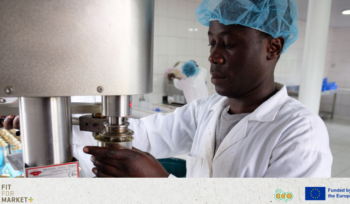
Measuring and predicting yields are major challenges in agriculture. The uncertainty of such evaluations has multiple repercussions that can affect the development of entire value chains. HPW Fresh & Dry Ltd., the largest dried-fruit producer in West Africa, requested support from COLEAD to resolve one of its most critical pain points: the lack of methods to estimate yields of its partner mango farmers reliably and efficiently. The company’s goal was to be able to accurately size its supply chain and… +
Key points This news update is a review of changes that were made in 2022.European Union (EU) maximum residue levels (MRLs) were changed for 75 plant protection products (PPPs) in 2022, compared with 123 in 2021. These changes include cases where MRLs for certain foods have been raised or lowered.In Great Britain (GB) maximum residue level (MRL) changes concerned 23 plant protection products (PPPs), of which 13 are considered key for ACP horticulture. Note that EU MRLs still apply in… +
BIOFACH 2023 was an exciting occasion for COLEAD to learn more about the journeys and success stories of African entrepreneurs in the organic farming sector. We had the opportunity to meet inspirational men and women who are turning their ideas into reality and developing their businesses. Here are some inspiring thoughts from the entrepreneurs we met. Get inspired! Read on as they share some of their thoughts and get inspired by them! Wherever you are, get started!! Opportunities can be… +
The Commission on Phytosanitary Measures (CPM) held its 17th face-to-face session from 27–31 March 2023 at the FAO Headquarters in Rome. The event was attended by approximately 400 participants from national and regional plant protection organisations, as well as other partner organisations of the International Plant Protection Convention (IPPC), including COLEAD. Complimentary to the CPM-17 event, COLEAD organised two events (in French and English) to provide an overview of recent changes in the European plant health regulations. The testimonials of… +
COLEAD organised a collective training course on ‘Sustainable soil management’ for the partner clusters of the DEFIA programme within the framework of the Support for the agro-ecological transition of the pineapple sector in Benin project. The training brought together a dozen participants from seven organisations, all of whom were farm managers, company executives or technicians responsible for supervising producers. The participants received training on: Assessment of soil properties and determination of key elements of soil fertility Identification of practices that… +
On Tuesday 6 June, 14h00-16h00 UTC+2, Marlene José will present her business during a side event on Unlocking business opportunities for young entrepreneurs organised by FARA, the COLEAD, YPARD and GFAR at the 8th African Agribusiness and Science Week (AASW8).   The session will be held online and on-site in Durban, South Africa. Online participants have to register using this link. Live interpretation in English and French will be available.    About Marlene José and FoodCare Marlene is the founder and CEO… +
On 10 May, COLEAD and PAFO convened the Innovations Session n°13 that focused on producers’ and SMEs innovations in agroecology for sustainable agrifood systems. Four inspiring farmers and entrepreneurs presented how their agrifood activities and businesses support agroecology and sustainability. The first panel was followed by the presentations of two African support organisations and of their successes with agroecological practices on the field.  The online session – available in English, French and Portuguese – gathered 250 participants and was again… +
The fall armyworm (FAW), Spodoptera frugiperda, is an emerging insect pest that was first recorded in West Africa in 2016. FAW attacks more than 80 plant species, with a strong preference for maize, one of the most widely produced and consumed cereals in sub-Saharan Africa. Since its introduction, the distribution of FAW has been expanding steadily and now covers the whole of Africa. The pest causes significant yield and economic losses and poses a serious threat to food security in… +
About 11 million young Africans enter every year the labour force which continuously adds pressure to local economies and food systems. Many young farmers and agri-entrepreneurs are innovators and risk-takers but lack access to market. There is an urgent need to strengthen the entrepreneurial ecosystem, especially in rural areas, to ensure that youth can establish viable livelihoods. Investing in youth and empowering young agri-entrepreneurs to engage responsibly in their farms and businesses are fundamental to achieve many Sustainable Development Goals… +
Review of EU and GB pesticide approval changes during 2022 During 2022, the European Commission (EC) published 125  changes to plant protection product (PPP) approvals within the European Union (EU). These include 35 changes concerning substances that are of importance for African, Caribbean and Pacific (ACP) horticulture. Great Britain (GB) has published 3 changes to PPP approvals involving alpha-cypermethrin, cinmethylin and indoxacarb.   How will ACP producers/exporters be affected? Many of these changes to EU regulations involve the loss of… +
Climate change is a major concern to the agricultural sector with effects on the quality of fruit and vegetables that could undermine, or reverse progress made in recent decades in terms of food security and safety. In this context, it is key to adapt and find solutions to the challenges linked to climate change to still be able to offer quality and enough food to consumers. The fruit and vegetable industry needs to adapt its methods for food production (from… +
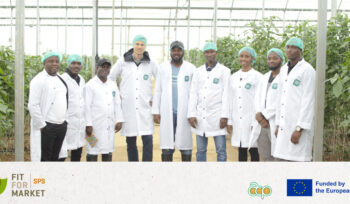
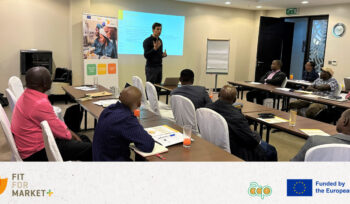
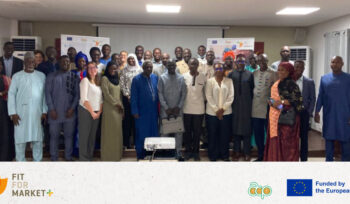
COLEAD provided training to Nigerian agronomists last year on the safe and effective use of appropriate control method for target pests. Fit For Market Plus (FFM+) recently organized a 5-day group training in Ibadan to reinforce previous lessons, share best practices, and teach effective messaging on safe pesticide use and crop protection to colleagues and members. Trainers Jimi Talabi and James Ekele employed field training workshop methodology and role-playing exercises to impart knowledge, improve understanding, and facilitate the adoption of… +
The 13th session of the Innovations Series on the theme of Producers’ and SMEs Innovations in Agroecology for Sustainable Agrifood Systems, will be hosted online via Zoom on Wednesday 10 May from 12:00-14:00 UTC. Live interpretation for the session will be available in English, French and Portuguese. Join us and register for this event by clicking on this link. The programme note for the session is available here. During this Innovations Session, producers and SMEs will showcase how their business… +
On 12 April 2023, COLEAD collaborated with the Embassy of Gabon in Belgium to host an online workshop, presenting its FFM+ and AGRINFO programmes to stakeholders in Gabon’s horticultural sector. The event was attended by H.E. Mr. Serge Thierry MICKOTO, Ambassador of the Republic of Gabon to Belgium, as well as over thirty public and private sector actors. The COLEAD team presented on the evolving regulatory requirements and trends in regional and international fruit and vegetable markets during the workshop.… +
The development of a sustainable global food system is crucial to meet the challenges of reducing poverty and inequality, ensuring food security for all and protecting our planet. COLEAD aims to contribute to the agricultural sector’s transition towards more sustainable agri-food systems adapted to local contexts. COLEAD is a network of companies, professional organisations, experts, private and public partners working in the agricultural and food sector, the world of development and the transmission of knowledge and expertise. In practice, through… +
As part of the implementation of the Fit For Market Plus (FFM+) programme, the COLEAD team has organized 6 virtual regional events and 20 national workshops since May 2022, bringing together a total of 1,600 participants. The team has also met with numerous potential partner-beneficiaries at trade fairs and conferences. Interested organisations were invited to fill out an application for support form available on the COLEAD website. The form is tailored to each type of organisation: production/processing companies, service providers,… +
As part of the Fit for Market Plus (FFM+) programme, a COLEAD team visited Malawi in March. To date, 65 FFM+ applications for support have been received from this country. The mission was an opportunity to meet with FFM+ programme candidates and share the COLEAD/FFM+ offer. This is significantly more than in previous programmes. Specifically, FFM+ applications have been received from 47 horticultural MSMEs (producers, processors), 12 support structures for smallholder farmers, 5 service providers and 1 professional association. This… +
The Fit For Market Plus (FFM+) programme was launched in Mali and Burkina Faso through the organization of two workshops in March. In total, 100 participants were present, including companies, professional organisations, cooperatives, service providers and competent authorities. At the event, the COLEAD team presented the evolution of EU market access requirements for fruit and vegetables, as well as the support opportunities available through the FFM+ programme, which aims to “mitigate the impacts of the COVID-19 pandemic by strengthening the… +
The COLEAD Research and Innovation Brokerage Department is currently working on updating Technical Itineraries or Good Phytosanitary Practices Guides through the FFM SPS and FFM+ programmes, which include information on good agricultural practices (GAPs). These GAPs ensure compliance with European and Codex MRLs, as well as residue-free production. Information on GAPs is integrated into the COLEAD E-GAP database, developed to ensure that producers have access to the necessary information to use PPPs safely and comply with market requirements (EU MRLs… +
COLEAD collaborates with stakeholders in agricultural value chains in countries with high potential for economic and social development to support their growth. One of COLEAD’s main activities is to strengthen the capacities of local actors through vocational training. Recently, as part of the FFM SPS programme, COLEAD organised a training session in Cameroon for the supervisory team of small producers and a few ‘pilot’ producer-dryers from the TERRESPOIR GIC. The objective of the training was to teach the producers how… +
In February 2023, COLEAD successfully participated in Fruit Logistica and BIOFACH in Germany, under the FFM+, FFM SPS and NExT Kenya programmes. Through a series of meetings, conferences and networking events, we established and nurtured relationships with almost 400 contacts from 57 countries. Despite ongoing challenges posed by the COVID-19 pandemic, both fairs made strides towards post-pandemic recovery. However, the number of visitors remained lower compared to the pre-pandemic period. We observed that the demand in the sector remains dynamic… +
AGRINFO is a new information programme on evolving EU policies, regulations and standards with potential impacts on agricultural value chains in low- and middle-income countries. This global programme, funded by the EU and implemented by COLEAD, covers food and commodity crops, livestock and fisheries. A key aspect of the new programme is disseminating clear and accessible information to all interested stakeholders. AGRINFO UPDATE is a regular email alert every 2 weeks. It lists the most recent EU regulatory and policy… +
Since the start of the year, around 850 new learners register monthly on the COLEAD e-learning platform (mainly via FFM+ programme). This vocational training platform (training.colead.link) is one of the online resources developed by COLEAD. To date, close to 20,000 users are registered on the platform, out of which 72.6% are based in member countries of the OACPS. Additionally, 75 of the 78 ACP countries are represented. Madagascar is the top user country with 1563 learners, due in part to… +
On 24 March 2023, the ALFA initiative (Agriculture Livestock Fisheries Africa) was officially established as a non-profit association. The event took place in Paris at the Economic, Social and Environmental Council with 50 founding members present, including COLEAD. Aware that Africa represents an exceptional lever for sustainable growth, the ALFA association aims to prospect and develop value chains in the agriculture and livestock sector, primarily relying on private entrepreneurship. The goal is to address the economic and food autonomy challenges… +