GLOBALG.A.P. has published a set of FAQs relating to COVID-19 for producers with GLOBALG.A.P. Certificates and Certification Bodies. It explains procedures for re-registrations and extensions, and which control points and compliance criteria are directly affected by the GLOBALG.A.P. emergency procedure due to the coronavirus.
GLOBALG.A.P. is working on the option of remote inspections and audits for certification bodies and producers: IFA Remote. An initial draft of the IFA Remote solution will soon be published, along with an invitation to join… +
FAO is has a growing range of information resources on COVID-19, available through its dedicated website. Selected information of particular relevance to COLEACP’s members and beneficiaries includes: POLICY BRIEF on COVID-19 and smallholder producers’ access to markets. Immediate impacts tend to be more severe for high-value commodities (perishable products), which are often produced by smallholder farmers. Several countries are putting in place a variety of measures to mitigate the impact of the pandemic on smallholder producers. This brief builds on… +
ACP
Inter-American Development Bank
The IADB has a dedicated website for Latin American and Caribbean businesses in the context of COVID-19. It includes blogs and connection platforms on topics such as ‘Tips to prepare your company for the impact of COVID-19’, and ‘How can the COVID -19 crisis change the private sector for the better?’
coronawestafrica.info
The Regional Working Group for Risk Communication and Community Engagement in West and Central Africa has launched an online portal, COVID-19 West and Central… +
Through an online survey, COLEACP has been asking what support is most urgently needed by the ACP fruit and vegetable sector during the current crisis. Preliminary results from 87 contributors are analysed below.
Respondents were asked to prioritise the three most urgent areas where support is needed. Access to finance was clearly regarded as the most urgent area (77.0% of respondents placed this in their top three issues), followed by hygiene and food safety practices (69.0%). Support for storage/processing, logistics… +
As part of an initiatives to support Kenya’s renowned horticultural industry, KQ Cargo supported by Fresh Produce Exporters Association of Kenya (FPEAK); Kenya Flower Council (KFC); the Embassy of the Netherlands in Kenya; the European Union in Kenya and the Government of Kenya, uplifted 40 tons of flowers and vegetables to Amsterdam. More flights are planned in the future.… +
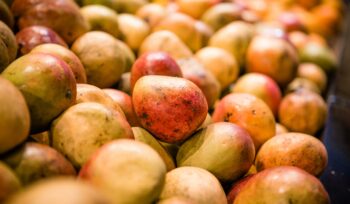
SIIM, a key West African mango producer and exporter, has announced the start of the 2020 campaign. The first mangoes, packaged under the Dibra brand from its stations in Burkina Faso, Côte d’Ivoire, Mali and Senegal, should arrive by the end of this week. In view of the coronavirus crisis, strict sanitary measures have been taken by the states of these countries not only to protect the population, but also to avoid the spread of the virus. Schools have been… +
Building on its intra-ACP Fit For Market programmes, COLEACP’s proposed activities in the short term to mitigate the impact of the COVID-19 pandemic will focus on logistics and access to markets. Activities will include: Monitoring and informing the ACP and EU agri-food industry on logistics, trade and market dynamics.
Supporting innovative national and international logistics and trade solutions to help ensure the trade in agricultural and food products – matching supply to demand for available logistical routes; diversifying from export… +
Provided by Union Fleurs – International Flower Trade Association
The gradual relaxation of lockdown measures in some European countries (Spain, Denmark, Germany) and the effective or planned re-opening of garden centres and/or flower shops (Belgium, Italy, Austria) offer some breathing space for demand of flowers and plants on the European market, which is starting to grow slightly, though nowhere close to the usual volumes known in the peak spring season across Europe. Easter has been generating some very welcome sales… +
Over the past two weeks, COLEACP has been asking businesses in ACP countries to share their experiences of the COVID-19 crisis and to let us know what support is most urgently needed. Our online survey will be repeated at the end of each month in order to measure the evolution of the impact of the pandemic over time, and companies that were unable to take part in the first round are encouraged to contribute in future. We will let you… +
AFRICA
A Zimbabwe exporter of fresh vegetables that also sells regionally and locally reports that after 3 days of lockdown, the government relaxed the rules for key sectors: health, agriculture, food manufacturing and distribution. This saw local markets partially open and trade has been going on, although at a slow pace. The bulk of agro-commodity prices have slumped, except for lemons and partially avocado. Farms have been asked to lockdown but operate with housed labour inside the farm. Regarding exports,… +
Business Fights Poverty, a business-led collaboration network focused on social impact, has launched a new Business and COVID-19 Response Centre and an Action Toolkit to provide practical steps large companies can take to support their MSME partners through the COVID-19 crisis. As MSMEs struggle, the impact on their communities is also significant as they are often the only source of goods and key services for the most poor and vulnerable populations. For large companies, who rely on MSMEs in their… +
The Delegation of the European Union in Cameroon has launched a survey to map the presence of European companies in Cameroon; to measure the impact of the COVID-19 crisis on European companies and identify the key actions to take to defend their interests; and to lay the foundations for the creation of a European Business Organization in Cameroon. Relating to the current crisis, the survey asks about impacts that companies are experiencing or expecting, including missing goods/services; production losses/sick employees;… +
A predicted second wave of desert locusts in East Africa will cause major food security problems for countries already struggling against the coronavirus lockdown – and COVID-19 is also directly disrupting the battle against the locusts. According to Al Jazeera (9 April), flight bans imposed to slow the spread of COVID-19 have significantly delayed deliveries of pesticides in countries across the region. Vincent Ssempijja, Uganda’s Agriculture Minister, reported that Uganda has deployed more than 2000 military troops to carry out… +
A review of key EU and Codex MRL changes since the start of 2018 and an introduction to E-GAP, your tool for tracking changes that affect your sector.
Every year, the use of many plant protection products is affected by Maximum Residue Limit (MRLs) changes. Since the start of 2018, MRL have been changed for 239 active substances in EU Regulation and the Codex Alimentarius combined.
This has a direct impact on producers who often must change production methods (Good… +
Agri-food MSMEs in ACP countries are particularly affected by the COVID-19 outbreak. On top of the health threat it poses to workers and stakeholders along their value chains, the pandemic is highlighting the vulnerability of agri-food supply chains to trade disruption on national, regional and international levels, especially for short shelf-life goods such as fresh produce. MSMEs are already vulnerable due to very limited cash flow reserves, and even a temporary disruption can lead to job losses and declining revenues… +
In response to the COVID-19 outbreak, the UK’s Department for Environment, Food and Rural Affairs (Defra) has announced the following measures to ease trade flows. Certificate of Organic Inspection (COI): Defra has agreed to accept electronic certificates of inspection produced in the online management tool TRACES NT for organic products, in line with EU provisions. Original documents need to be shown to Port Health Authorities once available.
Phytosanitary certificates: The UK is aligned with the European Union in terms of… +
GLOBALG.A.P. CONSULTATION ON NEW “IFA REMOTE” SOLUTION
In addition to the current emergency procedure for certificate extension published on 26 March, GLOBALG.A.P. is developing a new “Integrated Farm Assurance (IFA) Remote” system to meet the growing need for initial certification and re-certification based solely on remote inspections and audits. The solution will apply to all GLOBALG.A.P. standards, and will be available for the duration of the COVID-19 crisis; however, it probably will not be Global Food Safety Initiative (GFSI)-recognised. IFA… +
PAFO HIGHLIGHTS THE FAMILY FARMERS’ PRODUCTION SYSTEM
The Pan-African Farmers Organization (PAFO) has issued a statement on the commitment and responsibility of African farmers to ensure food security during COVID-19 quarantine. The communication notes that “In addition to the front lines of our ‘white’ soldiers who provide medical and paramedical care to our fellow citizens, our farmers, the ‘green’ soldiers of our Nations are on the front line to avoid food shortages and will ensure food security in this time… +
BENIN
Since 30 March, part of southern Benin has been under partial containment. From 8 April, the authorities made it compulsory to wear masks in all public places in the 12 towns of the cordon sanitaire. However, only a third of the 30 million masks ordered by the state have been delivered so far. The interior minister has invited those who do not have masks to stay at home and has deployed the police for strict control.
CAMEROON
Wearing a… +
Agroalimentaria is the main trading platform for agricultural and agro-industrial products in the Caribbean region. From 9 to 11 May, Dominican producers and exporters, as well as national and multinational companies in the food, tobacco and beverage sectors, will meet to present their products and know-how to the world. Tropical fruits, vegetables, condiments and spices, bananas, coffee and cocoa, particularly from organic farming, will be in the spotlight. During the event, COLEACP will give a presentation on the challenges facing… +
Earlier in March, prior to the COVID-19 lockdown, management of Kenya Horticultural Exporters (1977) participated in a training session on Training Needs Assessment in Nanyuki, as part of the process to set up an improved internal training unit.… +
They also remove the self-assessment and remote audit element of the certificate extension.
For more details, see https://www.brcgs.com/about/news/2020/brcgs-announces-revised-guidance-for-sites-affected-by-covid-19/… +
Leaders of the World Trade Organization (WTO), the Food and Agriculture Organization (FAO) and the World Health Organization (WHO) issued a joint statement on March 31 calling on governments to minimize the impact of border restrictions related to COVID-19 on the food trade. “Now is the time to show solidarity, act responsibly and adhere to our common goal of enhancing food safety, food security and nutrition and improving the overall well-being of people around the world,” the agency’s leaders said.… +
The portal includes FAO’s key messages and actions in response to this outbreak, as well as a series of questions and answers on the impact of COVID-19 on food and agriculture and a set of analyses and solutions on food and agricultural systems in the following areas: Development and transformation
Emergencies
Incentives and expenses
Nutrition Priorities
Smallholder access to markets
Social protection systems
Market Access… +