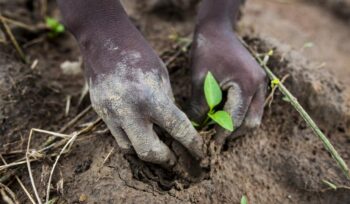
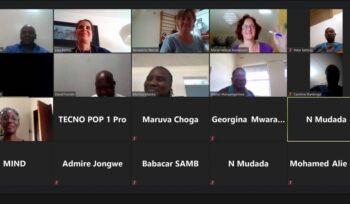
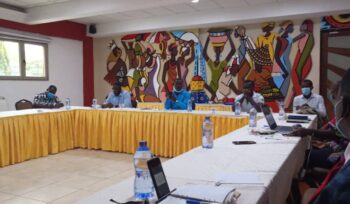
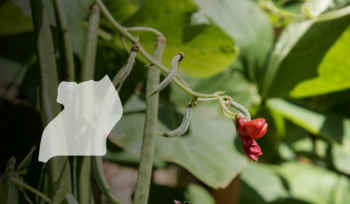
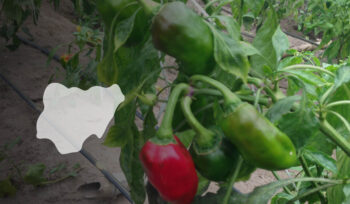
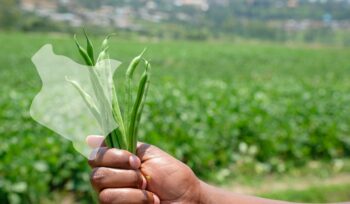
As part of COLEACP fit for Market Programme, a digital training on crop protection and safe use of pesticides for Dangote Farms Agronomists and Extension staff currently conducted by #COLEACP Expert Olufolajimi Talabi. The staff in turn will use the knowledge and skill to build the capacity of more than 5000 local tomato farmers under the Dangote farms outgrowers scheme.… +
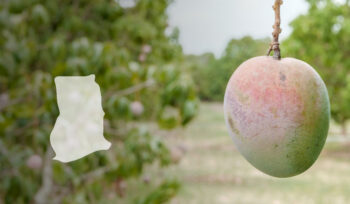
An update of “COLEACP Guidelines on the Export of Mango to the European Union” has just been published.
This guide provides a clear explanation of what needs to be done in order to ensure that Mango exports are in compliance with EU phytosanitary requirements related to non-European fruit fly (Tephritidae). It details the information to be provided, and actions to be taken, at all stages from production to export by producers and exporters, as well as by the national authorities… +
Virtual meeting between the COLEACP ‘s team and the East African Farmers Federation (EAFF), represented by Mr Kubai Robert. The meeting was to finalize an MoU focused on the support to small scale farmers in the avocado value chain in Kenya, building on the EAFF network.… +
Virtual meeting between COLEACP’s team and the Plant Science Faculty Members of Kenyatta University as part of Zoom session for the digital training “How to use Moodle for creating and animating an online training course”.… +
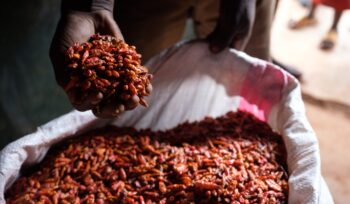
An update of COLEACP Guidelines on the Export of Capsicum from Africa, Madagascar, Cape Verde, and Mauritius has just been published.
This guide explains clearly what needs to be done to ensure that capsicum exports are in compliance with EU phytosanitary requirements. It details the information to be provided, and actions to be taken, at all stages from production to export by producers and exporters, as well as by the national authorities and inspection services.
The document has been updated… +
COLEACP’s digital training on the identification and management of false codling moth began in Sierra Leone in late June 2020, for participants from both the public sector (NPPO inspectors) and private sector (horticultural producers and exporters). In the first virtual meeting, trainer Mr Samuel Muchemi explained the digital training, and participants introduced themselves and asked questions.… +
An update on the expiry of EU approval of key Plant Protection Products (PPPs) for ACP countries
In the EU, active substances are approved for a maximum period of 10 years under Regulation EC 1107/2009, after which time the approval must be reviewed. The review process is detailed and involves the evaluation of existing (and sometimes new data) against a set of criteria, many of which have changed since the substance was first approved.
The schedule for the review of… +
COLEACP’s digital training on integrated fruit fly management for NPPO and technical managers of Gambian companies ended around positive feedbacks from participants. The training aimed to strengthen the capacity of plant protection officers and technical managers of exporting fresh mangoes companies in integrated fruit fly management measures. It also aimed to strengthen the capacity of phytosanitary agents to inspect operators in the mango sector.… +
This new collaboration will establish an accredited #Horticultural Practical Training Programme offering certificate and diploma courses in Tanzania and other countries in Eastern and Southern Africa. The Memorandum of Understanding was signed by the Tanzania Horticultural Association (TAHA), the Nelson Mandela African Institution of Science and Technology (NM-AIST), the World Vegetable Center (WorldVeg), and COLEACP.… +
M. Stephen Mintah, General Manager of Sea-freight Pineapple Exporters of Ghana (SPEG) and Chairman of COLEACP, attended a virtual meeting with COLEACP’s team as part of COLEACP’s COVID-19 measures to ensure market access and food security activities.… +
Virtual meeting between the Fresh Produce Consortium of Kenya (FPC KENYA) team, including FPC’s CEO Mr. Okisegere Ojepat and the COLEACP team as part of COLEACP’s COVID-19 measures to ensure market access and food security activities.
We introduced two new services – for linking local and regional producers and buyers, and for external logistics services – in the framework of #COLEACP’s development programmes.… +
Background
In February 2020, the UK Department for International Trade launched an online consultation process to inform the UK’s future most favoured nation (MFN) tariff schedule (i.e. UK Global Tariff, UKGT) following the effective UK’s withdrawal from the EU customs union and single market. The UKGT will be effective as from 1st January 2021.
There was an intense debate in the UKGT regime between free market liberalises and trade policy pragmatists, with a specific emphasis on the zero production-zero tariff … +
RHORTICAM, in collaboration with COLEACP, launched in May 2020 a survey of companies and cooperatives in the horticultural sector in Cameroon. This survey allowed to assess the impact of the global health and economic crisis currently affecting Cameroonian operators.
The main impacts are at the level of customer demand (drop in demand), as well as from a logistical point of view on supply chains.
The companies’ contribution also makes it possible to identify the needs for technical and financial support… +
COLEACP’s digital training on the identification and management of false codling moth began in Sierra Leone in late June 2020, for participants from both the public sector (NPPO inspectors) and private sector (horticultural producers and exporters). In the first virtual meeting, trainer Mr Samuel Muchemi explained the digital training, and participants introduced themselves and asked questions.… +
COLEACP has been working with Société Internationale d’Importation (SIIM) and Belgian start-up BlockO to develop MangoBlockchain, currently in beta version – a tool that is especially relevant in the context of the COVID-19 pandemic, where the resilience of supply chains depends on trust and transparency (Commodafrica, 19 May). A first for the region, MangoBlockchain will contribute to the professionalisation of the West African mango sector, which in recent years has experienced too many interceptions on arrival on the European market.… +
COLEACP’s new Nairobi-based programme, signed on 30 April, aims to increase the resilience, inclusiveness and sustainability of Kenyan horticultural value chains. The four-year, €5 million programme financed by the European Union through the EU delegation in Kenya, will aim to secure a lasting improvement in the capacity of all stakeholders in the Kenyan horticultural sector to adapt to evolving sanitary and phytosanitary (SPS), commercial, social and environmental requirements on local, regional and international markets.
Implemented by a programme management unit… +
At the Joint ACP-EU Private Sector Development Information, Knowledge Sharing and Networking event for the Pacific region in December, COLEACP participated in a B2B session for Fijian producers and export companies. The event, organised with the technical support of the Pacific Islands Forum Secretariat and the Pacific Islands Private Sector Organisation (PIPSO), brings together the implementation agencies of ACP/EU financing facilities and private sector development programmes on one hand, and ACP private sector stakeholders on the other.
… +
Through de means of videoconferencing, Zimbabwe Farmers Union participated successfully to a Workshop on strengthening training services for their members.… +
This news info provides an on regulatory changes concerning plant protection products
The European Commission (EC) has recently issued notifications of the non-renewal of approval under EU regulations of 4 key plant protection products: thiacloprid, beta-cyfluthrin, fenamiphos and mancozeb.
MRL CHANGES FOLLOWING NON-RENEWAL OF THESE ACTIVE SUBSTANCES
Following non-renewal of EU authorizations, the maximum residue levels (MRLs) are generally lowered to the limit of determination (LOD): 0.01 mg/kg. In most cases this will mean that these substances can no longer… +
As we all focus on COVID-19, it’s important not to lose sight of other critical issues facing the sector. Of particular concern is the locust crisis in Africa; the forecast is worrying and FAO warns that the impact on food security in the next few months could be devastating.
According to the FAO Locust Watch update, the situation in the Horn of Africa remains extremely serious. In Kenya, a new generation of locusts is developing. More eggs will hatch and… +
Due to COVID-19, we have moved forward to digital training. Coleacp trainers SARPONG Mark and ADDY Kenneth introduced the first digital training in Ghana, on integrated management for fruit fly control for fresh export technical managers. Trainees followed online courses and did exercises to put their knowledge into practice. Discussions on Zoom platform about each topic enabled a Q/A session and interaction among participants; Trainees reinforced their knowledge on recognizing #mango damage and completing phytosanitary certificates. Both trainers and trainees… +
PROVIDED BY UNION FLEURS – INTERNATIONAL FLOWER TRADE ASSOCIATION (WWW.UNIONFLEURS.ORG)
European market
Since mid-April, activity is gradually restarting on the European market with garden centres having opened again in some EU countries (Belgium, Austria, the whole of Germany). It provides some breathing space for the sector, but some major markets are still mostly locked down (e.g. France, United Kingdom, Switzerland). The overall market activity (both volumes and prices) in the EU is in any case nowhere close to what it… +
COLEACP is moving from face-to-face training to digital training in the context of COVID-19.
To comply with precautionary measures related to COVID-19, for the time being COLEACP has cancelled the organization of group training sessions. As an alternative, digital distance training is the best solution. Digital distance learning cannot entirely replace face-to-face training. However, methods and technologies are now available to achieve a highly satisfactory quality of training.
COLEACP has already moved ahead with the launch of Digital Distance Training… +
Inter-American Development Bank
This hub, coordinated by the IADB, lists initiatives and solutions to support SMEs in Latin America and the Caribbean through the crisis. It includes an interactive map of ideas and innovations in Latin America and the Caribbean, with ideas from entrepreneurs for possible innovative solutions applicable to the COVID-19 crisis.
OECD – SME Policy Responses
This guide from the Organisation for Economic Co-operation and Development highlights how SMEs are being affected by the current COVID-19 pandemic, reports… +