“There’s bound to be a before and after Coronavirus. The digital support to systems and pedagogical models will finally be recognized and promoted in universities, the virtual always pulling upwards,” said Claude Lishou, professor at the University Cheikh Anta Diop of Dakar in Senegal, and holder of the UNESCO Chair “ICT and development of higher education in West Africa”, in an interview with News Tank, 31/03/2020. He believes that “African universities have the foundations to overcome the crisis, they can… +
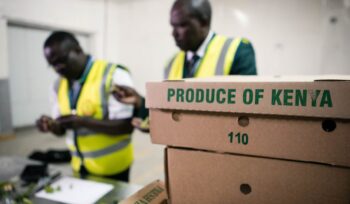
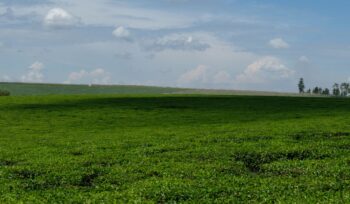
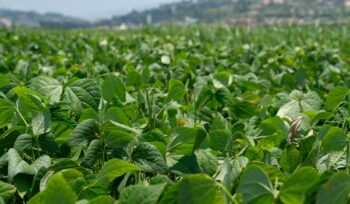
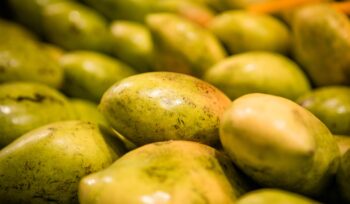
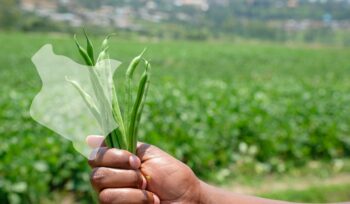
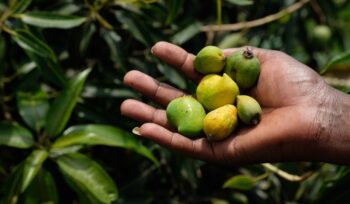
Vert LTD is a horticultural company based in Machakos, Kenya that specializes in growing and exporting fresh produce specifically for the European market. The company sells fine vegetables (French beans, snow peas, sugar snaps) to the EU market. In addition, they have started to process mangoes into pulp for national and regional markets since last year.
Jane gives us an update on the current market situation for its fine vegetables.
From a logistical perspective, there is a significant capacity shortfall… +
Logistics remains the main problem for Kenya’s vegetable exporting producers. Commercial passenger flights have not been allowed to land in Nairobi since last Wednesday. This was the most common means of transport used to send vegetables to Europe. Members of FPEAK (Fresh Produce Exporters Association of Kenya) are convinced that they can easily fill a plane (100 tons) several times a week.
All stakeholders in the Kenyan horticultural sector are mobilizing to try to maintain jobs and incomes and avoid… +
SOUTH AFRICA
As the country most affected in Africa by Covid-19, an unprecedented three-week containment was decreed. The government has banned the sale of alcohol and cigarettes and all travel. The authorities have planned an aid plan to make it easier for banks to borrow and lend.
BENIN
Containment officially began on March 30, 2020. It is not a general confinement, only twelve cities in the south of the country, including Cotonou, Ouidah, Allada and Porto-Novo, the capital, are concerned.… +
“Since the Coronavirus started, we have seen a drop in demand from our clients.
Especially, the exports to Morocco and Germany which have basically been put on hold due to the lock down.
Our local processors have also reduced their intake because there is one flight leaving Ghana. Even the juicers like Pinora have had to cancel programmes due to decreased demand on Europe as they are not able to trade right now.
So, we have lots of fruit on… +
An update provided by Union Fleurs – International Flower Trade Association
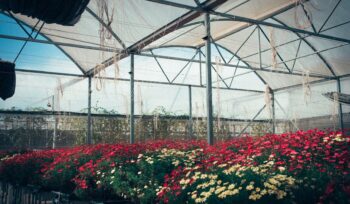
The global flower market situation has continued to wither during weeks 13 and 14 with the UK going into shutdown and an increasing number of countries worldwide implementing measures to combat the spread of COVID-19 and closing in particular all non-essential shops. Supermarkets are at the moment the only viable channel sustaining exports and sales of flowers in most countries around the world, and even there flowers are said… +
A change in the Maximum Residue Limits (MRLs) for imazalil and fipronil on several crops will enter into force in the coming weeks. The lower MRLs mean that they can no longer be used on these crops when the produce is being exported to the EU. Note that it does not affect their use on crops destined for the domestic or regional market in countries where they are registered for use by the national authorities; MRLs in ACP countries are… +
The International Plant Protection Convention (IPPC) Secretariat has published its key messages addressing the COVID-19 outbreak and lessons for the global phytosanitary community, briefly summarised here.
1. Prevention is always better than cure!
The COVID-19 global outbreak is showing the world how science-based preventive actions, including quarantine measures to contain invasive virus threats, are indispensable to protect the health of people, animals and plants alike. We should take particular note of this in the International Year of Plant Health 2020.… +
The coronavirus crisis is placing stress on Europe’s supply chains, with stockpiling leading to empty shelves, new border checks causing traffic jams for truckers, and fears of labour shortages (see Politico, 24 March). But according to Wouter Kolk, CEO for Europe of Ahold Delhaize, panic-buying is likely to subside within a week or two once people start trusting in the food supply again.
Fresh products like dairy, fruit and vegetables are the most sensitive to any disruption in the European… +
According to Netherlands-based Amar Import & Export, which specialises in African, Asian, Indian and Caribbean products, exotic vegetable prices are rising (see Fresh Plaza, 24 March). “The cargo flights from Suriname and the Dominican Republic have now been cancelled. That means exotic vegetables have also risen. Ginger prices had already increased dramatically,” said Amar’s Sandeep Singh.… +
The Commission has issued new practical advice on how to implement its Guidelines for border management, in order to keep freight moving across the EU during the current pandemic (see press release, 23 March). To ensure that EU-wide supply chains continue to operate, Member States have been requested to designate all the relevant internal border-crossing points on the trans-European transport network (TEN-T) as “green lane” border crossings (see map). The green lane border crossings should be open to all freight… +
The International Road Transport Union (IRU) welcomed the Commission’s guidelines on green lanes and the announcement that all freight qualifies to access those green lanes, but stated that “We know by experience that maximum 15 mins per truck will continue to result in huge delays and the situation will remain unchanged. There shouldn’t be any systematic checks at borders” (see Fresh Plaza, 24 March). IRU General Delegate Raluca Marian said that “harmonising EU transit rights for non-EU vehicles serving European… +
UK supermarkets are confident that they can cope with the effects of COVID-19 on the supply chain and that shopping patterns will eventually return to normal. But the coronavirus pandemic has awakened wider fears about the strength of the complicated supply chains that modern societies depend on (see BBC News: Business, 26 March). Half of the food consumed in the UK comes from overseas, with 30% coming from the European Union. The government is treating logistics workers as key workers,… +
Given the international nature and the very high degree of integration of the global flower supply chain, the high perishability of the products, and the very complex just-in-time logistics, the global flower industry has been hit hard by the escalating COVID-19 crisis since mid-March (see Statement from Union Fleurs, 24 March). An unprecedented and massive “domino effect” is now in effect at all levels, affecting all European countries and the main flower supplying countries in East Africa (Kenya, Ethiopia) and… +
In a statement on the COVID-19 pandemic, the Secretary General of the ACP Group of States, H.E. Georges Rebelo Pinto Chikoti, announced a collaboration with the European Union to mobilise an additional €25 million for the ongoing ACP Programme to Strengthen Health Systems for Universal Health Coverage in ACP States. The programme is funded by the 11th European Development Fund, with the World Health Organization as the main implementing agency.
The ACP Group of States is particularly concerned by the… +
Due to the coronavirus pandemic, officials in Africa are now resigned to delaying the launch of what is set to become the world’s largest free-trade bloc, the African Continental Free Trade Area (AfCFTA) (see Politico, 24 March). Trade talks aimed at launching the bloc on 1 July are now on hold. However, the intention is still for the AfCFTA to launch this year, with the hope that talks could resume by the end of May.
The pandemic is predicted to… +
The COMESA Business Council has published a Business Insider Special Edition, “Business Insights of the COVID-19 Virus”. At the international level, a snapshot of trade disruptions between the Common Market for Eastern and Southern Africa (COMESA) and its key trading partners due to COVID-19 describes a significant drop in international trade (imports and exports) due to logistical and control measures put in place by export destinations. Kenya’s cut flower exports are singled out as a key example, with the Kenya… +
SOUTH AFRICA
Exports of fruit (apples and pears) by sea to Europe have not so far been affected by COVID-19: the United Kingdom has increased imports of these products from South Africa to 177%. However, schools have been closed, companies have reorganised by developing teleworking, port warehouses are applying new rules, and South African ports have implemented measures to digitise shipping documents. Containment of the population was decreed on 26 March. BURKINA FASO
There are no more regular flights between… +
Restrictions by country Business Insider is continually updating its LIST OF COUNTRIES’ COVID-19 RESTRICTIONS – it reports that currently one-third of the global population is on coronavirus lockdown Global mapping
There are a number of global resources mapping the spread of COVID-19, including the World Health Organization’s SITUATION DASHBOARD
Johns Hopkins University’s CORONAVIRUS RESOURCE CENTER In ACP countries
Africa World Health Organization NEWS and regional dashboard: COVID-19 IN THE WHO AFRICAN REGION
The African Union’s Centres for Disease Control and… +
There is no evidence that food is a likely source or route of transmission of the virus. According to the European Food Safety Authority (EFSA), experience from previous outbreaks of related coronaviruses (e.g. SARS and MERS) has shown that transmission through food consumption did not occur, and there is no evidence to suggest that COVID-19 is different. The European Centre for Disease Prevention and Control (ECDC) explains that the virus is transmitted from person to person mainly through droplets that… +
The highest guarantees of food safety are a key element for governments’ emergency planning. The World Health Organization (WHO) has published precautionary recommendations on good hygiene practices in food handling and preparation, such as washing hands, and on how to avoid potential cross-contamination. More information can be found on the WHO website.
COLEACP’s advice to all operators in the fresh produce sector is to maintain and strengthen their customary strict food safety and hygiene procedures at all stages. Operators should… +
International logistics continues to be affected by port closures and congestion in China, which has led to localised shortages in the availability of refrigerated shipping containers. In addition, containers not being unloaded for days or even weeks has led to a 30–50% increase in the cost of reefer containers. This is the case for imports of summer and stone fruits from the southern hemisphere (about 20,000 tons of cherries from Chile, as well as other products from Peru and Argentina).… +
European governments and the private sector will do their utmost to continue to ensure the delivery of food, but at least initially, exotic fruits may not be among the products most in demand. Because restaurants are closed, consumers are looking to stock more food, so there is high demand, particularly for basic fruit and vegetables, especially as people look for healthy foods with a high vitamin C content to bolster their health. There is also expected to be higher demand… +
The EU guidelines set out the principles of an integrated approach to effective border management to protect health while preserving the integrity of the internal market.
Regarding transport of goods and services, the EU guidelines state that control measures should not undermine the continuity of economic activity and should preserve the operation of supply chains, particularly relating to essential goods such as food supplies. Professional travel to ensure transport of goods and services should be enabled, including the facilitation of… +