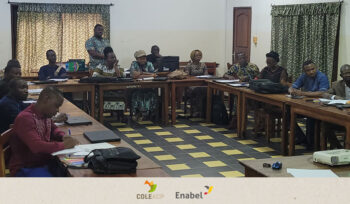
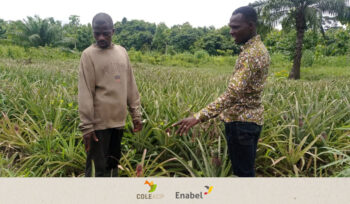
As part of the project to support the agro-ecological transition of the pineapple sector in Benin, COLEACP organised a training for trainers’ session from 27 June to 9 July 2022 in Cotonou.
Sixteen experts took part in the session, which is the second of a three-phase training cycle aiming to strengthen the skills of relay experts on technical and pedagogical subjects so that they can subsequently support DEFIA’s partner groups in their agro-ecological transition projects.
This second session aimed to… +
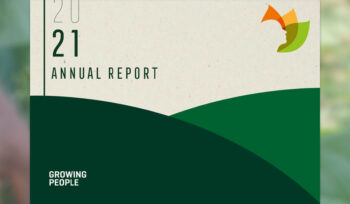
Our new look annual report is available here.
Get a quick overview of our 2021 programmes (Fit For Market, Fit For Market SPS, NExT Kenya, STDF projects) and our contributions to collaborative projects (with UNIDO and Enabel, among others) – and view snapshots of selected programme activities.
The report also gives a brief summary of the EU and ACP horticultural markets in 2021. “Despite the unpredictable international context, we remain confident in the future. All the more so as horticultural… +
The COLEACP Flash info issued on 20th June (and our website) gives an overview of recent AMENDMENTS TO THE EU PLANT HEALTH LEGISLATION. The latest regulation introduces new rules for False Codling Moth, which will apply from 14 of July 2022.
We have updated our Guidelines on the export of Capsicum from Africa to incorporate the latest changes, and this is now available from our e-library. You may also be interested in the recent updates of our guidelines on eggplant… +
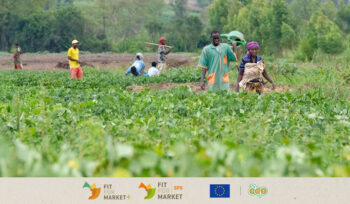
In Fouta-Djallon, central Guinea, potato is a major crop, widely exported to countries in the sub-region, with more than 45,000 tonnes produced per year and 38,000 affiliated producers – 64% of whom are women.
One of the major problems faced by potato crop is blight. Extremely prevalent during the rainy season, mildew limits the cultivated area of potato and forces producers to apply numerous phytosanitary treatments to ensure production. Surveys carried out as part of the development of the Guide… +
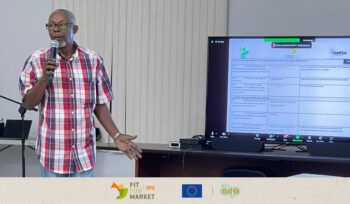
On 24 May the Ministry of Agriculture, Animal Husbandry & Fisheries of the Republic of Suriname, in collaboration with COLEACP (Fit For Market SPS programme) and the Caribbean Agricultural Health & Food Safety Agency (CAHFSA), held a one-day Eggplant R-SAT Validation Workshop in Paramaribo, bringing together 20 key representatives from the public and private horticulture sectors.
Prior to the Suriname workshop, a COLEACP expert team facilitated the dialogue and engagement between key stakeholders, both public and private, in their assessment… +
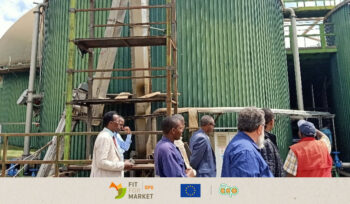
In the last week of May, Kenya hosted a study tour by the Somalian competent authorities – the Somali Bureau of Standards (SOBS) and the Somali Agricultural Regulatory and Inspection Services (SARIS), part of the Ministry of Agriculture & Irrigation (MoA). They visited the Kenya Bureau of Standards (KEBS) and the Kenya Plant Health Inspectorate Service (KEPHIS) among other key stakeholders in the country – the Fresh Produce Exporters Association of Kenya (FPEAK), Pest Control Products Board (PCPB), Bureau Veritas… +
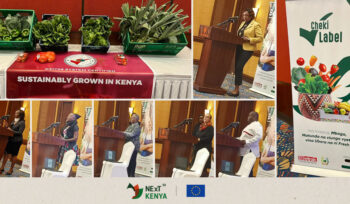
On 5 July, at a meeting with representatives of Kenya’s horticultural public and private sectors, Dr Kedera, NExT Kenya programme coordinator, presented the results of a study on the bottlenecks affecting the competitiveness of Kenyan horticultural exports.
These results are the fruit of more than a year’s work, which involved local consultants, multiple exchanges with stakeholders in Kenya and Europe and the competent authorities, as well as methodological and coordination work by COLEACP’s Markets Insights department.
What did the study… +
Guinea
Several meetings were organised with the Direction Nationale de la Protection des Végétaux et des Denrées Stockées (DNPV-DS) of the Ministry of Agriculture in Guinea. Planned capacity building activities (training in sampling and performing official controls) were discussed, as well as possibilities for the establishment of an internal training unit within Guinea’s National Plant Protection Organisation (NPPO).
The STDF project in Guinea began in 2019 with the aim to strengthen phytosanitary capacity in Guinea, contributing to the establishment of… +
As reported in earlier COLEACP Flash Info emails, following the UK’s departure from the European Union the maximum residue levels (MRLs) for Great Britain (GB) have followed a different review process since January 2021.
The UK competent authority has recently reviewed 48 active substances to determine some Codex MRLs that could be adopted as GB MRLs.
It is likely that in future EU and GB MRLs will increasingly diverge: EU MRLs can be seen via the EU Pesticides database
GB… +
Production
Africa
Short Ivorian mango season follows long Peruvian one
Henk van der Meij of Hars&Hagebauer reports on mango trade that “the Peruvian season’s tail end was unexpectedly long, due partly to shipping delays. So the first part of the African season (Côte d’Ivoire) coincided with the last part of the Peruvian season. That’s usually not ideal, but the promotions are keeping the mango sales momentum going. Eventually, the market will also have to start paying the price needed for… +
A new study on the Pacific region by COLEACP’s Market Insights service aims to gain an in-depth understanding of regional, national and international trade dynamics and market trends, and to identify value-added supply chains for ACP-Pacific fruit and vegetable industry players.
Although production is growing generally, and particularly for ginger, the region is increasingly dependent on imports, mainly due to the growth of the tourism sector and urban populations’ greater appreciation of imported processed foods.
The most imported products are… +
As the term of office of COLEACP’s Board Members expired in June 2022, elections were held at the COLEACP Ordinary General Meeting on 22 June.
Sixteen Board Members were elected: ACP
EUROPE
Chairman
Mr Stephen MINTAH,
SPEG
(Ghana)
Vice-President
Mrs Leena MALDE,
WEALMOOR
(UK)
Secretary General
Mr Jean-Marie SOP,
UNAPAC
(Cameroon)
Treasurer
Mr Vincent OMER-DECUGIS,
S.I.I.M
(France)
Mr Moctar FOFANA,
AOM
(Mali)
Mr Thomas HILDENBRAND,
SIPEF
(Belgium)
Mr Karim DOSTMOHAMED,
FRIGOKEN
(Kenya)
Mr Olivier HERRERA MARIN,
FRESAL
(France)
Mrs Virginie… +
On 3 June 2022 the European Commission published its report on the application of EU health and environmental standards to imported agricultural products. The debate on how EU rules can ensure that imported produce matches EU standards – described as “mirror clauses” – has been a hot topic during France’s presidency of the Council. Several Member States are pressing the Commission to ensure that as the EU strives for higher standards, third countries must be obliged to apply the same… +
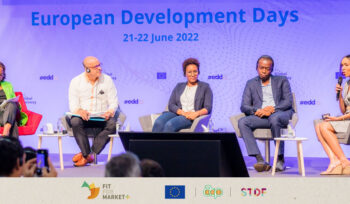
On 22 June, during the European Development Days in Brussels, three young entrepreneurs from Africa and the Caribbean had the opportunity to present their business model promoting sustainability, links with research, development and adoption of technologies, and the use of digital tools in a Lab Debate organised by COLEACP and its partners.
The European Union (EU)’s premier forum for international partnerships took place physically in Brussels and online on 21-22 June. It focused on the implementation of the EU’s Global… +
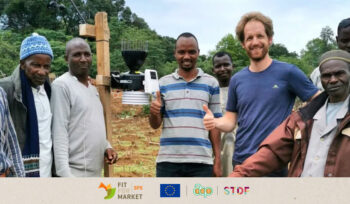
In the framework of the implementation of the project “Support to the agro-ecological transition of the pineapple sector in Benin» and following the training of the interviewers on the FAO TAPE tool, the data collection phase with a sample of 300 pineapple producers who are members of DEFIA’s partner groups took place between 2 and 30 June 2022.
As a reminder, this activity was organised with the aim of identifying current practices and development potential in terms of agro-ecological practices… +
In April 2022, COLEACP has improved two new training programs on “Crop Protection” to help workers in charge of crop protection decision making and the implementation of functional pest and disease monitoring programmes to make well-considered decisions and adopt good practices. Participants are invited to join the training session entitled “Crop Protection & Strategy” to be able to make the appropriate crop protection decisions considering thresholds, feasibility, registered products and production system. Afterwards, participants will have the opportunity to attend… +
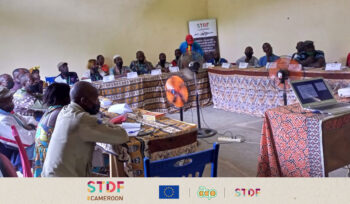
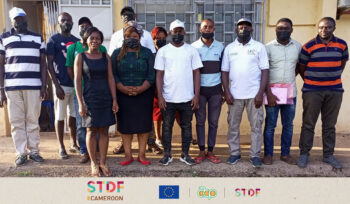
The fifth training session on good production practices for Penja pepper was held on 9 and 10 June 2022, with the objective to develop skills and technical capacities of 27 producers and managers of Penja pepper. The participants were mostly English-speaking, from the Bouba production basin in south-west Cameroon. The training was supported by STDF and implemented through the COLEACP project “Strengthening the phytosanitary monitoring and certification system for Cameroon’s fruit and vegetable sector” (STDF Cameroon).
The course has enabled… +
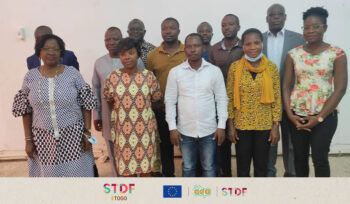
A meeting of the Steering Committee of the “Project to strengthen the phytosanitary control and certification system for the fruit and vegetable sector in Togo (STDF/PG/375)” was held from 29 to 30 June 2022 in Lomé, Togo.
The STDF project consists of strengthening the framework and capacities of the services involved in inspection and control, as well as private operators active in the production and export of fruit and vegetables. It should allow better access to markets for fruit and… +
Awareness-raising meetings were held in the basins of the Penja pepper geographical indication in Cameroon, from 3 to 6 May 2022. The meetings brought together 40 agro-traders under the theme: “Good storage practices and rational and safe use of phytosanitary products”. The events were supported by STDF and implemented through the COLEACP project “Strengthening the phytosanitary monitoring and certification system for Cameroon’s fruit and vegetable sector” (STDF Cameroon).
During the sessions, sellers of agricultural inputs were given information on the… +
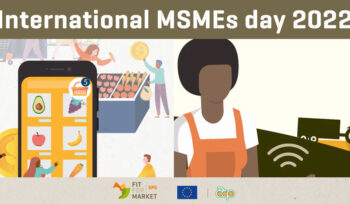
With respectively less than 10, 50 and 250 employees, Micro, Small and Medium-sized Enterprises (MSMEs) are the backbone of most economies. They account worldwide for over 70% of all businesses and for more than 50% of jobs,1 especially for women and youth. MSMEs work with millions of family farms and contribute to securing food safety and security, providing nutrition to local consumers and communities, as well as promoting innovation and creativity towards sustainable food systems.
MSMEs are highly sensitive to… +
A training course was organised in Thiès, Senegal, from 8 to 10 June 2022, for ANCAR extension service supervisors, as part of the Fit For Market SPS programme. The training, which brought together 25 participants, addressed the demands of the local, regional and export markets and their differences, the respective requirements of each of these markets (regulatory, commercial, etc.), the non-tariff barriers, the steps to reach the desired market, and the technical and financial implications for both the producer and… +
Join IFOAM to the second webinar on the new EU organic regulation: Key Changes for Organic Producer Groups.
When:27 June 2022 (15:00 – 17:00 CEST) on Zoom.
IFOAM – Organics International together with FIBL, IFOAM – Organics Europe, and leading experts in the field are developing guidance to explain the implications of the new EU Organic Regulation for producer groups worldwide.
This second webinar hosted by IFOAM – Organics International summarizes again the fundamental changes for a certified group’s composition,… +
False Codling Moth (FCM, Thaumatotibia leucotreta) is listed as a priority pest under EU plant health regulations ((EU) 2019/1702). Unfortunately, as this pest has been intercepted on several host plants in recent months at EU border controls, stricter rules are now being introduced in a new regulation (EU) 2022/959 of 16 June 2022. It is expected that this will be applied in July 2022.1</.
A draft of the new regulation was submitted to the WTO in April. Some amendments were… +
From February to May 2022, 10 experts from Fiji and Papua New Guinea took part in training-of-trainers on communication methods, supported through the EU-funded Fit For Market SPS programme. The training in Fiji was face-to-face; in Papua New Guinea it had to be conducted remotely due to government restrictions.
In May, the experts in both countries followed the second phase of this training – to master digital tools, and to be able to facilitate remote training sessions.
Conducting remote training… +