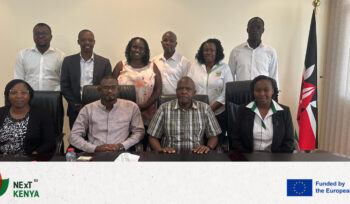
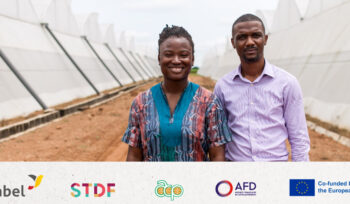
Since the operational launch of the NExT Kenya programme, COLEAD has received 188 applications for support. Of these, 131 were transformed into development projects, 40% of which were tailor-made support projects. In Year 4 of NExT Kenya (1 January to 19 September 2023), 36 applications were received and analysed.
The vast majority of the programme’s partner-beneficiaries are horticultural micro, small and medium enterprises (MSMEs; 52% of the memorandums of understanding signed), followed by consultancy firms and certification bodies (31%). Other… +
On 13 July 2023, COLEAD led a presentation session on pineapple waste recovery solutions in Allada, Benin, for DEFIA’s partner clusters. The event brought together 14 participants from 12 organisations.
The session focused on a mapping of local solutions for recovering production waste and co-products from the fruit and vegetable sectors. The mapping also included an assessment of the volumes and types of co-products/waste generated by each cluster. As a result of this work, the mapping team was able to… +
The avocado sector is developing rapidly in East Africa. There are many opportunities to be seized, but to keep avocado yields high and constant while respecting the environment, sustainable soil management is becoming increasingly crucial. However, there is no single sustainable approach, as soil composition and growing conditions vary considerably from one site to another. To preserve soil fertility, it is essential to adopt practices and recommendations that are adapted to the specific characteristics of the soil, while taking account… +
Facilitating access to markets for micro, small and medium enterprises (MSMEs) in the agri-food sector in low- and middle-income countries is at the heart of COLEAD’s mission: to “implement all actions to increase the contribution of agricultural sectors, and horticultural sectors in particular, to achieving the Sustainable Development Goals”.
To this end, COLEAD supports the beneficiary partners of its programmes to (i) comply with public and private regulatory requirements for market access; and (ii) access more market information and business… +
The OECD and COLEAD are committed to working together to collect and share information about the fruit and vegetable sector. Session n°5 of their online series will focus on Innovations and technologies to reduce food waste and losses and was held on Wednesday 11 October 2023 – 08:00-09:30 UTC/10:00-11:30 CET (English/French interpretation available).
The OECD has recently published a report on Developing food labels for improved health outcomes – Insights into simplified nutrition labelling policies to improve the integration and… +
In September, with the support of the Embassy of Botswana in Brussels, COLEAD hosted a webinar to introduce the AGRINFO and Fit For Market Plus (FFM+) programmes to invited guests representing the country’s public and private sectors.
FFM+ works to strengthen the sustainability of the ACP horticultural sector, and there has been much interest in the recent launch of the programme in Botswana. Several applications for support have already been received from the fruit and vegetable sector.
The AGRINFO team… +
COLEAD recently held a media training session and coaching for CEO’s and communication leads of three business membership organisations such as Kenya Flower Council (KFC); Fresh Produce Exporters Association of Kenya (FPEAK) and Fresh Produce Consortium of Kenya (FPCK). This training comes against a background of increased demand for effective communication for stakeholder engagement, nationally, regionally, and globally. Indeed, in the past few years, communication has become a major issue for all the horticulture stakeholders at the national and international… +
The Fit for Market Plus programme recently organised a five-day collective training session on “Mastering the main cultivation techniques for banana production (soil preparation-fertilisation-plant protection)” in Kindia, from 11 to 15 September 2023 at the headquarters of the Lower Guinea Fruit Growers’ Federation (FEPAF-BG).
The aim was to build the skills and capacities of the federation’s members and technical staff, namely growers, agricultural technicians and advisors, production managers from member cooperatives, managers from certain cooperatives and a representative from the… +
The 2023 International Day of Awareness of Food Loss and Waste (#IDAFLW) is a call for all to reduce food loss and waste (FLW). While 74 kg of food is being wasted on average per person each year worldwide (UNEP, 2021), food production is increasingly being impeded and food security endangered in times of economic, environmental and geopolitical crises. It is estimated that 13 percent of the world’s food production for human consumption is lost (discarded, incinerated or otherwise disposed)… +
Created in 1998, the Confédération Paysanne du Congo (COPACO-PRP) is a professional organisation comprising 452 local entities: farmers’ associations, production cooperatives, farmers’ groups, cooperative unions, farmers’ federations and farmers’ production and service organisations. COPACO-PRP is a member of the Plateforme Régionale des Organisations Paysannes d’Afrique Centrale (PROPAC) and therefore of PAFO. It has a national office in Kinshasa, 18 provincial coordinators, 130 local grassroots units and 17 extension workers. COPACO represents some 1,600,000 producers (57% men and 43% women) who… +
The Fit for Market Plus programme recently organised a four-day collective training session on “Principles of Food Safety Quality Management System and Traceability” in the Southern Highlands of Tanzania, specifically in Njombe, from the 22 to 25 August 2023.
This training aimed to enhance the skill and capacities of the technical and compliance staff of horticultural companies, including farm managers, agronomists, production managers, harvesting managers, processing and packaging managers and quality and traceability managers in Food Safety Quality Management System… +
The next Innovations Session n°14 will focus on Climate-resilient practices and innovations by agrifood SMEs and will be held online on Wednesday 30 August 2023, 12:00-14:00 UTC. Find out more in the programme and join the discussion (available in English, French and Portuguese) led by the Pan-African Farmers’ Organization (PAFO) and the COLEAD by registering here.
During this Innovations Session n°14, agrifood farmers and entrepreneurs will present climate-resilient practices and innovations that they have developed to support the sustainability of… +
To address the increasing request for dried ginger and improve current practices, SAHANALA has received support from COLEAD as part of its Fit for Market SPS programme. The aim was to establish a sanitary quality management system to obtain Food Safety System Certification (FSSC) 22000 certification for ginger processing. The FSSC 22000 standard provides a certification model that ensures food safety standards and processes throughout the food supply chain.
The first step of the mission, overseen by an expert from… +
The 2023 International Youth Day highlighted the importance to young people of “green skills”, which include “the knowledge, skills, values and attitudes needed to live, develop and sustain a sustainable and resource-efficient society”. Young agricultural leaders and entrepreneurs are key players in achieving many of the Sustainable Development Goals (SDGs), as they contribute to food security and safety, create jobs and improve livelihoods through responsible engagement in their farms and businesses. They are also leading the transition to a digital… +
Changes to EU and GB pesticide maximum residue levels
Following the departure of the United Kingdom from the European Union (EU), COLEAD’s monitoring of pesticide regulations now covers maximum residue limit (MRL) changes in both the EU and Great Britain (GB), enabling us to keep COLEAD members and partner-beneficiaries up-to-date.Note that EU MRLs still apply in Northern Ireland (GB covers only England, Scotland and Wales).During the period April-June 2023, we have been highlighting significant changes to EU MRLs that affect… +
EU and GB approval changes
Following the United Kingdom (UK) departure from the European Union (EU), COLEAD’s Regulation Monitoring now covers both EU and Great Britain (GB) approval changes, enabling us to keep COLEAD members and partner-beneficiaries up-to-date on both regulatory frameworks.
Note that EU approvals still apply in Northern Ireland. Great Britain is the mainland comprising England, Scotland and Wales.
The European Commission (EC) has recently published changes to 52 plant protection product (PPP) approvals within the EU, some… +
A review of key Codex MRL changes in 2022-2023
Every year, the use of many plant protection products is affected by changes to permitted Maximum Residue Limits (MRLs). In July 2022, MRLs were changed for 476 combinations of active substances/commodities and recently published in the report of the 53rd session of the CODEX committee on pesticide residues.
These changes often have a direct impact on producers who may need to change production methods (Good Agricultural Practices – GAP) in order… +
World Youth Skills Day focuses on the strategic importance of equipping youth with skills for employment, decent work, and entrepreneurship. Youth play a central role in the agricultural value chain, however youth-specific support systems must be in place to enable their success. This calls on an entrepreneurial ecosystem that attracts young entrepreneurs and understands their needs. To continue this discussion, the IICA-COLEAD Caribbean Agrifood Business series held its ninth session focusing on Successes from innovative youth-led businesses/SMEs in the agrifood… +
2022 has been a year of transformation for our association: new name, new statutory purpose, and the launch of new programmes which expanded the sectoral and geographical scope of the association’s activities. The process of changing our organisation’s name was initiated two years ago in a context of continuous evolution of COLEAD’s scope of action and that of its partners. The choice of COLEAD – Committee Linking Entrepreneurship-Agriculture-Development is the result of a participatory and iterative approach carried out with… +
From 12th to 14th June, the European Commission (EC) organized a seminar on the theme “Trade, Private Sector, Development & Engagement.” The event took place online and in Brussels and was intended by representatives from European Union delegations. On this occasion, DG INTPA form the EC invited COLEAD to produce a short video that was broadcasted on the third and final day of the seminar. The objective of the video was to illustrate the session “How to make the Green… +
This lively webinar, titled “AGRINFO: A Valuable Tool for the Philippines Agri-food and Fish Export Sectors”, was organised by COLEAD in collaboration with the Philippine Embassy in Brussels, on Tuesday 30 May. AGRINFO is funded by the European Union and implemented by COLEAD.
The AGRINFO programme regularly summarises and disseminates crucial knowledge about rapidly evolving EU regulatory measures that impact agri-food and fish exports from low- and middle-income countries.
We are grateful to the Philippine Embassy in Brussels for their… +
DOBI AGRICO LIMITED, based in Abuja, is a Nigerian agro business that specializes in growing and processing vegetables, herbs, and spices. Their range of crops includes capsicum (bell pepper/bird eye chilies), tomatoes, cucumber, baby corn, butternut squash, common bean, spring onions, and more. The company is dedicated to exporting its products while maintaining high standards of agricultural practices for both domestic and international markets. To support their endeavors, Dobi Agrico joined the Fit for Market SPS (FFM SPS) programme in… +