

- 22/12/2025
- Posted by: Sandra Borma
- Category: News
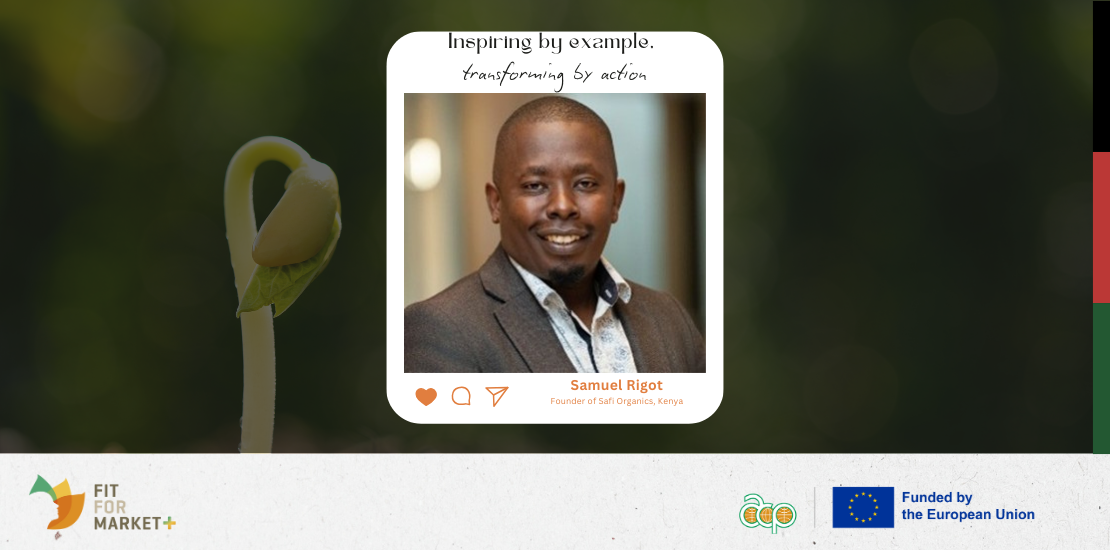
Samuel Rigu grew up in rural Kenya, where he witnessed farmers struggle with poor soils, low yields, and limited access to affordable fertilizers. Seeing his grandmother and neighbors face these challenges inspired his vision for an agricultural system that restores soil health while improving farmer livelihoods.
In 2015, Samuel founded Safi Organics, a technology-driven company that converts crop waste into high-quality organic fertilizers. As CEO, he leads efforts to scale solutions that address soil degradation, an urgent challenge in Africa, where 65% of soils are degraded and crop yields have fallen sharply. Safi’s soil-specific fertilizers increase yields by about 30% and boost farmer incomes by up to 50%, with farmers reporting doubled avocado incomes and reduced coffee production costs.
Samuel brings over a decade of entrepreneurial and agribusiness experience. He previously co-founded a company that sold over one million mosquito coils in Kenya, served as Country Director for Takachar, and transformed the Turning Point Trust Farm from loss to profit within six months.
Looking ahead, Safi Organics aims to reach 200,000 farmers and expand village-based production across Africa, while exploring carbon credits. Samuel’s work demonstrates how innovation can turn agricultural waste into value, strengthening both livelihoods and sustainability.
Samuel Rigu presented his company during Innovation Session N°24, organised by PAFO and COLEAD, supported through FFM+, which aimed to showcase the innovations and successes of African agricultural companies and small and medium-sized enterprises.
Join the Circular Economy conversation on the Agrinnovators Forum.
This activity is supported by the Fit For Market Plus (FFM+) programme, implemented by COLEAD within the Framework of Development Cooperation between the Organisation of African, Caribbean and Pacific States (OACPS) and the European Union. This publication receives financial support from the European Union and the OACPS. The content of this publication is the sole responsibility of COLEAD and can in no way be taken to reflect the views of the European Union or the OACPS.