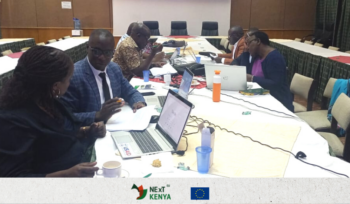
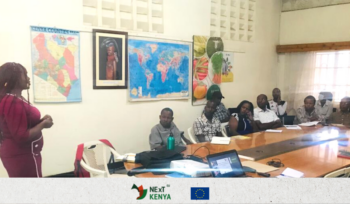
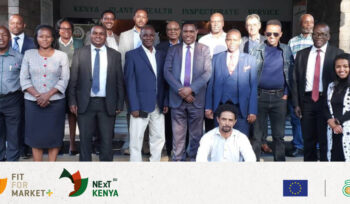
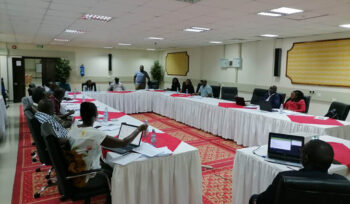
The Fit For Market SPS programme has organized a training of trainers for Hargy Oil Palms Ltd (HOPL). The objective of the training was to build on the technical and pedagogical skills of HOPL’s trainers to improve the training provided to the growers. Within the framework of its social responsibility policy, HOPL works on improving the livelihoods of smallholders by helping them increase their income and improve nutrition by growing fruit and vegetables.
A group of ten extensionists was first… +
Over the past decades, agriculture has continuously expanded and enhanced its productivity to ensure food security and food safety to the growing global population in an unsustainable way. This has led to the loss of natural ecosystems, declining biodiversity and increasing greenhouse gas emissions1. The global agrifood system, which includes food production, processing, packaging and transport, is responsible for one of the largest shares of greenhouse gas emissions2 and thus is an important contributor to climate change. However, promoting more… +
On Friday, 21 October 2022, COLEACP took part in the 6th African Diaspora Agrofood Forum (ADAF), organised by The Food Bridge vsw and hosted by the Brussels city hall. This annual forum brings African Diaspora entrepreneurs, policymakers and expert in the African agrifood sector together to highlight the latest trends and potentials for growth in the agrifood sector. COLEACP contributed to the organisation of the event through the FFM SPS and FFM+ programmes funded by the European Union within the… +
To date, 390 applications for Fit For Market Plus (FFM+) support have been filed by various organisations from African, Caribbean and Pacific countries.
In order to further promote this new programme and meet potential partner-beneficiaries, a series of launch events and activities have already been organised in Cameroon, Cote d’Ivoire, Ghana, Nigeria, Rwanda, Sierra Leone, Togo and Uganda. More launch events will also be organised in the coming weeks and months.
In Uganda, the launch of the FFM+ programme took… +
In 2020, COLEACP and CABI signed a Memorandum of Understanding to work together on key areas of interest concerning SPS measures around the world.
The collaboration, which ultimately aims to benefit food security among countries within the African Caribbean and Pacific (ACP) states, includes work on regulations and standards; technical assistance in the implementation of SPS measures; capacity assessment, training and e-learning; research and innovation on ways to manage SPS risks; and information sharing and communication materials for different stakeholders.… +
Penja pepper has been grown in the volcanic soil of the Penja valley in the Njombé-Penja region, Cameroon, for about 50 years. It is considered one of the best peppers in the world, thanks to the unique taste created by the local volcanic soil. Cultivation of the crop is a major source of rural employment; almost all Penja pepper is produced by smallholders with less than 3 hectares of land. However, production of the pepper has faced sanitary and phytosanitary… +
Plant health is a key factor in any strategy to achieve food security, protect the environment and biodiversity, and facilitate safe trade. The First International Plant Health Conference, held from 21–23 September 2022 in London, aimed to address new and emerging plant health challenges, including climate change impacts, the risks associated with significant increase in international trade, the rapid loss of biological diversity and new pest pathways, such as e-commerce, by exploring more efficient national, regional and global policies, structures… +
This series of events focuses on innovations and successes of Caribbean farmer-led businesses and SMEs. The events are organised by the Inter-American Institute for Cooperation on Agriculture (IICA) and COLEACP. Sustainable agriculture, good practices, bioeconomy, trade, food safety and quality, resilience, and the link between agriculture and tourism are some of the key focus areas for collaborative efforts.
The sixth session, held on 25 August 2022, focused on the “High-end market opportunities for Caribbean agrifood products”. To compete globally, it… +
Agri-food
Africa
Changes to EU and GB pesticide maximum residue levels
Following the departure of the UK from the EU, Fresh Produce Exporters Association of Kenya’s (FPEAK) monitoring of pesticide regulations now covers maximum residue level (MRL) changes in both the EU and Great Britain (GB), enabling FPEAK to keep members and partner-beneficiaries up to date. During the period April-June 2022, notifications of MRL changes were issued for flutianil (EU), sulfoxaflor (GB), cyantraniliprole (GB) and cinmethylin (GB). The EU and… +
In September 2022, COLEACP responded to the public consultation on the Regulation of the European Parliament and of The Council on the sustainable use of plant protection products and amending Regulation (EU) 2021/2115.
In line with COLEACP programmes’ overall goal – to reduce poverty, improve food security and food safety, and ensure sustainable and inclusive growth by strengthening the agri-food export sector – the response focused on the adoption of the Regulation in the context of its potential impact on… +
On Wednesday 26 October 2022, COLEACP and the PanAfrican Farmers Organization (PAFO) co-organised a hybrid session on Business opportunities for African young entrepreneurs in African and European markets as part of the 2022 International Young Farmers Summit organised by the PAFO. The main objective of the Summit is to promote, strengthen and spread the voice of young farmers in the international arena.
The joint session featured three African young entrepreneurs (see biodata) who are part of COLEACP’s wide network of… +
British Retail Consortium Global Standards (BRCGS) Food Safety Issue 9 was launched on 1 August 2022. To help COLEACP partner-beneficiary companies comply with the new issue, the NExT Kenya programme held a 1-day training on ‘Key changes on BRCGS Food Safety Issue 9’ at the Boma Hotel in Nairobi, Kenya, in October 2022. The training aimed to update middle managers’ technical skills on the new issue of the BRCGS Food Safety standard in order to allow them to make the… +
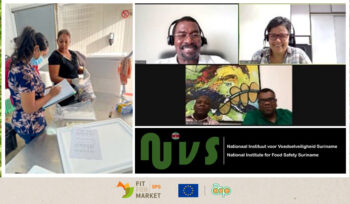
Surivit, a Surinamese company specialising in fruit and cassava processing, produces cassava flour, baby porridge, cassava pancake mixes and cassava flakes both for local use in Suriname and for export markets. SURIVIT works with a total of 38 local outgrowers located all over the country, including the women’s cooperative Wi! Uma fu Sranan (WUFS – “We the women of Suriname”), an organisation that aims to improve the living standards of female producers.
Since 2021, Surivit has worked to develop a… +
Climate
Caribbean
IICA-IFAD report highlights significant contributions of family farmers in Latin America and the Caribbean and pending challenges regarding action against climate change
Family farming is highly vulnerable to climate change-related extreme weather events, a vulnerability that is exacerbated by a lack of funding, the deterioration of soil health and high production costs. However, in Latin America and the Caribbean, this sector is making important contributions to resilience, adaptation and mitigation, which often go unnoticed. These are the conclusions… +
The Forum for Agricultural Research in Africa (FARA) and DeSIRA-LIFT jointly organised two events at the 2nd Biennial Conference on Africa Climate-Smart Agriculture, which took place on 14–16 September 2022 in Accra, Ghana, and online. The Conference provided opportunities to discuss Climate-Smart Agriculture (CSA) accountability, resource use and impact in Africa amongst a wide audience.
The first event, Thematic Paper Presentation on compatibility assessment of agroecology and CSA practice, focused on agroecological transformation in support of climate change and the… +
The launch of FFM+ in Nigeria, on 23 September 2002, provided an opportunity for COLEACP’s partners in the country and Nigerian horticultural system stakeholders to learn more about the new programme.
FFM+ aims to bring together private and public stakeholders and disseminate robust and up-to-date information, research and training content to the industry. In Nigeria, actions under FFM+ will be targeted towards providing support to implement quality management systems for food safety and high-quality produce; training on crop protection strategies;… +
COLEACP and The FoodBridge vzw, a non-profit organisation, have produced a Compendium showcasing the innovative businesses of nine African Diaspora agrofood entrepreneurs. These entrepreneurs have seized the opportunities to apply their education and professional skills gained in Europe to support sustainable development in their country of origin, alongside achieving entrepreneurial success in their country of residence. Through their businesses, they contribute to the development of the African continent and address the social, economic and environmental challenges in their place of… +
The World Food Day 2022 highlights the increasing interlinkages of economies, cultures, and populations with its theme “leave no one behind”. Global health, planet and political challenges call for global solutions that include guaranteeing the access and availability of nutritious food, as well as reducing food losses and waste. These solutions should specifically be designed and adapted to rural populations as they are the most vulnerable to food and climate crises, with 80 % of the extreme poor living in… +
The International Day of Rural Women, celebrated the day before the International World Food Day (on 16 October), acknowledges women’s significant contributions to agriculture food and food safety, as well as the rural economy in all regions of the world. Women represent, on average, 43 percent of the agricultural labour force in developing countries from 20 percent in Latin America to 50 percent in Eastern Asia and sub-Saharan Africa.1 They are a significant entrepreneurial force as owners of farms, input… +
The NExT Kenya programme organised a crop protection strategy training on 4–7 October 2022. The target audience for this 4-day training programme was technical managers, quality managers, extension staff, agronomists (production managers) and crop protection managers from horticultural production companies. Aimed at developing the participant’s knowledge of the principles of crop protection strategies, the training was attended by 12 participants from various Kenyan horticulture #MSMEs. A practical field study on #scouting, #identification and #management of pests at Real IPM in… +
The NExT Kenya programme is helding a Packhouse optimisation training for managers responsible for packhouse management, and other company personnel involved in the packing of fresh fruit and vegetable. Fourteen participants from ten different horticulture companies are participating in 4 days of classroom training which also features a practical visit to a packhouse. The training will be followed by on-site coaching for each company to improve their packhouse processes. Experts will provide advice on how to implement points for any… +
Changes to EU and GB pesticide maximum residue levels
Following the departure of the United Kingdom from the European Union (EU), COLEACP’s monitoring of pesticide regulations now covers MRL changes in both the EU and Great Britan (GB), enabling us to keep COLEACP members and partner-beneficiaries up-to-date.
Note that EU MRLs still apply in Northern Ireland (GB covers only England, Scotland and Wales).
During the period July-September 2022, we have been highlighting significant changes to EU MRLs that affect 50… +
EU and GB approval changes
Following the UK departure from the EU, COLEACP’s Regulation Monitoring now covers both EU and GB approval changes, enabling us to keep COLEACP members and partner-beneficiaries up-to-date on both regulatory frameworks.
The European Commission (EC) has recently published changes to plant protection product (PPP) approvals within the European Union (EU). These include:
– Non-approval as a basic substance of black soap E470a and calcium propionate
Great Britain (GB) recently pubished a note concerning their decision… +
The 2022 International Day of Awareness of Food Loss and Waste (#IDAFLW) is a call for all to pursue the efforts in meeting the target 12.3 of the Sustainable Development Goals (SDGs) for halving per-capita global food waste at the retail and consumer levels and reducing food losses along production and supply chains by 2030.
17% of the total food produced is wasted at the retail, food service and consumption levels.1 In addition, 14% the world’s food production for human… +