

- 22/12/2025
- Posted by: Sandra Borma
- Category: News
Following the major crisis triggered in 2023 by a ginger wilt outbreak that caused production losses of up to 80% in some key producing areas of Nigeria, particularly in Kaduna State, COLEAD, through the FFM+ programme, continued and strengthened its support to the sector in 2025. This new phase builds on the initial actions implemented in 2024 and aims to restore farmers’ confidence, improve the sustainability of production systems, and enhance the competitiveness of the sector.
In partnership with CBI’s Ginger Nigeria programme, COLEAD coordinated a new series of multi-site agronomic trials involving six Nigerian companies operating in the sector. These trials made it possible to test and refine a coherent set of good agricultural practices, including reduced planting densities, the establishment of raised beds, improved management of soil organic matter, and the combination of conventional and biological approaches to disease control. The expected results, from harvests scheduled between November and January, will provide an essential technical and economic basis for the sustainable intensification of ginger production.
In parallel, COLEAD played a central role in identifying the pathogen responsible for the disease, in close coordination with IITA, NAQS and NRCRI. Analyses point to the involvement of Fusarium spp., notably Fusarium oxysporum and Fusarium verticillioides, thereby strengthening the scientific evidence needed to define appropriate control strategies.
To respond to the sanitary emergency, COLEAD also carried out a comprehensive mapping of conventional and biological crop protection options, paving the way for future trials, validation of good agricultural practices, and strengthened dialogue with competent authorities and manufacturers.
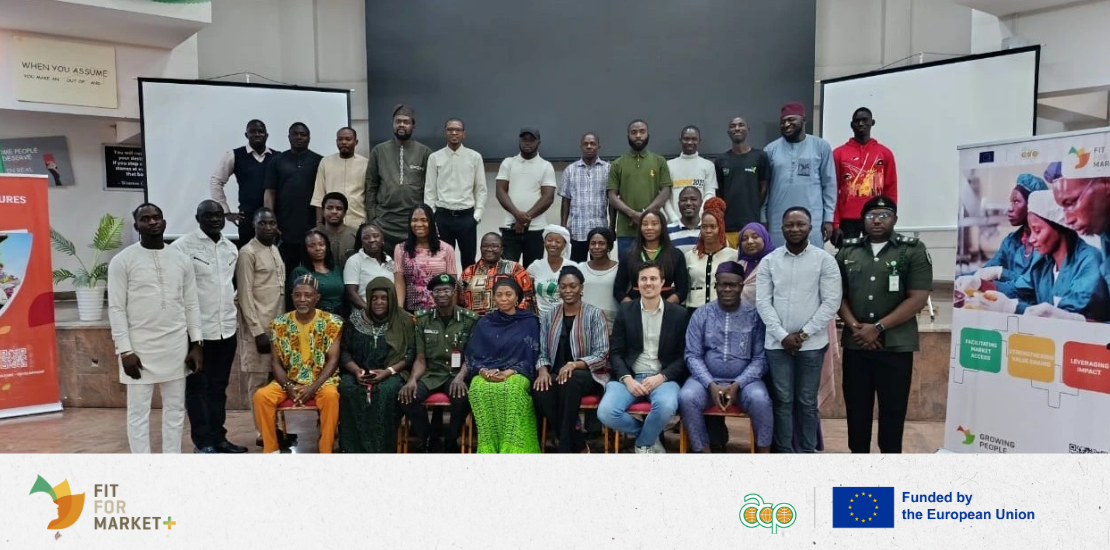
These advances were shared during a training session held in November 2025 in Abuja, organised in collaboration with CBI and the Nigerian Export Promotion Council, bringing together producers, exporters, research institutions, regulatory authorities and international market actors.
This training built on the 2024 session and presented findings from the 2025 field trials to 16 MSMEs engaged in ginger production, aggregation, and export.
Key institutional contributions included:
- NRCRI – research insights and pathogen-related findings
- NAQS – additional pathogen-related findings and phytosanitary considerations
- NAFDAC – pathways for plant protection product registration in Nigeria
- GIZ (VACE TARED programme) – opportunities for potential future support to Nigerian ginger
- Verstegen Spices & Sauces – market insights and supply chain perspectives
This dynamic was further reinforced through an international buyer mission, organized by CBI, fostering technical and commercial exchanges.
Through these coordinated interventions – applied research, capacity building, diagnostics, technical documentation and market engagement – COLEAD is contributing to the development of a more resilient, sustainable Nigerian ginger value chain, better equipped to face future sanitary and commercial challenges.
This activity is supported by the Fit For Market Plus (FFM+) programme, implemented by COLEAD within the Framework of Development Cooperation between the Organisation of African, Caribbean and Pacific States (OACPS) and the European Union. This publication receives financial support from the European Union and the OACPS. The content of this publication is the sole responsibility of COLEAD and can in no way be taken to reflect the views of the European Union or the OACPS.