ALL NEWS

(Source : Pip Magazine n°11, April 2007) “In addition, the Toolbox contains databases covering relevant supporting information. The Toolbox was designed as a CD-ROM, with the aim of providing a solution to the problems that face export companies in accessing important information, while at the same time minimising internet connection problems experienced in most ACP countries. The Toolbox comes in the form of two CD-ROMS. Once they are installed on a computer, they provide access to several sources of information,… +
The Gender Balance on Corporate Boards Directive will officially come into force at the end of 2024, marking a landmark step towards achieving gender parity in EU-listed companies. The Directive sets ambitious targets to be met by 30 June 2026: 40% of non-executive director positions and 33% of all board positions must be filled by individuals of the under-represented gender in large or listed companies in the EU. EU Member States had until 28 December 2024 to transpose these requirements… +
A unique initiative is being launched in the run-up to 2026, which the United Nations has declared the International Year of Women Farmers, with the launch by COLEAD and partners of a global poetry and song competition. The event aims to celebrate the essential role of women farmers in food security, rural development and resilience to climate change. A showcase for creativity and recognition The competition will be held in a spirit of cultural exchange and international recognition. It invites… +
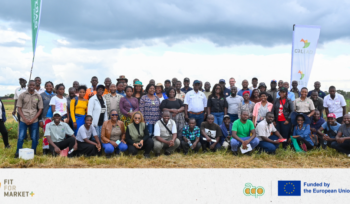
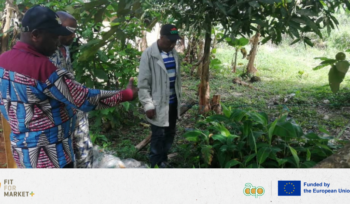
On January 10, 2025, the Golden Valley Agricultural Research Trust (GART) hosted a highly successful trial demonstration day at its research farm in Chisamba, Zambia. The event presented the content and progress of the ongoing COLEAD research trials implemented by GART, which focus on exploring the potential benefits of integrating undervalorized crops (here Cleome and Amaranthus), into the well-established tomato and cabbage production systems. Under the Fit For Market Plus Programme, field trials are set-up in commercial production environments to… +
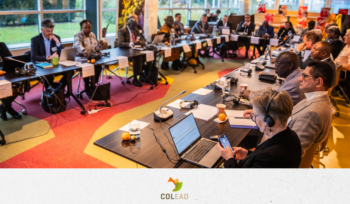
The COLEAD 2024 Consultative Committee, held on the 4th of December in Brussels and online, in a shorter format than in 2023 but extended to include more partners, marked an important strategic step by launching a participatory process to develop the COLEAD 2030 strategy. Bringing together key stakeholders (board members, technical and financial partners and COLEAD management) in an international context marked by geopolitical and climate challenges, this committee confirmed the priorities for strengthening COLEAD’s impact on the Sustainable Development… +
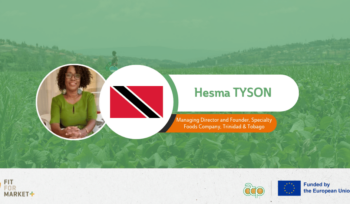
Hesma Tyson, Managing Director and Founder, Specialty Foods Company, Trinidad & Tobago Hesma Tyson founded Caribbean Specialty Foods Company Limited in 2008 to change the way hot sauces are made, without artificial ingredients, and to see her favourite condiment on the international stage. Hesma has worked in the food industry for over 15 years. She was inspired by the experience of mixing sauces in her home kitchen. The company was formed after three years of research and development, during which… +
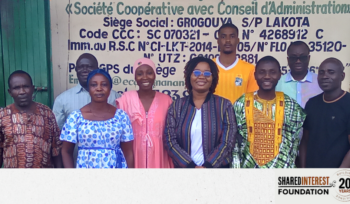
The partnership between COLEAD and the Shared Interest Foundation (SIF) continues to make progress in its mission to strengthen cooperatives in Côte d’Ivoire, Rwanda and Uganda. Launched in February 2024, the project entitled “Design and Management of a Training & Technical Assistance Programme” has successfully implemented three of its four core components.   Key achievements Baseline diagnostics: a thorough assessment of the governance and financial frameworks of the eight participating cooperatives has been completed. The diagnostic reports have provided a… +
In November 20-24, AGRINFO organised three webinars to present a new guide developed by the programme on the regulations governing the export of honey to the European Union. This outlines a number of recent regulatory changes affecting countries wishing to export honey to the EU. The webinars were organized on a regional basis and included: 25 November: Session in French for African countries 26 November: English session for ACP countries 27 November: Session in English for Asian, Pacific and Central… +
The STDF/PG/946 project “Strengthening phytosanitary capacities to promote exports of horticultural products from Senegal” was officially launched on 6 June. Led by COLEAD in partnership with the Directorate of Plant Protection (DPV) of the Senegalese Ministry of Agriculture, Food Sovereignty and Livestock and funded by the STDF, this three-year project aims to improve and strengthen Senegal’s phytosanitary system to bring its practices in line with international standards. In addition to its technical and economic objectives, the project incorporates an ambitious… +
Funded by the Inter-American Development Bank (IDB), the initiative aims to transform the food safety management and control system and improve the competitiveness of the Dominican Republic’s agricultural sector. Progress and achievements By the end of the first quarter 2025, all 46 planned activities will have started ,  ensuring a structured and rapid implementation of the project’s objectives. The project team consists of 17 experts from six countries (Chile, Spain, Belgium, Argentina, Honduras and the Dominican Republic) who bring a… +
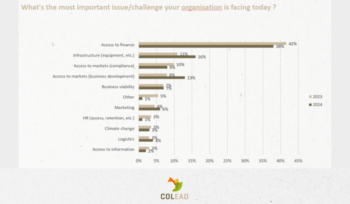
Respondents scored 8.21 out of 10 on their likelihood to recommend COLEAD to fellow professionals. At COLEAD, we value the insights and feedback of our partner-beneficiaries (PBs) i.e. partners who have benefited from a programme implemented by the organization, to refine our practices and enhance the impact of our support. Our annual Pulse Survey, conducted each summer, continues to serve as a cornerstone for assessing our performance and aligning our efforts with the evolving needs of our stakeholders. Here are… +
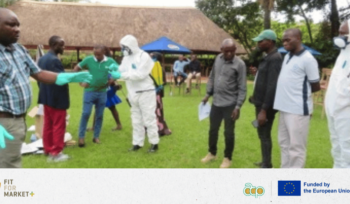
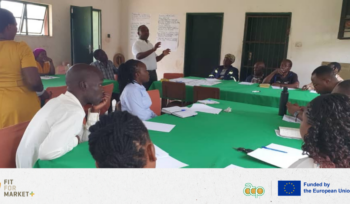
Through the Fit For Market Plus (FFM+) programme, COLEAD works with small and medium enterprises (SMEs) in the horticultural sector. This has recently been the case in Uganda and Rwanda as part of initiatives to improve agricultural practices. In response to requests from these SMEs, COLEAD has recently developed targeted training courses to strengthen crop protection practices and promote the safe use of crop protection products.   Building local capacity through training of trainers Recognising the importance of sustainable knowledge… +
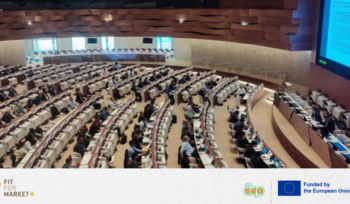
COLEAD continues its active participation in the standards-related work on Quality Standards for Fresh Fruit and Vegetables. In November 20-24, delegates representing the member states of WP7 reviewed and adopted a number of proposed standards that had been developed or revised by the four specialised sections during the year, covering Fresh fruit and vegetables Dried fruit and nuts Seed potatoes Meat Round table on a sustainable and efficient food system A highlight of this session was the Round Table on… +
Source : PIP Magazine n° 10, December 2006 “Today, 80% of the services funded by the PIP are provided by ACP consultants, compared to 20% at the programme’s start-up. ACP expertise is thus massively replacing European expertise. This situation enables companies to find economically viable solutions to their problems at the local level and to build the anticipation capacity of stakeholders in the ACP fruit and vegetable sector. The local experts also offer the advantage of being very familiar with… +
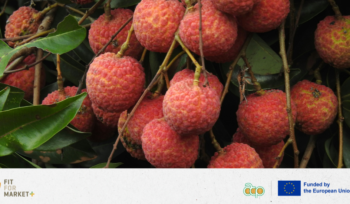
A sustainable approach to improve competitiveness and reduce environmental impact In October 2024, COLEAD through the Fit For Market Plus programme, initiated an innovative collective training course in Madagascar entitled “Assessment, reduction and recovery of waste from the lychee sector”, aimed at improving the competitiveness of local companies while addressing environmental and social issues. This event is the first stage of a three-phase training project that will allow the knowledge acquired to be progressively adopted and applied directly in the… +
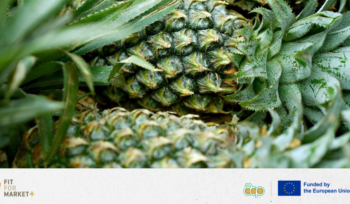
In an important step towards sustainable agriculture, a trial has begun in Benin to valorise pineapple waste from the juice industry. The initiative, part of the Fit For Market Plus (FFM+) programme, aims to convert pineapple by-products into nutritious animal feed, addressing both environmental challenges and economic opportunities. Pineapple (Ananas comosus) is an important crop in Benin and plays a key socio-economic role, creating jobs, particularly for women and young people, in fruit production and processing. However, these activities generate… +
The Corporate Sustainability Reporting Directive (CSRD) is a European directive that requires companies to publish comprehensive reports on their sustainability performance. It expands and strengthens the requirements of the previous Non-Financial Reporting Directive, in particular by introducing dual materiality analyses, covering both the impact of the company’s activities on the environment and society, and the risks these issues pose to the company itself. The CSRD will be phased in by 2026 and already affects thousands of companies in the European… +
The FFM+ programme is running at full speed on the ground: 17 OACPS member countries were visited this month   The FFM+ programme is running at full speed on the ground, with 17 OACPS member countries visited this month. In total, COLEAD has received almost 1,100 applications for support and has implemented more than 500 development projects since the launch of the FFM+ programme. In November, COLEAD carried out technical missions in 17 countries as part of the FFM+ programme.… +
In memory of Guilhem Picker: a visionary for sustainable agricultural development   It was with deep sadness that we learned in November of the death of Guilhem Picker, an emblematic figure and visionary in the development of Cameroon’s agri-food sector. For more than forty years, he left his mark on the country’s agricultural landscape, inspiring generations with his commitment, expertise and entrepreneurial spirit. A builder of agricultural sectors Arriving in Cameroon in 1977, Guilhem Picker first distinguished himself as a… +
Dr Evelyn Maureen Acquaye inspires us and you?   A visionary leader linking youth and sustainability in Ghana’s agri-food sector In the vibrant heart of Ghana’s Central Region lies a source of hope and sustainability: Benyima Farms. Under the dynamic leadership of Dr Evelyn Maureen Acquaye, this woman-owned business is transforming the agricultural landscape by combining innovation, sustainability and empowerment. An anesthetist turned agribusiness entrepreneur, Dr Acquaye embodies resilience and visionary thinking. In 2013, she founded Benyima Farms, a 240-acre… +
Promoting sustainable agriculture and empowering communities in Togo with Cajou Espoir   EDFI Management Company and COLEAD support Cajou Espoir’s innovative beekeeping project In a notable advance for sustainable agriculture in Togo, EDFI Management Company (EDFI MC) has partnered with COLEAD to support beekeeping capacity of one of its investee companies Cajou Espoir, a Togolese company active organic cashew production. This collaboration, supported by technical expertise from COLEAD and co-financed by the EDFI MC AgrifFI initiative, exemplifies a shared commitment… +
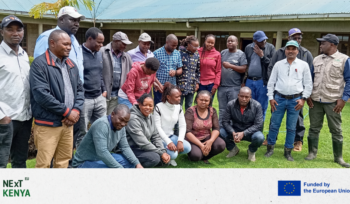
Improving pest and disease management to improve the environmental sustainability : The inspiring case of AAA farmers in Kenya   AAA Growers, one of Kenya’s largest horticulture companies and renowned exporters of premium vegetables and fresh herbs, is making progress in improving pest and disease management on its farms. As part of its commitment to sustainability and quality production, AAA Growers participated in an Integrated Pest and Disease Management (IPDM) training organised by COLEAD in October through the NExT Kenya… +
Strengthening cooperative governance: Zimbabwe’s Rusitu Valley leads the way   The Rusitu Valley Fruit Growers and Marketing Trust (RVFGMT), a cooperative of 1,400 growers in Chimanimani, Zimbabwe, is undergoing a transformative journey to strengthen its governance and sustainability. With targeted support from the Fit For Market Plus (FFM+) programme, RVFGMT is addressing critical governance challenges to better serve its members and position itself as a beacon of sustainable development in the region. RVFGMT aggregates and markets the produce of its… +
Improving seedling multiplication techniques: the example of SCOOPS AGRIVILLAGE in Cameroon   The cooperative is now better equipped to develop the skills of its members. SCOOPS AGRIVILLAGE, a dynamic agricultural cooperative in Cameroon, recently benefited from technical assistance through the Fit For Market Plus (FFM+) programme. Recognising the importance of using healthy planting material to optimise yields and support the growth of its members, the cooperative requested an in-depth diagnosis of plant propagation techniques, particularly for citrus and banana. The… +