ALL NEWS

By nature, farmers are entrepreneurs, and are used to taking and managing risks. But why do some businesses succeed and grow, while others don’t? Why have some managers been able to seize the opportunities that come their way, but not others? How do some companies manage to adapt to new realities or integrate new production standards, and remain profitable, while others disappear? Managing and developing a company is a global approach that requires many skills. Whatever the size of the… +
Successful digital status event of the NExT Kenya programme On 29th of April, COLEACP hosted a digital event on its 5-million EUR NExT Kenya programme, funded through the EU to enhance Kenya’s horticultural exports. 150 participants had the opportunity to listen to our high-level panelists, to find out what has happened in the first year of the programme and how to partner with the programme. Following speakers all shared their views on the current challenges and opportunities of the Kenyan… +
In Nairobi, technical staff of Fresh Produce Exporters Association of Kenya (FPEAK), Fresh Produce Consortium of Kenya (FPC) and Kenya Flower Council (KFC) took part in group training on effective implementation of protocols for the management of false codling moth (FCM, Thaumatotibia leucotreta) as part of COLEACP’s NExT Kenya programme. The technical training focused on effective implementation of the FCM protocol for roses, and troubleshooting/coaching for companies, to support the associations in offering these services to their members. The training… +
Horticultural processing company Surivit is receiving personal e-coaching from a business expert to help tackle the macro- and micro-economic consequences of the Covid-19 pandemic. Through COLEACP’s Fit For Market programme. Surivit works closely with women’s cooperative Wi! Uma fu Sranan (WUFS), in English “We the women of Suriname”), an organisation that aims to improve the living standards of female producers, to produce cassava flour, baby porridge, cassava pancake mixes and cassava flakes both for local use in Suriname and for… +
For the past two weeks the government has been mobilising the international community to request financial support for reconstruction. The latest estimate by the Ministry of Finance was for $500 million (50% of St Vincent & The Grenadines’ annual GDP). The United Nations has launched an appeal for solidarity and some countries have already replied positively. The Prime Minister and the Ministers of Finance and Tourism visited the North region (up to the Red zone limits) to see the impact… +
Ministry extension staff (group 2) trained in the COLEACP Field Training Workshop method Training-of-trainers on safe use of pesticides, crop protection and Field Training Workshops for extension workers and researchers of MAAHF Suriname In Suriname, the primary support to famers is provided through the extension services of the Agriculture sub-directorate of the Ministry of Agriculture, Animal Husbandry and Fisheries (MAAHF). A need was identified for Ministry extension staff to receiving training in COLEACP’s Field Training Workshop method to upgrade their… +
COLEACP has long depended on a committed team of local representatives (“relays”), who contribute their wide-ranging in-country and regional expertise in each of the three African, Caribbean and Pacific regions, keep us in touch with our value chains “on the ground”, and enhance our networks. Meet the team! COLEACP National Relays AFRICA Burkina Faso Edit Patric KABRÉ is an expert in food safety and SPS issues Cameroon Guy Jacques WAMBA is an agricultural engineer specialising in plant protection and organic… +
GLOBAL 2021 Global food policy report: Transforming food systems after Covid-19 On 13 April the International Food Policy Research Institute (IFPRI) launched its 2021 Global Food Policy Report. Covid-19 upended our food systems in 2020, leading to lost livelihoods, food insecurity and rising poverty. The report looks at the critical lessons learned from the pandemic so far and explores opportunities for transforming our food systems to be more resilient, healthy, sustainable, efficient and inclusive going forward. Critical questions addressed include:… +
On 21 April, Afruibana held a webinar titled “Agriculture at the heart of the Africa-Europe relationship”. The event was organised as part of the presentation of the Afruibana White Paper on African Bananas, which aims to take stock of the past decade on the European banana market, and to offer perspectives at the start of the new decade. COLEACP recognises that the banana export industry is key for the development and modernisation of this and other ACP fruit and vegetable… +
GLOBAL World of Fresh Ideas On 26-27 May, Fruitnet will be live and online to host “World of Fresh Ideas”, a learning and networking event for the global fresh fruit and vegetable business. Four programme tracks offer talks, interviews and interactive discussions with experts from across the international fresh produce business. Organised by Fruitnet in cooperation with Fruit Logistica, the event is aimed at suppliers, distributors, buyers and service providers in the fresh produce trade. Source: World of Fresh Ideas… +
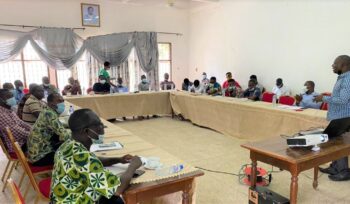
A key aim of this COLEACP training is to enable the technical staff of Jubba Agro to pass on key messages effectively to the farmers they work with on a daily basis. As well as strengthening the teaching skills of the technical staff, the online training offers a review of all the principles of food hygiene and traceability. The training is given by a Ghanaian expert, Mr Mark Tutu Sarpong, one of COLEACP’s network of regional and local expert trainers.… +
COLEACP’s online training for National Plant Protection Organisations (NPPOs) tackles both the organisation and the implementation (enforcement) of official sanitary and phytosanitary (SPS) controls. Organisation of official controls Participants in this series learn how to design and supervise the implementation of a system of official SPS controls adapted to the requirements of the International Plant Protection Convention (IPPC), and particularly relating to the new requirements of the EU plant health legislation that came into force in December 2019. In April… +
An upcoming online session on key plant health issues affecting National Plant Protection Organisations (NPPOs) and stakeholders in the fruit and vegetable sector of ACP countries will address “How import controls of fresh fruit and vegetables are carried out in Europe – example of Belgium – main implications and challenges”. In this webinar, on 4 May, NPPOs from member states of the East African Community (EAC) and the Caribbean Agricultural Health and Food Safety Agency (CAHFSA) will outline the experiences… +
COLEACP has been holding a series of e-meetings on sanitary and phytosanitary (SPS) issues with National Plant Protection Organisations (NPPOs) from ACP countries. The latest meeting, on 15 April, focused on “Establishment and update of regulated pest lists in ACP countries – main implications and challenges”. This interactive session allocated time for the exchange of information and experiences between the speakers, participants and the COLEACP team. A representative from the International Plant Protection Convention (IPPC) gave a short introduction explaining… +
As part of the PAFO-COLEACP collaboration for the modernisation of agricultural value chains in Africa, on 6 and 8 April we held the first training webinars in response to requests from PAFO members (French and English in parallel). The webinars were aimed at farmers, technical staff, agronomists and extension workers who wish to learn about the principles and skills related to integrated crop protection and safe pesticide use. Throughout April, English sessions will be held on Tuesdays and French sessions… +
In anticipation of the start of the 2021 mango export campaign in several West African countries – Burkina Faso, Cameroon, Côte d’Ivoire, Gambia, Guinea and Mali – COLEACP partnered with the competent authorities in each country to organise workshops for discussion and exchange. The workshops took place between the end of March and mid-April, and brought together private sector operators and the competent authorities of each country. Part 1 focused on the mango dossier submitted to the European Union under… +
Transit procedures from EU to UK – State of play Freshfel Europe, the European Fresh Produce Association, reports that according to the EC’s Directorate-General for Taxation and Customs Union (DG TAXUD), despite the UK being a member of the Common Transit Convention since 1 January 2021, the procedure is still not entirely reliable. The UK is not yet entirely connected to the Customs Decisions System (CDS), as they have to re-join as a third country. This onboarding procedure is still… +
The La Soufrière volcano, which had seen a low-level eruption since December, experienced the first of several major explosions on Friday 9 April, and volcanologists say activity could continue for weeks. A further explosion was reported on the morning of Tuesday 13 April, sending another massive plume of ash into the air. COLEACP members, partners and friends are sharing news and images with us. Jethro Greene, Chief Coordinator of the Eastern Caribbean Trading Agriculture and Development Organisation (ECTAD CARIBBEAN), which… +
On 8 April the Inter-American Institute for Cooperation on Agriculture (IICA) and COLEACP signed a technical cooperation agreement to work to develop a more sustainable and resilient agriculture sector in the Caribbean region. The agreement was signed during a virtual ceremony by Manuel Otero, Director General of IICA, and Jeremy Knops, General Delegate of COLEACP. Sustainable agriculture, good practices, bioeconomy, trade, food safety and quality, resilience, and the link between agriculture and tourism will be some of the key focus… +
The Gambian Plant Protection Services (Department of Agriculture) is organising a preparatory meeting for the mango export season on 16 April. The meeting is aimed at various stakeholders of the country’s mango sector. Systems approach for fruit fly control This exchange is being held in preparation for the mango export season, as it is essential to ensure that both public and private sectors take all the necessary steps to implement the integrated measures defined in the systems approach to ensure… +
The Innovations Series, co-organised by the Pan-African Farmers’ Organization (PAFO) and COLEACP, showcases innovations and successes of African farmer-led businesses and SMEs. The next online session – the fourth in the series – will focus on “Sustainable food systems: The key role of SMEs and businesses”. Join us on Thursday 20 May, 12:00-14:00 (GMT) – register here. A recording of the third session, “The African Continental Free Trade Area (AfCFTA): Opportunities for SMEs and businesses in the agri-food sector”, is… +
COLEACP is launching four new calls for tenders concerning the provision of “Support to the COLEACP team for the implementation and monitoring of COLEACP programme activities” in Rwanda (ref. 211196); Dominican Republic (ref. 211195); Zimbabwe (ref. 211194) and Nigeria (ref. 211193). You will find below all information related to this service procurement notice, including the terms of reference (point 8. Objective, description and resources required). Please note that only successful candidates in this first phase will be invited for the… +
In anticipation of the start of the mango export season in Guinea, COLEACP organised a workshop for discussion and exchange on the 2021 mango season in partnership with the National Directorate for Plant Protection, Stored Foods and Technical Control (DNPVDS-CT). This workshop took place on Monday 12 April. It provided an opportunity to review the integrated management measures, the phytosanitary inspection and certification system and the precautionary measures detailed in the mango dossier submitted to the European Union, in the… +
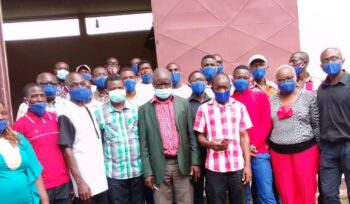
On April 13, 2021, under the WACOMP – Guinea-Bissau, funded by União Europeia na Guiné-Bissau and implemented by UNIDO-United Nations Industrial Development Organization, training on Technical Itinerarios was started for the production of mango. Training is directed at #manga technicians in Guinea-Bissau, in particular: cooperatives, agricultural companies, community leaders, agricultural technicians, mango producers and model farmers. 15 technicians from different national partner organizations of the #WACOMP-GB project participate in this training. In the course of training, trainees will pay a… +