Key points
Since the start of 2021, there have been European Union (EU) maximum residue level (MRL) changes concerning 123 plant protection products (PPPs), compared with 59 in 2020. These changes refer to modifications to the previous regulation, and can be either an increase or lowering of the MRLs for certain foods.
Since the latest Flash Info in August 2021, there have been changes to 40 PPPs, 13 of which are key for ACP horticulture (acrinathrin, ametoctradin, spinetoram, fludioxonil, fosetyl-aluminium,… +
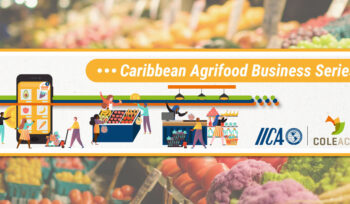
The fourth session of the Caribbean Agrifood Business Series, organised by the Inter-American Institute for Cooperation on Agriculture (IICA) and COLEACP, focused on “Ensuring food quality and safety in the Caribbean: the key role of SMEs and businesses”. The online session on 9 December reunited 240 participants from the Caribbean and other parts of world, including 15 African countries.
Entrepreneurs, food safety and quality specialists, and experts on policy and finance highlighted the importance of food and nutrition security in… +
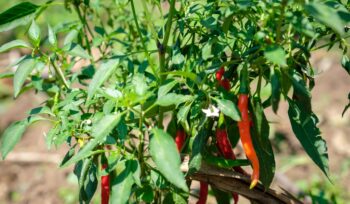
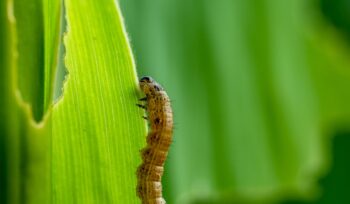
COLEACP has just updated its Technical Brochure on the management of false codling moth (FCM, Thaumatotibia leucotreta), for use in training sessions with Ugandan growers of pepper (Capsicum spp.).
The main enhancement is an updated table of plant protection products (PPPs) potentially effective against FCM that are currently registered for use in Uganda (2021). The information includes the active ingredients and concentrations, the Insecticide Resistance Action Committee (IRAC) mode of action classification, the World Health Organization (WHO) classification, and the… +
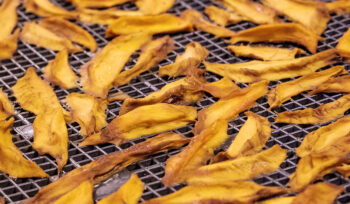
A new market profile of dried mango and mango juice from Mali looks at the local, regional and European markets to identify potential opportunities for product diversification. The report, supported by the Fit For Market programme, was developed by COLEACP’s Market Intelligence service.
The dried mango export market is growing, particularly with demand for certified organic and Fairtrade products. South Africa is the main exporter of dried mango with an estimated market share of 50%. After Asian countries, the West… +
In 2020, due to Covid-19 restrictions, it became urgently necessary to develop digital tools and distance learning methods.
COLEACP mobilised quickly, and in April 2020 a training course on the basics of digital training was organised urgently for COLEACP’s ACP experts and the training department team, in partnership with the Digital and Multimedia Teaching Support Centre at the University of Lausanne.
The transition to digital involves mastering new tools, learning new teaching methods, and operating a platform to host the… +
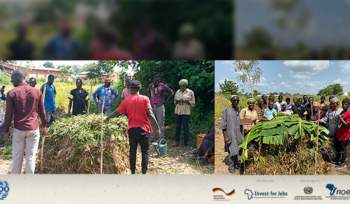
COLEACP’s recent work with mango producers and processors in Senegal has focused on recovering and quantifying mango waste. Composting was identified as a key solution for recovery of the organic waste produced by the companies.
Although this solution is relatively simple, implementing it on a large-scale production site requires specific theoretical and practical knowledge.
Through its Fit For Market SPS programme, COLEACP is providing training and consultancy for mango production/processing companies in Casamance. These activities contribute to UNIDO’s implementation of… +
COLEACP Keynote Address at ABIM 2021
On 19–20 October, COLEACP participated in the 16th Annual Biocontrol Industry Meeting (ABIM) in Basel, Switzerland. During these two days, 970 participants from 44 nations were able to network together face-to-face, as well as listen to inspiring presentations and panel discussions. Both SMEs and large enterprises were well represented.
The programme of ABIM 2021 included a journalist-led panel discussion involving biocontrol industry leaders, food processors, NGOs and researchers on how biocontrol will help transform… +
In November, the EU Standing Committee on Plants, Animals, Food and Feed approved amendments to Implementing Regulation (EU) 2019/1793. As a reminder, this is the regulation on the temporary increase of official controls and emergency measures at EU border control posts where there is a food safety risk or evidence of widespread serious non-compliance with EU legislation.
All of the new amendments are due to the detection of pesticide residues.
The new measures are specified in a draft Regulation and… +
Agri-food and climate
Africa Voices from the AGRF 2021 Summit call for pathways to recovery and resilient food systems
The AGRF 2021 Summit, was a critical gathering of global and African voices. Designed to outline, discuss and validate commitments to, and accelerate action towards, ending hunger, reducing poverty and improving nutrition by 2030. From 7-10 September, leaders from across the continent and beyond gathered under the theme of “Pathways to recovery and resilient food systems” to define the pathways and… +
At the request of the Ethiopian Institute of Agricultural Research (EIAR) and the Ministry of Agriculture, the Food and Agriculture Organization (FAO) organised a capacity development programme on market access in October.
The five-day hybrid training event was organised by the FAO Subregional Office for Eastern Africa (FAO-SFE), FAO Ethiopia and the Ethiopian Ministry of Agriculture. Contributors included representatives of the World Trade Organization, DG-SANTE of the European Commission, and national and international experts, as well as EIAR, the National… +
Agri-food
Africa
Rwanda: Rwanda plans to double its lending to agriculture
Rwanda plans to double its lending to the agricultural sector from 5.2 to 10.4% by 2024. The goal is to modernise agriculture, which now accounts for one-third of Rwanda’s GDP. Small farms can rarely access financial services due to high interest rates (18-24% per year). Access to these loans will enable farmers to invest in new means of production and thus secure the food supply for a country whose… +
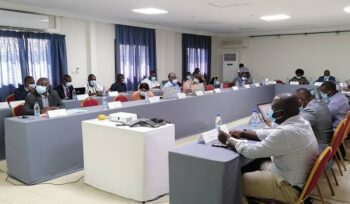
On 30 November 2021 in Lomé, the Steering Committee (COPIL) of the “Project for the reinforcement of the national phytosanitary control and certification system for fruits and vegetables in Togo” (STDF/PG/375) reviewed activities to date and made plans for 2022.
Officially launched in November 2018, the project was initially scheduled to close on 31 October 2021. However, due to delays caused by the Covid-19 pandemic, the technical implementation period of the project has been extended to 31 October 2022.
The… +
The new EU Organic Regulation (Regulation (EU) 2018/848), originally intended to apply from 1 January 2021, was postponed to 1 January 2022 to allow for completion of the secondary legislation due to Covid-19, among other reasons.
In the meantime, several new delegated and implementing acts have been issued during 2021. At the time of writing, 18 items of secondary legislation have been published, and a further eight are in the adoption process. These latest changes are included in COLEACP’s “Update… +
On 18 November the International Plant Protection Convention (IPPC) Secretariat and the Food and Agriculture Organization (FAO) released new guidelines on fall armyworm (FAW): “Prevention, preparedness and response guidelines for Spodoptera frugiperda“.
Fall armyworm is affecting plant health in more than 70 countries, with many others at high risk of introduction. The guidelines offer globally harmonized measures and actions that countries can take to minimise the spread of the pest and protect their territories. It is a transboundary pest that… +
Last September, COLEACP supported Belgium-based NGO The FoodBridge with the organisation of the 5th African Diaspora Agrofood Forum which reunites stakeholders to discuss the role of the African Diaspora and global agribusiness in supporting development both on the African continent and in diaspora communities.
Over 200 participants followed the online conferences on ‘Recovery, resilience and sustainability: African diaspora agrofood entrepreneurship in a changing world‘ on Friday 17th September 2021. The recordings of the conferences are available on COLEACP YouTube channel… +
In November 2020, the Pan-African Farmers’ Organization (PAFO) and COLEACP launched the Innovations Series held every two months and aimed at showcasing innovations and successes of African farmer-led businesses and small and medium enterprises (SMEs).
Six Innovations Sessions have been organised on various topics and featured 24 inspiring farmers groups and entrepreneurs. They presented their businesses to more than 2 200 participants from more than 100 countries on different continents. Find here a snapshot of their presentations which we hope… +
The COLEACP Rapid Assessment Tool (R-SAT) is a practical step-by-step guide to help competent authorities work with private sector stakeholders to conduct a rapid assessment of the status and functioning of SPS systems.
Through the Fit For Market SPS programme, Côte d’Ivoire is among the first countries where the R-SAT tool has been used. During a launch workshop in June 2021, the decision was taken to apply the tool to the national control system in the Capsicum sector, both for… +
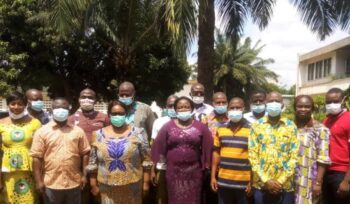
A training course on Health Quality Management was organised from 26 to 29 October 2021 for supervisors of the Institute for Technical Advice and Support (ICAT).
The training, which took place face-to-face in Lomé, was organised through the STDF project to strengthen Togo’s SPS system. It involved 15 participants and focused on product traceability, good hygiene practices, risk analysis, the principles of self-checking, regulatory requirements, and document management.
The supervisors who took part in the training are now better able… +
A “Sanitary and Phytosanitary Good Practice Guide for the Penja Pepper Sector” has recently been published in French and will soon be available in English. Together with sector stakeholders, the Penja Pepper Representative Geographical Indication Group (GRIGPP) managed the development and production of the guide, which is based on an analysis of SPS risks throughout the value chain. The publication was achieved through the project “Improving SPS capacity in the Penja pepper value chain”, which is funded by the Standards… +
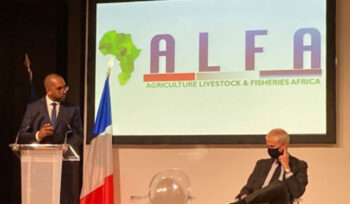
On 6 October, a new initiative was launched at the headquarters of the Movement of the Enterprises of France (MEDEF), on the sidelines of the Africa-France summit. The Agriculture-Livestock-Fisheries-Africa (ALFA) initiative, a grouping of 105 French companies covering the entire value chain, was launched by Karim Aittalb, CEO of GEOCOTON and co-founder of ALFA1, in the presence of France’s Minister for Foreign Trade, Franck Riester.
The aim of this new platform is to contribute to renewing the partnership between Africa… +
COLEACP is contributing to a UNIDO project in Senegal that aims to create shared prosperity, by providing support to improve the competitiveness of the country’s mango sector and advice in the environmental and social fields.
COLEACP’s Research & Innovation service has been working with partners in Senegal to support the improvement of waste management in mango processing. During July and August, a technical team worked to identify appropriate methods for the valorisation of mango production waste and co-products. This study… +
What’s happening at COP26?
You can view the overall schedule and themes here.
What events are relevant to food systems?
As well as the international negotiations, there are many “Green Zone” events and side events. The following selection focuses on natural resources, agriculture, and the ACP regions.
Green Zone
You can join these events virtually by subscribing to the COP26 YouTube channel.
Links to each free live stream will be found on the Green Zone webpage. Date in November
Time… +
AFRICA
Building resilient food systems in Africa – Declaration at the 11th AGRF
The 8,300 participants of the Eleventh African Green Revolution Forum (AGRF) came together in Nairobi, Kenya from 7 to 10 September 2021 to call for and plan action on building resilient food systems in Africa.
“Here at the AGRF, we have heard a strong call for Africa and the world to change the way we produce, process, market, consume food, and reduce waste. We know that a… +
On 11–12 October COLEACP participated in a workshop on “Reducing the use of pesticides in tropical agriculture: Key challenges and strategies”, organised by the Agropolis Foundation. During these two days, scientists from the European Union, Middle East and Africa exchanged views on topics ranging from epidemiology, toxicology and environmental impact to societal impacts resulting from pesticide use across the globe.
Edouard Lehmann, COLEACP’s Research & Innovation Manager, took part in a round table on how to promote multi-stakeholder collaboration in… +