ALL NEWS

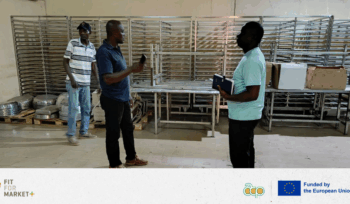
As part of the Fit For Market Plus (FFM+) programme, COLEAD coordinated and facilitated a targeted technical assistance mission to support Bodukwan Multi Fruit Processing Ltd, in Ghana, in improving its energy performance. A certified expert was deployed to carry out a Type 1 energy audit in line with ISO 50002:2014 at the company’s processing facility in Kumasi. The mission aimed to analyse the plant’s energy consumption by source, equipment and process, review existing operation and maintenance practices, and identify… +
As part of the Fit For Market Plus (FFM+) programme, COLEAD supported Malawi Mangoes (MM) through a strategic mission aimed at transforming its waste management system from a linear and costly approach into a circular, efficient and value-creating model. Implemented between September and November 2025, the mission followed a structured approach, from the initial diagnostic to the co-development of a comprehensive operational strategy. The assessment carried out on the Matumba and Dzuwa farms, as well as at the Salima processing… +
Rayfield Agricultural and Integrated Farms Ltd., a Nigerian family-owned company based in Keffi, Nasarawa State, successfully resumed exports of fresh leafy vegetables to the United Kingdom in June 2025, following targeted technical assistance provided by the COLEAD under the Fit For Market Plus (FFM+) programme. Operating a 156-hectare farm, Rayfield had lost access to its export markets as a result of the COVID-19 pandemic. Despite these challenges, the company’s management remained committed to gradually improving its production and handling practices… +
As part of the Fit For Market Plus (FFM+) programme, COLEAD supported the Malagasy company Malakass, active in cassava processing in the Atsimo-Andrefana region, with the aim of strengthening and sustainably structuring its relationships with local producers. This field mission, carried out from 30 September to 11 October 2025, sought to secure a regular, reliable and high-quality supply—an essential condition for the company’s continued development. The support was built around a participatory approach, starting with an in-depth diagnostic with the… +
Complete Farmer, a Ghanaian Agritech innovator, is set to strengthen its outgrower network with technical assistance from EDFI Management Company, delivered by COLEAD. This support, part of the AgriFI Country Window (CW) Ghana facility, will help Complete Farmer enhance its outgrower model and training systems, benefiting over 12,500 smallholder and 163 commercial farmers. Earlier in 2025, AgriFI invested USD 2.5 million (EUR 2.2 million) in Complete Farmer, providing long-term financing to scale operations. COLEAD, selected in 2024 by EDFI Management… +
In September 2025, EPILIMNION Ltd., marketing its products under the CRISP brand, benefited—through the FFM+ programme—from in-depth technical support aimed at optimising and expanding its greenhouse production capacity under tropical conditions in Trinidad and Tobago. Specialising in the production of baby greens, microgreens and herbs for local retail and food service markets, EPILIMNION has established itself in recent years as a credible local alternative to imported products, notably during the COVID-19 pandemic. In response to rapidly growing demand, the company… +
As part of the Fit For Market Plus (FFM+) programme, COLEAD supported Coldiron, a horticultural company based in Zimbabwe, through post-training support aimed at strengthening the quality, credibility and operational relevance of its business plan. This support followed the company’s participation in the training course “Create a business plan for your agribusiness.” The main objective of this support was to assist Coldiron in reviewing and finalising its business plan, ensuring that it accurately reflects the company’s current operations and meets… +
At the twelfth meeting of the Conference of the Parties to the Stockholm Convention (SC COP-12), countries agreed to add the pesticide chlorpyrifos to Annex A of the Convention. This decision paves the way for the global elimination of chlorpyrifos, a pesticide recognized for its severe impacts on human health and the environment. What is the Stockholm convention? The Stockholm Convention is a global treaty designed to protect human health and the environment from highly hazardous chemicals called Persistent Organic… +
After several years working in IT and CRM consulting, Eric Medji decided to embark on a new career path in 2013. Convinced of the economic and cultural potential of African raw materials, he decided to devote himself to the agri-food industry. With the support of his family – Ghislaine and Christian Medji – he founded Othentiks, a Beninese company dedicated to producing natural fruit juices from African soil. His goal is clear: to demonstrate that Africa can not only transform… +
Born in northern Uganda, Josephine Okot grew up witnessing the heavy burden women carried in agriculture and the barriers they faced : limited access to education, credit, and markets. These experiences inspired her to dedicate her life to transforming the country’s agricultural sector. In 2004, she founded Victoria Seeds Limited with the ambition to provide smallholder farmers with quality seeds. After being denied loans by commercial banks, she secured financing through a USAID-backed loan guarantee. What began with five employees… +
In a world marked by geopolitical upheavals, persistent economic instability, and growing pressure to finance sustainable solutions, the question of access to finance for agricultural enterprises has taken on renewed importance. The discussions held on the 2 October during the EDFI (European Development Finance Institutions) Management Company Corporate Day 2025 and on the 1-2 October at the Council on Smallholder Agricultural Finance (CSAF) Convening highlighted a shared conviction: development finance can only be effective when built upon a solid foundation… +
Over the past months, COLEAD, through its programmes FFM+ and AGRINFO, has been actively contributing to ensuring fairness in global supply chains, including those in ACP countries, by addressing Unfair Trading Practices (UTPs). This news provides an update on the legislative state of play and on COLEAD’s activities related to this important issue. What are UTPs? The stark imbalances between small and large operators in the agricultural and food supply chain can lead to UTPs in business-to-business relationships where farmers… +
Please find the report of the conference “Boosting agrifood research and innovation cooperation for impact at scale” which took place in Brussels (11-13 March 2025) financed by the European Commission under the DeSIRA initiative. To effectively contribute to desirable agrifood systems transformation in this time of poly-crisis, investments in R&I are more than ever required and need to be done in partnership. The R&I orientation for food systems transformation was discussed with a focus on innovative approaches such as agroecology,… +
More than 150 participants joined COLEAD’s webinar “Integrating Gender for Inclusive Growth” last month, an interactive session focused on the central role of gender equality in building sustainable and resilient agri-food systems. The event, opened by COLEAD chairman Stephen Mintah and General Delegate Jeremy Knops, explored practical approaches to mainstream gender at all levels: individual, organisational, and systemic. International expert Kerry Kyd (South Africa) delivered a dynamic presentation on gender-related risks and opportunities in operations, encouraging participants to reflect on… +
Held in Abuja, MoodleMoot Nigeria brought together the African Moodle community — educators, researchers, developers, EdTech actors, and institutions — to share best practices and strengthen the quality of online education and training across the continent. The conference focused on how digital technologies and innovation in the Fourth Industrial Revolution (4IR) can transform learning, foster inclusion, and build more resilient education systems. Moodlemoot Nigeria serves as a platform for collaboration and knowledge exchange, aiming to: promote inclusive access to quality… +
Six years after its first publication, the EAT–Lancet Commission on Healthy, Sustainable and Just Food Systems returns with a renewed vision in a world that has been profoundly transformed: geopolitical instability, soaring food prices, and the lasting impacts of the COVID-19 pandemic. These challenges highlight once again that food systems lie at the heart of global balance — food security, human health, environmental sustainability, social justice, and resilience. While current systems have managed to feed the world’s population in caloric… +
This training session, held in Baní (Dominican Republic), focused on “Developing a crop protection strategy centred on the mango and banana sectors.” Organised with the support of the Fit For Market Plus (FFM+) programme, the initiative aimed to strengthen local capacities in integrated pest management (IPM) and promote sustainable, competitive agricultural practices. A participatory and inclusive training The session brought together a wide range of stakeholders from the agricultural sector, including production managers, technical supervisors, exporters, agronomists, plant health and… +
As part of the FFM+ programme, COLEAD recently supported the Rusitu Valley Fruit Growers and Marketing Trust (RVGMT) and the Pineapple Growers Agricultural Cooperative Society Limited (PGACSL) in aligning their Quality Management System (QMS) and Internal Control System (ICS) with the new EU Organic Regulation (EU 2018/848). This revision of the European framework introduces stricter requirements for group certification, traceability, and transparency, which are essential for maintaining access to EU organic markets. The assignment involved close collaboration with the RVGMT… +
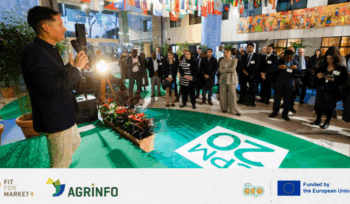
From 15 to 18 September 2025, COLEAD took part through the FFM+ programme, in the Ghana Industrial Summit and Exhibition (GISE), a major event for industrial transformation in Ghana and across West Africa. The mission aimed to strengthen synergies between public, private and technical partners, while showcasing initiatives implemented through the Fit for Market Plus (FFM+) and AGRINFO programmes. Beyond institutional visibility, this participation marked a key milestone in promoting a sustainable, innovative, and competitive regional agro-industry. The GISE: a… +
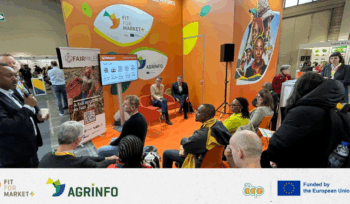
From 23 September to 8 October 2025, a dedicated mission took COLEAD to Saint Kitts and Nevis, Barbados, and Guyana under the Fit for Market Plus (FFM+) and AGRINFO programmes. The objective: to support the empowerment of Caribbean agricultural stakeholders while strengthening coordination with regional institutions and development partners. This field mission also marked COLEAD’s first physical presence at the Caribbean Week of Agriculture (CWA), following several virtual participations since 2021. Caribbean week of agriculture 2025: a strategic participation Organised… +
Source : Horizons magazine, October 2014 (…) COLEACP helps farmers improve the quality of products for the local market.  As the standard of living rises in the ACP states, short supply chains now offer real opportunities for economic development. Local and regional markets are developing into important outlets for the agrifood sector in Africa and the Caribbean. They represent an attractive alternative to export. In many African countries, selling goods at a stall or a local grocery is no longer… +
Processing units play a central role in creating added value, ensuring product quality, and enhancing the competitiveness of horticultural value chains. Moreover, strengthening the technical and organisational capacities of small enterprises and cooperatives is a key condition for scaling up the regional agri-food sector and recognising the economic role of women within value chains. In Casamance, training sessions organised through the Fit For Market Plus (FFM+) programme have brought together production and processing managers with a clear objective: to improve… +
As part of the Fit For Market Plus (FFM+) programme, COLEAD provided technical assistance to Ramsay Agriculture, a small but dynamic farming enterprise based in Mzuzu (Malawi), through the Horticultural Production and Marketing Consortium (HOPMAC). Towards a safer and more sustainable production model The support aimed to help the company put into practice the knowledge acquired during the training course “Developing a Crop Protection Strategy”. Over four intensive days, the COLEAD expert assessed existing pest management practices, trained field staff… +
As part of the Fit For Market Plus (FFM+) programme, Jacarandas, a company specialising in the production of spices and essential oils in Madagascar, benefited from technical assistance to update its Waste Management Plan (WMP). The mission, carried out jointly by LONO (Côte d’Ivoire) and SOATY, a Malagasy expert trained under the programme, aimed to provide the company with a plan aligned with international standards and oriented towards a “Zero Waste” policy, through the recovery or treatment of all waste… +