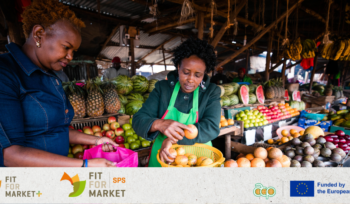
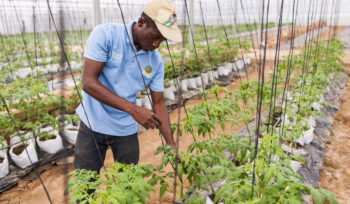
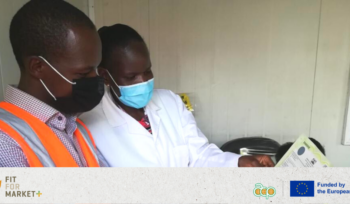
Women are the main drivers of the global food production (UNDP) and about a third of all global established businesses are women owned and managed (GEM). At the same time, women spend around three times more time on unpaid care work than men (ILO) – a work that is estimated to account for more than 40 per cent of GDP in some countries (ILO). Women face many other challenges that prevent them from contributing to the economy or reduce their… +
… +
The DeSIRA-LIFT project, “Leveraging the DeSIRA initiative for agri-food systems transformation”, aims to catalyse the European Union’s DeSIRA programme current and future activities supporting the Development of Smart Innovation through Research in Agriculture to enhance its impacts. It was launched in June 2021 with funding from the European Commission (DG INTPA) for a duration of 4 years (June 2021–May 2025).
COLEAD is the lead of the second service area (with support from the Natural Resources Institute) working closely with African… +
The way in which products are sold and marketed can have a considerable impact on the growth and sustainable development of a business. To penetrate a regional or international market, producers have to compete with producers from all over the world. What’s more, when exporting, certain legal and commercial requirements mean higher operating costs. Hence the need to adopt a diversified market strategy based on an understanding and specific positioning on local, regional and international markets.
Through its programmes, COLEAD… +
As part of its mission to promote the development of sustainable agriculture, COLEAD has joined the CABI BioProtection portal. As a not-for-profit organisation, COLEAD works to share knowledge and expertise in the agri-food sector in developing countries, particularly in Africa, the Caribbean and the Pacific regions. This collaboration with CABI underlines a shared commitment to promoting and developing bioprotection on a global scale and to improving sustainable agricultural practices. It is part of a wider collaboration initiated in 2020 between… +
The Shared Interest Foundation (SIF), a UK-based charity, is partnering with COLEAD in an initiative aimed at enhancing the operational effectiveness and sustainability of cooperatives in Côte d’Ivoire, Uganda, and Rwanda, which are currently receiving finance from their business arm, Shared Interest Society
The project will revolve around (i) a baseline diagnostic phase to identify existing gaps and weaknesses in the current governance and financial frameworks of each cooperative, (ii) a training programme on cooperative governance and management, planning, and… +
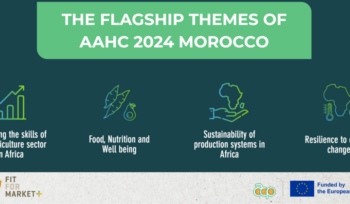
During the week of February 25th to March 1st, the COLEAD Research & Innovation Brokerage department attends the All Africa Horticultural Congress 2024 (AAHC) in Marrakesh in the framework of the FFM + programme. This congress, organised every four years under the International Society for Horticultural Science (ISHS), is a significant scientific event in African horticulture. By participating, COLEAD aims to foster collaboration, knowledge exchange, and innovation to support the resilience and growth of Africa’s horticultural sector.
During the session… +
The FAO Strategic Framework 2022-2031 highlights the critical role of strengthened national and international integrated One Health systems in achieving global food security and environmental protection, with a particular emphasis on the prevention, early warning, and management of plant pests and diseases. In alignment with this framework, the project aims to develop a comprehensive training toolkit on plant health legislation. This toolkit is designed to enhance knowledge and awareness of plant health legislation’s key components, its vital role in ensuring… +
As part of its ongoing efforts to promote innovation and sustainable development in the agricultural sector, COLEAD regularly strives to play its role as a liaison and catalyst for collaboration between universities and research institutes around the world. The main objective is to facilitate the raising of funds for research, which is essential for the advancement of innovative projects that respond to the sector’s sustainability challenges and opportunities.
COLEAD’s Research & Innovation Brokerage department facilitates South-North partnerships between academic institutions… +
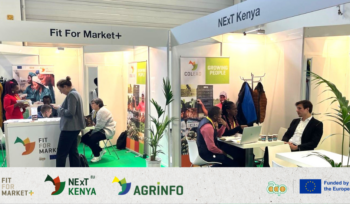
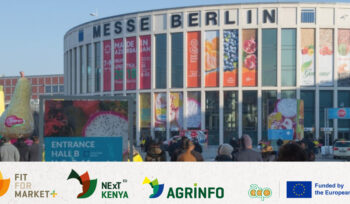
As Fruit Logistica 2024 has just concluded, COLEAD reflects on some of the fair’s highlights, considering its mission to serve the Sustainable Development Goals (SDGs) through its programmes, funded by donors such the EU, OACPS, AFD, ENABEL, and STDF. COLEAD was present as an exhibitor through its FFM+, NExT Kenya, and AGRINFO programmes, facilitating numerous meetings with existing and potential partner beneficiaries. Among these operational and useful appointments, some particularly resonated with the association’s vision and mission.
The Importance of… +
COLEAD’s AGRINFO programme collaborated with the South African Embassy in Brussels and the Department of Agriculture, Forestry and Fisheries to host an informative webinar on “Supporting your monitoring of & compliance with EU law”. The event on 24 January, which focused on the EU-funded agrinfo.eu website and pesticide-related EU legislation, saw participation from over 40 competent authorities, regulatory affairs, and agri-food associations in South Africa.
Morag Webb and Chris Downes of COLEAD emphasised the critical role of AGRINFO in offering… +
On 23 January COLEAD’s AGRINFO programme held an introductory webinar for stakeholders and competent authorities in Sri Lanka. The webinar was organised and hosted by the Sri Lanka Export Development Board (EDB). The event brought together over 90 participants from diverse sectors including tea, coconut, spices, organic production, and packaging.
Keynote Speakers & Insights: Dr Kingsley Bernard, CEO of EDB, extended a warm welcome to all attendees. Morag Webb and Chris Downes of COLEAD demonstrated the EU-funded agrinfo.eu website and… +
COLEAD recently organised a technical webinar at the request of MINAE (Ministry of Agriculture and Livestock) in collaboration with the Embassy of Madagascar in Brussels. The aim was to shed light on European regulations and alignment procedures for Madagascan companies.
The main topics covered were: the process for adopting new European regulations
how to participate in public consultations
the impacts on Madagascar’s agri-food sectors
coordinating stakeholders for effective public–private dialogue
monitoring tools. The webinar attracted more than 80 participants from… +
COLEAD recently organised a workshop titled “Sampling and Methods for Detecting Harmful Organisms in Fresh Fruit and Vegetable Exports to the EU.” This collaborative effort, facilitated by seasoned experts, successfully enhanced the competencies of 96 phytosanitary inspectors from 26 countries across Africa, the Caribbean, and the Pacific.
The workshop included an English session with 50 participants from 15 countries and a French-speaking session with 46 participants from 11 countries. Introducing the nuanced concepts of Risk-Based Sampling (RBS), the workshop equipped… +
Launch of our first webinar for information and training.
Access to finance is widely recognised as a key solution for rapid and sustainable development of agriculture in sub-Saharan Africa. The main limiting factors are the lack of suitable finance and the capacity of entrepreneurs to prepare a suitable application. COLEAD is stepping up its involvement in this area through programmes such as Fit For Market +.
Our approach focuses on empowering agripreneurs to develop their projects by demystifying access to… +
March 2004: Celebrating the first results of the PIP programme in developing expertise in Africa.
Twenty years ago, COLEAD’s PIP programme achieved its first successes in capacity building in ACP countries, providing economically viable solutions for companies producing and exporting horticultural products. This extract from the March 2004 PIP Magazine highlights “Strengthening the capacities of the horticultural sector”.
Improving the quality of services from suppliers to producers and exporters
ACP producer-exporter countries have a wealth of expertise and local knowledge… +
A multi-stakeholder platform in Africa and Europe, aiming to innovate, inform, and improve practices, supporting the transition to more sustainable and resilient food systems.
CEA-FIRST began on 1 December 2023 and will run for 3 years. The project brings together 22 partners from Europe and Africa covering a wide range of expertise and stakeholders (research, NGOs, donors, extension workers, etc.) involved in the field of food and nutritional security and sustainable agriculture. CEA-FIRST will be launched in Accra (Ghana) from… +
PACIFIC (PIFON-COLEAD): “Strengthening the resilience of the agri-food sector in the Pacific Islands” (a new series)
The Pacific Islands Farmers’ Organisations Network (PIFON) and COLEAD are initiating a series of roundtables on “Building Resilience: Strengthening the Agro-processing Sector in the Pacific Islands”. These roundtables aim to highlight inspiring companies in the Pacific region that have excelled in value addition. Join the first webinar on Wednesday 28 February 2024 from 8.00 to 9.30am FJT (UTC+12). To register, please use the… +
Case studies from Ghana and Zimbabwe
Launched in 2022, the Fit For Market Plus (FFM+) programme is committed to assisting the agriculture sectors of African, Caribbean, and Pacific countries in transitioning to more sustainable agricultural and food systems. This aligns with the action priorities outlined in the EU Green Deal’s Farm to Fork strategy. To date, we have responded to 870 applications for support under the FFM+ programme and implemented of the first development projects is well underway, through a… +
Building and consolidating reliable and lasting links with the market.
COLEAD will be exhibiting at the forthcoming Fruit Logistica trade fair in Berlin from 7 to 9 February, with three programme stands: Fit for Market+ (FFM+): Hall 26 C-92
NExT Kenya: Hall 26 C-90
AGRINFO: Hall 25 A-03 Existing and potential beneficiary partners of each programme are particularly welcome to meet the COLEAD team. This will also be an opportunity to share the latest news from the association and its… +
In line with the EU “Global Gateway” and “Farm to Fork” strategies
In a world characterised by growing political and economic challenges, exacerbated by climate crises and international conflicts, COLEAD’s 2023 Consultative Committee provided an important platform to address pressing issues related to the agendas of different stakeholders and the development of agriculture, a sector that is crucial to achieving the Sustainable Development Goals (SDGs).
The importance of the agri-food sector
The agri-food sector plays a central role in developing… +
Brindging research and policy for agri-food systems
The DeSIRA initiative aims to bring the world of research closer to the formulation of policies in favour of resilient, sustainable and equitable agri-food systems in southern countries.
DeSIRA-LIFT provides services to DeSIRA partners and projects in three areas: Agricultural innovation systems and development evaluation approaches.
Support for African organisations involved in agricultural development research (CORAF, ASARECA, CCARDESA and FARA), extension (AFAAS), higher education (RUFORUM) and capitalising on experience in innovation (TAP and… +
Responding to COP28’s call for a “just transition”, the Fairmiles consortium explores an equitable approach to achieving “Net Zero”.
Climate change is real and requires an urgent, radical response if we are to adapt to the significant threat it poses to our planet. However, as pressure mounts on companies to act, there is a growing risk that corporate ‘net zero’ strategies – which aim to reduce emissions by cutting imports or airfreight of food – may negatively impact less economically… +
Highlighting the IPPC (FAO) COLEAD collaboration in SPS e-learning.
The International Plant Protection Convention (IPPC) is a multilateral treaty for international cooperation in plant protection. The Convention has 182 signatories. Countries wishing to become contracting parties to the IPPC should send their instruments of accession to the Director-General of the FAO.
The IPPC aims to ensure coordinated and effective action to prevent and control the introduction and spread of organisms harmful to plants and plant products. This is achieved… +