ALL NEWS

Zambia : innovative COLEAD-GART partnership to improve soil fertility and increase the economic value of crops In an exciting new development through the Fit For Market Plus programme, COLEAD has partnered with the Golden Valley Agricultural Research Trust (GART) in Zambia to launch ground-breaking field trials. These trials are designed to evaluate the integration of two underutilised vegetables, Cleome (Cleome gynandra L.) and Amaranthus (Amaranthus spp.), into tomato and cabbage cropping systems. The main objective is to explore sustainable agricultural… +
FLASHBACK 2005 : HOW DOES THE PIP (PROGRAMME) TACKLE FOOD SAFETY?   A member of the European Parliament’s Agriculture Committee, Robert Sturdy (UK, Conservative) has contributed to the development of rules on the food safety of agricultural products placed on the market in the European Union: “We certainly do not want this legislation to be a barrier to trade,” he says. “But I can understand that a farmer in Africa, where regulations and controls are not the same as in… +
GUINEA STRENGTHENS PHYTOSANITARY CONTROL TO IMPROVE ACCESS TO AGRI-FOOD MARKETS   The project “Strengthening the phytosanitary control and certification system in Guinea” launched in 2019 and funded by the Standards and Trade Development Facility (STDF), was the subject of a closing workshop in Conakry on 24 April. It was an opportunity to present and welcome the results and positive impact of the project. In particular, the National Directorate of Plant Protection and Stored Foods (DNPV-DS) has benefited from capacity building… +
Discover COLEAD’s new self-paced course on business planning in agriculture COLEAD is pleased to introduce through the FFM+ programme  a new educational offering: a self-paced course designed to equip agricultural professionals with the skills to produce effective and compelling business plans. This course is specifically tailored to the agricultural sector, with a focus on horticultural businesses, and aims to enhance participants’ ability to secure funding, optimise management and stimulate innovation within their organisations. Course outline The new course provides a… +
Successful energy audit leads to cost savings and sustainability for Gambia Horticultural Enterprises Gambia Horticultural Enterprises (GHE), a leading Gambian company specialising in the export of fresh and processed produce to Europe, recently collaborated with COLEAD through the FFM+ programme on a comprehensive energy audit aimed at optimizing energy efficiency and reducing operational costs. As expenses for electricity and fuel for irrigation and processing activities climbed, GHE sought alternative energy solutions and embraced sustainability initiatives. Following the results of the… +
STDF Project: Strengthening Training Capacity in Guinea As part of its ongoing commitment to improve phytosanitary safety and competitiveness in the agricultural sector, COLEAD recently led a major initiative in Guinea as part of the STDF project. Last February in Conakry, the COLEAD team facilitated a capacity building programme aimed at equipping the Direction Nationale de la Protection Végétale et du Service de la Sécurité (DNPV-DS) with the necessary tools and strategies for the ongoing training of its staff. As… +
Review of EU and GB MRL changes in 2023 Key points  This news update is a review of changes that were made in 2023. European Union (EU) maximum residue levels (MRLs) were changed for 82 plant protection products (PPPs) in 2023, compared with 75 in 2022. These changes include cases where MRLs for certain foods have been raised or lowered. In Great Britain (GB) maximum residue level (MRL) changes concerned 41 plant protection products (PPPs), compared with 23 in 2022.… +
New training for trainers on triple concordance skills assessment As part of the FFM+ programme, the 29th of April marks a significant step forward in training methodology as COLEAD launches a new Training of Trainers programme. This initiative is designed to enhance trainers’ skills in assessing learners’ actual skill acquisition based on the innovative principles of triple concordance. This approach ensures a robust and comprehensive assessment strategy that is vital for both learners and trainers. A multinational initiative The upcoming… +
EU and GB pesticide approval changes – Yearly review 2023   Review of EU and GB pesticide approval changes during 2023 During 2023, the European Commission (EC) published 201 changes to plant protection product (PPP) approvals within the European Union (EU). These include 87 changes concerning substances that are of importance for African, Caribbean and Pacific (ACP) horticulture. Great Britain (GB) has published 182 changes to PPP approvals involving 50 changes concerning substances that are of importance for ACP horticulture.… +
Empowering horticultural companies on sustainability: an energy audit for the Tanzanian company Africado Ltd.   In a world where environmental sustainability is becoming increasingly important, organizations are looking for ways to reduce their carbon footprint and operate more efficiently. One initiative is to conduct energy audits to ensure sustainability and efficiency by determining and documenting energy usage, providing estimates of energy savings from alternatives, and focusing on the use of alternative energy. Africado Ltd, one of the leading Tanzanian exporters… +
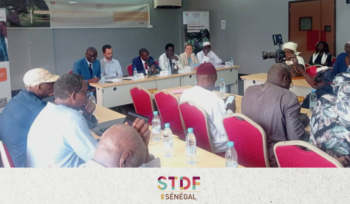
New STDF funded project in Senegal to strengthen the plant health system Senegal, like many countries in the Sahel region, faces major challenges in securing its food supply in the face of rapid population growth and urbanisation. The threat posed by climate change, with the increased spread of pests and transboundary diseases, poses a significant risk to the country’s agriculture and food security. In this context, the Senegalese Ministry of Agriculture, led by the Directorate of Plant Protection, has launched… +
The critical role of gender equality in sustainable development   On the occasion of the International Women’s Day, we celebrated in March the significant contributions of women in agri-food systems around the world. The agri-food sector is a major source of employment for women, with an estimated 66% of women in sub-Saharan Africa working in the sector. However, women often face discrimination and constraints that limit their productivity and earning potential. Understanding the root causes that limit women’s participation in… +
Final evaluation of the FFM and FFM SPS programmes   Launched in 2016 and 2019 respectively, the FFM and FFM SPS programmes have built on the valuable lessons learned from COLEAD’s previous initiatives, amongst other the Pesticides Initiative Programme (PIP & PIP2) and the Development of Food Safety Systems (EDES), funded by the European Union (EU), and the Organisations of ACP States (OACPS). With funding from the EU, the OACPS and the Agence Française de Développement (AFD) of €25 million… +
18 months after FFM+ launch: over 900 applications received and 300 development projects underway   Support for the Fit For Market Plus (FFM+) programme has been designed to contribute to the transition of agriculture in the member countries of the Organisation of African, Caribbean and Pacific States (OACPS) towards a more sustainable agricultural and food system by integrating the priority areas for action set out in the EU Green Pact’s Farm to Fork Strategy. FFM+ has been designed and implemented… +
Flashback 2005: task forces in the fruit and vegetable sector, strengthening public-private dialogue   (Source : PIP Magazine, July 2005) “(…)The European Union defines specific food safety and phytosanitary standards for all types of food, whether produced on its territory or imported from third countries. Naturally the ACP fruit and vegetable export sector is obliged to abide by these rules. In that context, ACP private operators and the public sector have to work together to develop strategies enabling them to… +
COLEAD at the world banana forum: advocating for a sustainable future in the banana industry   In an important step towards sustainable development in the banana industry, COLEAD participated in the Fourth Global Conference of the World Banana Forum. This world event, hosted by the Food and Agriculture Organization of the United Nations (FAO), took place on 12-13 March at the FAO headquarters in Rome, Italy. It brought together stakeholders from around the world to focus on promoting sustainable practices… +
Sustainable mango production in Mali   As part of its efforts to increase the competitiveness through the adoption of sustainable practices by Malian companies, COLEAD organised two intensive training sessions on GlobalGAP Integrated Farm Assurance (IFA) version 6 in Bamako, Mali, as part of the Fit For Market Plus programme. These training sessions, organised in response to growing demand from local companies exporting mangoes to the European Union, aimed to bring food safety and sustainable management practices in line with… +
DRC: training supervisors in Bukavu to help producers meet market demands   As part of its ongoing commitment to promoting excellence and sustainable development within agricultural cooperatives, COLEAD recently organised a training session for supervisors of producer support structures in Bukavu as part of its Fit For Market Plus programme. The initiative, which lasted for two intensive weeks, brought together supervisors and experts from different smallholder support structures with a common goal: to strengthen their pedagogical and technical skills in… +
Guinea: good agricultural practices for small potato farmers   In February, COLEAD, through the STDF Guinée programme, organised a training session in Mamou to improve the skills of supervisors and extension workers in disseminating good agricultural practices in potato production. The training focused on the effective use of the “Boîte à Images”, an educational tool to help communicate the key messages of the Good Potato Practice Guide. Particular emphasis was placed on food safety and plant health aspects, emphasising the… +
Philippines–EU fisheries trade: EU market access today and tomorrow   On 19 March a timely webinar for the Philippines fish and seafood sector was held just as trade negotiations resumed between the Philippines and the European Union. The webinar, organised by the AGRINFO programme along with the Philippine Embassy in Brussels and the Bureau of Fisheries and Aquatic Resources (BFAR), focused on the the world’s biggest single market for fish and fishery products – the EU market. Pablito Mendoza, Deputy… +
Madagascar: a strategic social and environmental plan for companies (rain forest alliance)   In June 2023, several Madagascan companies active in the lychee sector were informed, at their request, about the Rainforest Alliance (RFA) standard. Specifically, the workshop provided an opportunity to introduce the RFA standard, explain its principles, highlight overlaps with other private standards, provide guidance on the certification process, identify available resources and answer participants’ questions. Following the workshop, a survey was conducted among the participating companies to… +
COLEAD national members meetings: Kenya, Ghana and Nigeria lead the way   COLEAD is a network of communities that now covers 180 countries. Its members form the core community of the organisation. There are currently 511 members in 48 countries. The success of the 50th anniversary celebrations at the end of last year, both in the countries where the members are based and in connection with the General Delegation, has been followed up. Members now meet on a country-by-country basis… +
PFO and COLEAD working together to strengthen the pacific islands agro-processing sector   The Pacific Farmer Organisations (PFO) and COLEAD are pleased to invite you to the second online meeting in the series of roundtables on “Growing Resilience: Strengthening the agro-processing sector in the Pacific Islands” organised by PFO and COLEAD. The Roundtable will be held in English on Wednesday 24 April 2024, 9:00-10:30am Fiji time (UTC+12). We would like to remind participants from outside the Pacific Islands that due… +
COLEAD and the Freshfel Environmental Footprint Initiative invite you to participate in the public consultation for the newly developed shadow Product Environmental Footprint Category Rules (PEFCR) for fruits and vegetables. This initiative aims to standardize a cutting-edge environmental footprint methodology for the fresh produce sector. We’re calling on all stakeholders, especially those with expertise in fruits and vegetables, to submit feedback by April 30, 2024. Your insights are crucial to ensuring that the shadow PEFCR truly reflects the needs and… +