

- 18/12/2025
- Posted by: Sandra Borma
- Category: News
At the twelfth meeting of the Conference of the Parties to the Stockholm Convention (SC COP-12), countries agreed to add the pesticide chlorpyrifos to Annex A of the Convention. This decision paves the way for the global elimination of chlorpyrifos, a pesticide recognized for its severe impacts on human health and the environment.
What is the Stockholm convention?
The Stockholm Convention is a global treaty designed to protect human health and the environment from highly hazardous chemicals called Persistent Organic Pollutants (POPs). POPs are organic chemical substances that possess a particular combination of physical and chemical properties such that, once released into the environment: they remain intact in the environment for long periods, travel long distances across borders, accumulate in the living organisms including humans, are found at higher concentrations at higher levels in the food chain, and have serious harmful effects on health and ecosystems.
Because POPs can be transported over long ranges through air and water currents, addressing this challenge requires coordinated global action.
In response to this global problem, the Stockholm Convention, which was adopted in 2001 and entered into force in 2004, requires its parties to take measures to eliminate or reduce the release of POPs into the environment.
The Stockholm Convention has three annexes: Annex A, Annex B, and Annex C, which list different groups of persistent organic pollutants (POPs) subject to specific control measures:
- Annex A: Lists chemicals for which production and use must be eliminated.
- Annex B: Lists chemicals for which production and use must be restricted.
- Annex C: Lists chemicals for which unintentional release must be minimized and eventually eliminated.
The Stockholm Convention initially covered 12 POPs. Since the adoption of the Convention, the Conference of the Parties has adopted a series of decisions to amend Annexes A, B and C, adding 22 additional POPs to the original dirty dozen. Further information on all the chemicals listed in the Annexes to the Stockholm Convention is available here.
Chlorpyrifos
Chlorpyrifos is a broad-spectrum chlorinated organophosphate insecticide widely used in agriculture and as a biocide for non-agricultural pests. Chlorpyrifos has historically been one of the most widely used organophosphate insecticides worldwide — registered for use in nearly 100 countries. There are also public health uses, including treatments for mosquitoes, and the control of fire ants and certain species of ticks that may transmit diseases.
Chlorpyrifos is characterized by properties such as persistence in some environments, bioaccumulation and capacity to be long-range transported. Major health issues such as neurodevelopmental toxicity and neurotoxicity have been linked to chlorpyrifos exposure in humans. Chlorpyrifos is highly toxic to aquatic species, early life stages of fish and aquatic invertebrates, bees, birds and mammals.
What is new?
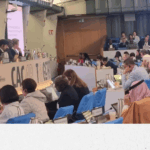
The twelfth meeting of the Conference of the Parties to the Stockholm Convention (SC COP-12), held in Geneva from 28 April to 9 May 2025, resulted in the addition of the pesticide chlorpyrifos to Annex A of the Convention.
By listing chlorpyrifos in Annex A, the Parties formally agreed to the global elimination of its production and use, recognising its classification as a highly hazardous pesticide with proven risks to human health and the environment. In practice, this means that countries that are Parties to the Convention are now required to phase out chlorpyrifos and ensure that it is no longer manufactured, imported, exported or used.
The amendment will enter into force on 9 October 2026, one year after its formal communication to the Parties.
The ban is, however, accompanied by specific exemptions, applicable for five years after its entry into force. While the POPs Review Committee initially recommended seven exemptions, the Parties ultimately approved 22 exemptions:
- Control of leaf-cutting ants (Attaspp. and Acromyrmex spp.) for agricultural use only.
- Control of locusts for agricultural use only.
- Control of ticks in cattle.
- Wood preservation against borers and termites in building foundations
- 18 Crop-pest complexes, which are detailed in Table 1.
Table 1: Specific crop-pest exemptions for which chlorpyrifos may be available for agricultural use only
Crop | Pest |
| Barley | Termites |
| Cabbage | Diamondback moth (Plutella xylostella) |
| Cacao | Cacao-mosquitos (Helopeltis spp.), cacao pod borer (Conopomorpha cramerella) |
| Chickpea | Cutworms |
| Citrus | Scale insects |
| Cotton, cotton seed | Aphids, carpophagous caterpillars, cutworms, spider mites, cotton leaf roller (Syllepte derogata), whitefly larvae, whitefly adults |
| Eggplant | Shoot and fruit borer (Leucinodes orbonalis) |
| Maize | Armyworms (Spodoptera cosmioides and Spodoptera frugiperda), lesser cornstalk borer (Elasmopalpus lignosellus), variegated cutworm (Peridroma saucia), corn earworm (Helicoverpa armigera), sugarcane white grub (Lepidiota stigma), seedling flies (Atherigona spp.), stem borer (Ostrinia furnacalis), green stink bug (Nezara viridula) |
| Onion | Root grubs |
| Peanut | White grubs |
| Pineapple | Mealybug (Dysmicoccus brevipes), pineapple weevil (Metamasius dimidiatipennis), glasshouse symphylid (Scutigerella immaculata) |
| Rapeseed | Crucifer flea beetle, turnip sawfly, common pollen beetle, turnip gall weevil |
| Rice | Rice planthoppers, rice stemborers, rice leaf rollers |
| Sorghum | Armyworms (Spodoptera cosmioides and Spodoptera frugiperda), lesser cornstalk borer (Elasmopalpus lignosellus) |
| Soya bean | Armyworm (Spodoptera litura), soybean pod borer (Etiella zinckenella), soybean seed fly (Ophiomyia phaseoli), soybean leaf beetle (Phaedonia inclusa stall), tobacco whitefly (Bemisia tabaci), soybean aphid (Aphis glycines), spiralling whitefly (Aleurodicus dispersus), green stink bug (Nezara viridula), brown stink bug (Riptortus linearis), spider mite (Tetranychus cinnabarinus) |
| Sugar cane | Termites, beetles, sugarcane white grub (Lepidiota stigma), sugarcane top borer (Triporyza vinella), sugarcane stem borer (Proceras sacchariphagus) |
| Teff | Termites |
Potential impact in ACP countries
To help anticipate the impact of this decision, COLEAD has developed an interactive dashboard showing registered plant protection products in ACP countries containing chlorpyrifos, together with their respective conditions of use in ACP countries.
The analysis highlights that around 450 products containing chlorpyrifos are currently registered across 20 ACP countries, meaning that the listing of chlorpyrifos in Annex A could have significant consequences for these countries.
This dashboard is based on information extracted from the latest national lists of registered plant protection products provided by 34 ACP countries. To confirm if your country is included, please refer to the list here. If your country is not listed, we highly recommend reaching out to your national authorities.
What should ACP producers/exporters do now?
With the upcoming global phase-out of chlorpyrifos, ACP producers, exporters and support organisations are encouraged to take proactive steps to ensure continuity of production and market access:
- Check whether chlorpyrifos is still used within their production system — directly on farms or indirectly through purchased inputs.
- Review national regulations to monitor future restrictions or withdrawal timelines that may follow the Stockholm Convention decision.
- Engage with suppliers and distributors to identify alternative plant protection products already authorised at national level for the same target pests.
- Start planning transition strategies early, including integrated pest management (IPM) and biological control solutions where available.
- Report any foreseeable difficulties to interprofessional organisations or value chain platforms so they can advocate for support measures.
Taking early action will help mitigate disruption, avoid sudden non-compliance, and maintain access to markets once the ban becomes effective.
If you have any major concerns about these changes, and fear that you will be left without an effective and locally available alternative, please contact COLEAD at: network@colead.link.
This publication has been developped by the Fit For Market Plus programme, implemented by COLEAD within the framework of Development cooperation between the Organisation of African, Caribbean and Pacific States (OACPS), and the European Union (EU). This publication has been produced with the financial support of the EU and the OACPS. Its contents are the sole responsibility of COLEAD and can under no circumstances be regarded as reflecting the position of the EU or the OACPS.
References
Stockholm Convention on Persistent Organic Pollutants (POPs). Text and Annexes (2025) https://chm.pops.int/TheConvention/Overview/TextoftheConvention/tabid/2232/Default.aspx
Decisions adopted by the Conference of the Parties to the Stockholm Convention on Persistent Organic Pollutants at its twelfth meeting (2025) UNEP/POPS/COP.12/32/Add.1
https://chm.pops.int/TheConvention/ConferenceoftheParties/Meetings/COP12/tabid/9744/Default.aspx