

- 25/03/2026
- Posted by: Sandra Borma
- Category: News
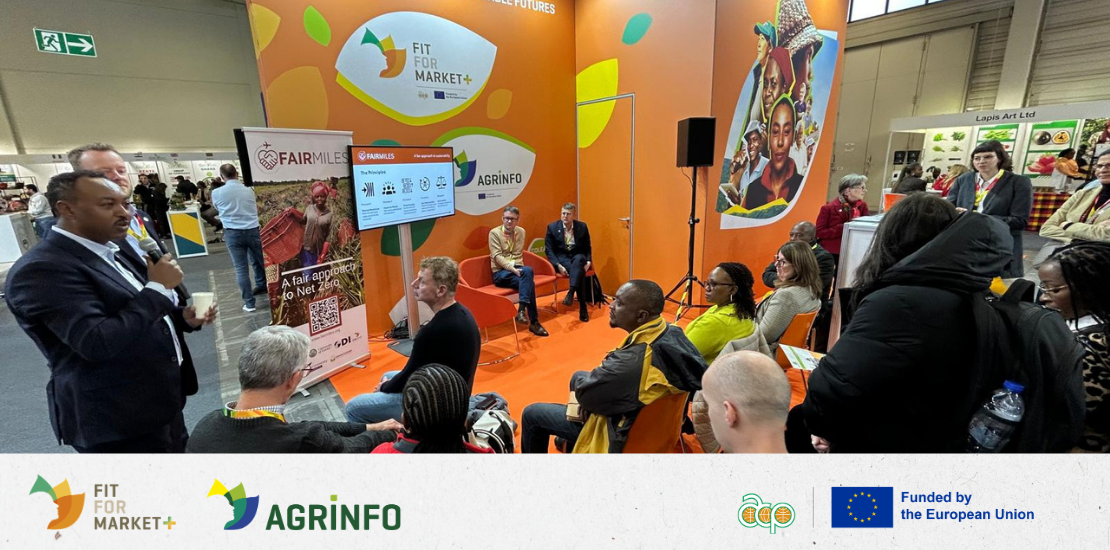
The COLEAD took part last February in the international trade fair Fruit Logistica as part of its FFM+ and AGRINFO programmes.
At Fruit Logistica 2026, several structuring trends emerged, confirming the ongoing transformation of the fruit and vegetable sector. Sustainability, logistics, technological innovation and market dynamics are shaping current priorities.
Sustainability remains central but is shifting towards concrete implementation. Stakeholders highlighted the complexity of existing frameworks and the need for clearer standards capable of demonstrating tangible results, particularly in terms of quality, loss reduction and resource efficiency. Regenerative agriculture is also gaining attention, although it remains a marginal approach.
Logistics is becoming a strategic lever for competitiveness. Decarbonisation of transport, the development of rail solutions and cold chain management are key concerns. Real-time monitoring of transport conditions is increasingly essential to ensure quality and reduce losses.
Plastic-free packaging solutions are expanding, driven by innovation and European regulatory requirements (PPWR). However, their large-scale adoption will depend on cost, technical performance and market acceptance.
Artificial intelligence is emerging as an operational tool across the entire value chain: crop analysis, automated sorting, defect detection, flow management and risk anticipation. It helps improve quality, decision-making and operational reliability.
From a market perspective, avocados continue to grow, but with increasing demands for consistent quality, supported by advanced control technologies. Meanwhile, blueberries are emerging as a major opportunity, particularly for some African countries, provided that quality, varieties, export timing and environmental requirements are well managed.
Overall, Fruit Logistica 2026 highlights a sector in transition, where economic performance, technological innovation and operational sustainability are now closely interconnected.
This activity is supported by the Fit For Market Plus (FFM+) programme, implemented by COLEAD within the Framework of Development Cooperation between the Organisation of African, Caribbean and Pacific States (OACPS) and the European Union; and by the AGRINFO programme, implemented by COLEAD and funded by the European Union (EU). This publication receives financial support from the European Union and the OACPS. The content of this publication is the sole responsibility of COLEAD and can in no way be taken to reflect the views of the European Union or the OACPS.