

- 22/12/2025
- Posted by: Sandra Borma
- Category: News
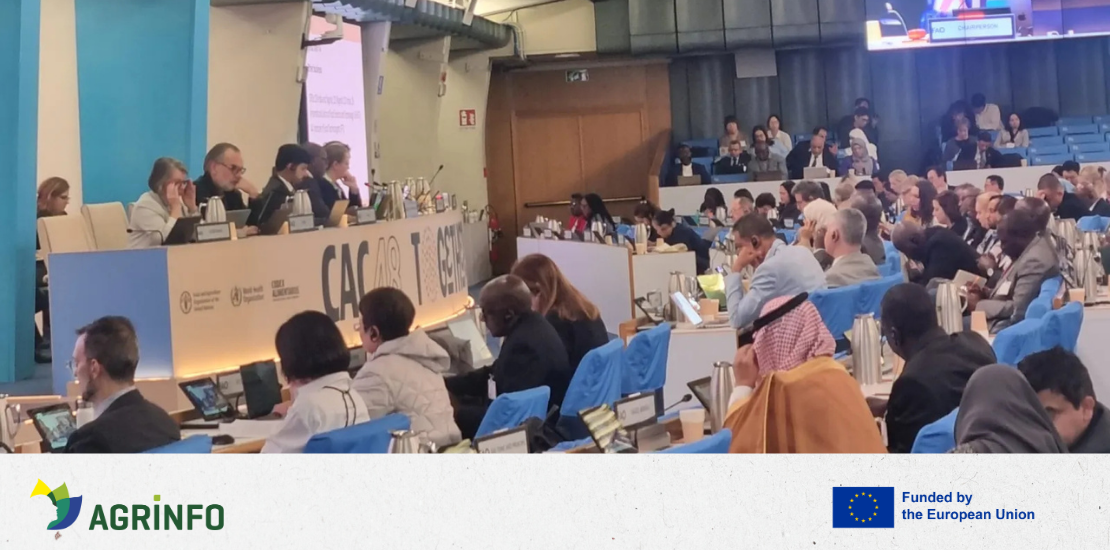
As part of the AGRINFO programme, COLEAD took part in the 48th Codex Alimentarius Commission (CAC48), held at FAO headquarters. This major international forum for the development and adoption of food safety standards was organised this year under the theme “Together”, highlighting the importance of broad and inclusive global participation in standard-setting processes.
The event provided COLEAD with a valuable opportunity to present its programmes and expertise to delegates from more than 100 countries, while also strengthening exchanges and identifying potential areas of collaboration with other observer organisations, including the International Dairy Federation (IDF), ISO/TC 34, the International Union of Food Science and Technology (IUFoST) and Croplife.
The Commission adopted several new standards and key texts, notably the standard for fresh dates, guidelines on monitoring the stability and purity of pesticide reference materials, and new maximum levels for lead in spices, dried bark and culinary herbs. It also endorsed the revised Code of Practice for the prevention and reduction of aflatoxin contamination in peanuts, as well as a regional standard for lulo (naranjilla) in Latin America and the Caribbean.
Several new work proposals were also approved, including the development of a regional African standard for dried fish (salted or unsalted), the conversion of a regional Asian standard for laver products into an international standard, and new standards for galip nut and breadfruit flour.
CAC48 further approved a proposal from the United Arab Emirates to develop a standard for pasteurised liquid camel milk, leading to the reactivation of the Codex Committee on Milk and Milk Products. Finally, the Commission discussed the monitoring framework for the Codex Strategic Plan 2026–2031 and confirmed that the Republic of Korea will take over as host of the Codex Committee on Processed Fruits and Vegetables.
COLEAD’s participation in CAC48 fully reflects its commitment to promoting science-based, inclusive SPS standards that are aligned with the realities of agri-food value chains, in support of food safety and sustainable access to international markets.
This activity is supported by the AGRINFO programme, implemented by COLEAD and funded by the European Union (EU). This publication receives financial support from the European Union. The content of this publication is the sole responsibility of COLEAD and can in no way be taken to reflect the views of the European Union.