ALL NEWS

As part of COLEACP’s Fit For Market programme, a group training session began Tuesday in Abidjan for coconut producing and exporting companies on the theme of “CULTIVATION OF COCOT FARMERS ON CÔTE D’IVOIRE”. This training aims to strengthen the knowledge and skills of production managers on good production and post-harvest practices of coconut cultivation. We wish an excellent training to our participants and thank our experts again.… +
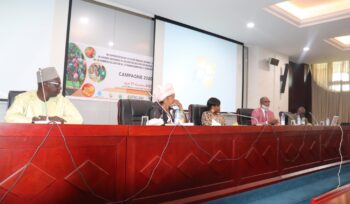
During December, COLEACP began a series of regional e-meetings for National Plant Protection Organisations (NPPOs). The first was held in collaboration with the Common Market for Eastern and Southern Africa (COMESA) on 4 December. It was followed by an e-meeting on 15 December for Economic Community of West African States (ECOWAS) countries. The third session, for Pacific NPPOs, will be on 17 December (in English). The series will continue in 2021, with key topics including (among others) lists of regulated… +
COLEACP has signed a Memorandum of Understanding with the East African Community (EAC) to support a competitive and sustainable horticultural sector in the East African Region. The agreement identifies synergies in four key areas of SPS systems: strengthening governance; improving operational processes; managing skills and competencies; and strengthening communication dynamics between relevant stakeholders, particularly to ensure communication between National Plant Protection Organisations (NPPOs) and professional organisations, especially focusing on active involvement of the private sector in the process of strengthening… +
On 8 December, COLEACP signed a Cooperation Agreement with the Economic Community of West African States (ECOWAS). Mr Alain Sy Traoré, Director of Agriculture and Rural Development of the ECOWAS Commission, said “Within the framework of this Cooperation Agreement, we encourage the continuation of the exchanges initiated between COLEACP and ECOWAS through the Fit For Market SPS and SyRIMAO programmes, which have already made it possible to identify points of synergy between the two projects for the next mango campaign… +
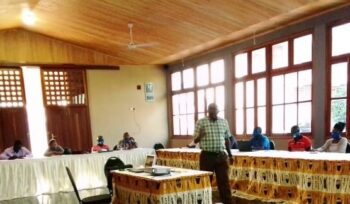
COLEACP organised group training on internal auditing in Harare from 8-10 December 2020. Food safety, quality and traceability managers of Zimbabwean horticultural companies worked on their internal auditing techniques and practices. Conducting regular and professional internal audits greatly contributes to the maintenance and continuous improvement of any quality management system. After the group training, all participants will return to their respective companies to carry out a practical exercise on internal auditing, adapted to the quality management system implemented in their… +
Assisted by a COLEACP expert, Farm Fare Feeds has developed a detailed action plan to achieve GLOBALG.A.P. certification. As a first step, the technical team of Farm Fare Feeds followed intensive training on how to implement and successfully manage a quality management system that meets GLOBALG.A.P. requirements.… +
COLEACP and CABI have signed a Memorandum of Understanding to work together on key areas of interest concerning sanitary and phytosanitary (SPS) measures around the world. The agreement, which ultimately aims to benefit food security among countries within the African Caribbean and Pacific (ACP) states, will enable a strategic focus on improving SPS measures – including regulations and standards – at a local, national and regional levels. The understanding will build on CABI’s main objective of improving people’s lives worldwide… +
Over recent months, COLEACP has been piloting a remote training approach to provide capacity building for Nigerian consultants on setting up and managing a documented food safety management system that is compliant with international food safety standards, in this case with a practical focus on GLOBALG.A.P. option 1 for operators in the fruit and vegetables sector (V.5.2). The training uses a combination of asynchronous remote learning via COLEACP’s existing e-learning modules, combined with specific synchronous training sessions to dive deeper… +
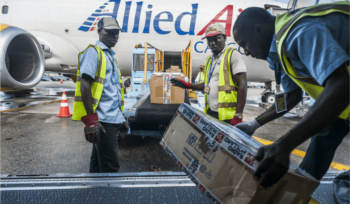
On 26 November Kenya Airways launched direct cargo flights from Mombasa to various destinations around the world (Business Today, 26 November). The maiden flight, from Moi International Airport in Mombasa to Sharjah International Airport in the United Arab Emirates (UAE), marked the first direct cargo flight from outside Kenya Airways’ cargo hub at Jomo Kenyatta International Airport. KQ Cargo will initially run one weekly flight from Mombasa, ferrying mostly fish and seafood to UAE, and will gradually increase frequencies and… +
As part of its Fit For Market Programme, COLEACP is supporting Ecole Supérieure des Sciences Agronomiques (ESSA) in the development of new modules or training courses on SPS themes. The aim of this support is to assist the working group set up at ESSA in its deliberations on the integration of specific modules on “sanitary and phytosanitary (SPS)” issues into the training of students, either by adapting existing courses or by developing a new training offer. ESSA is the only… +
The Delegation of German Industry and Commerce in Nigeria (AHK Nigeria), in collaboration with GIZ and Don Bosco, held its second Dual Vocational Training Business Summit and Skills Conference in early December. The first summit in 2019 hosted around 150 business and political representatives. The objective of the 2020 Skills Summit was to continue and deepen the discussion through a focus on the agriculture and health sectors. In the context of the challenges faced during the coronavirus crisis, it also… +
Key points EU approval will not be renewed for six PPPs that are important to ACP horticulture : – thiophanate methyl – mancozeb – imidacloprid – zeta-cypermethrin – haloxyfop-p – pencycuron How will ACP producers/exporters be affected? Non-renewal means that these PPPs can no longer be legally used within EU countries. But it also has an impact on ACP growers – the EU maximum residue levels (MRLs) will be reduced to the limit of determination (LoD), which in most cases means… +
A workshop in Coyah brought together several of Guinea’s ministries (Justice, Health, Agriculture, and Trade) to validate new legislation governing official control, inspection and phytosanitary certification, in line with the international phytosanitary standards signed and ratified by Guinea. The workshop was supported by the #STDF Guinea programme, implemented by COLEACP, which is working to strengthen the country’s SPS control and certification system.… +
As part of COLEACP’s Fit For Market programme, training in vegetable production was organised for the Global Shea Alliance (GSA). The objective was to strengthen the participants’ technical skills on crop seasonality – what can be produced between October and April (shea off-season), good agricultural practices, crop protection, integrated pest management (IPM), safe use of pesticides, and post-harvest practices. Participants showed great interest and the training was highly appreciated. The next step, which is training on hygiene and food safety,… +
After participating in the Business Survival Bootcamp organised by COLEACP in cooperation with the African Management Institute, Aspire Cooperative in Zimbabwe received individual e-coaching from a COLEACP business expert on strategic planning and cost management, to assist in planning and coping with the challenges resulting from the microeconomic consequences of the pandemic. Aspire Cooperative produces vegetable seedlings, rape, cabbages, watermelons, tomatoes and sweet potatoes, and is now venturing into passion fruit production.… +
AFRICA Climate change increasingly threatens vulnerable Africa A recent report from the World Meteorological Organization states that climate change is having significant impacts in Africa (Commodafrica, 28 October). These impacts are likely to worsen in the future, particularly for food supplies, economies and health. The main risks for agriculture are reduced crop productivity (heat and drought); increased pest and disease damage; and the effects of floods on food system infrastructure.   Aerial imagery detects and tracks banana threats New research… +
AFRICA UEMOA encourages consumer interest in local products On the occasion of the first “October, month of local consumption” in its eight member states, the West African Economic and Monetary Union (UEMOA) aims to counter the growing disinterest of West African consumers in local products (Commodafrica, 8 October). In a UEMOA market of 120 million consumers, African companies are faced with a growth in imports of food products. Encouraging the consumption of local products must also involve supporting national agriculture… +
ACP COMESA: Product diversity critical for regional trade Intra-regional trade is being weakened by a lack of product diversity, as most states within the Common Market for Eastern and Southern Africa (COMESA) and the whole of Africa are producing and exporting similar goods (Chronicle, 11 November). COMESA recently expressed concern over the low intra-regional trade among its 21 members, which is estimated at 7%. Details are in a research paper titled “Estimating Comesa’s trade potential in Africa: optimising export opportunities… +
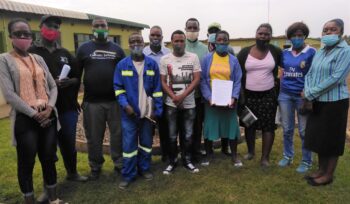
ZFU is the largest farmers’ organization in Zimbabwe in terms of number of members, representing over a million farming households. The technical team of ZFU, including capacity building managers and provincial managers, is following a training series to strengthen their technical and teaching skills to keep their member farmers up to date with the latest knowhow to enhance quality and productivity. This first training handled Crop Protection and Safe Use of Pesticides, which improved their background knowledge about identification of… +
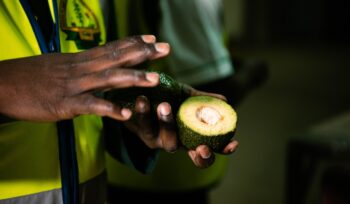
Technical staff from FTE Kenya and Kenyan IPM COLEACP expert conducted field visits to avocado orchards in Meru, as part of Integrated Pest Management training delivered through the Fit For Market programme.… +
The Fresh Produce Exporters Association of Kenya (FPEAK) and Fresh Produce Consortium Kenya (FPC Kenya) issued a press statement on the avocado market on 11 November. According to FPEAK and FPC Kenya, up to the end of October 2020 Kenya exported 68,000 tons of avocados, valued at Ksh14 billion (about US$128 million), a record-high for the Kenyan subsector. The Avocado Society of Kenya reports that demand for avocados has risen both locally and internationally, with demand for fruits and fresh… +
In collaboration with the Organisation of African, Caribbean and Pacific States (OACPS), COLEACP organised a workshop on 30 October to present a set of practical recommendations (and remaining points of uncertainty) for ACP horticultural businesses trading directly or indirectly (via the EU) with the United Kingdom. Representatives from the Fresh Produce Consortium and Freshfel Europe also shared their analyses and priority areas for action. Context The UK officially left the European Union on 31 January 2020, and is now entering… +
This news provides updates on recent changes to EU maximum residue limits (MRLs) for plant protection products (PPPs). Where an MRL has been lowered, it is important for growers using the PPP to make any necessary adjustments in good time to ensure continued compliance with EU regulations. This may mean adapting production practices (good agricultural practices, GAP) or using alternative control methods. This news also includes a complete list of the MRL changes introduced so far in 2020. If you… +
With support from COLEACP as part of its Fit for Market programme, the technical team of Probest followed intensive training on how to scale up their Quality Management System to meet GLOBALG.A.P. requirements for two additional production sites. Probest is a Zimbabwean company specialising in production of fresh snow peas (mange-tout and sugar snaps) as well as fine beans for the export market, and a variety of fresh vegetables for local markets. Congratulations with this successful capacity building!… +