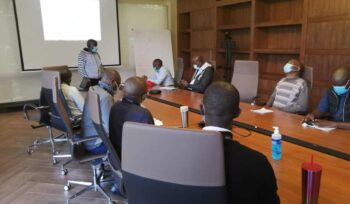
COLEACP’s Field Training Workshop method – training for Dangote Farms
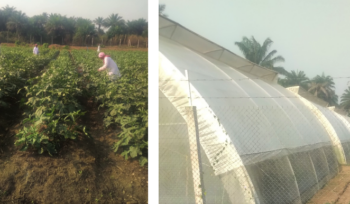
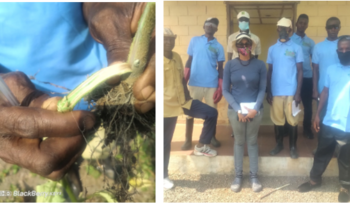
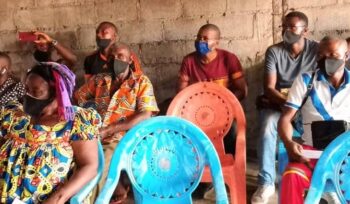
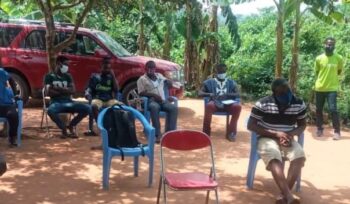
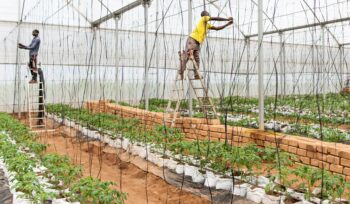
At the end of January, COLEACP facilitated training on crop protection, safe use of pesticides and the Field Training Worksohp method for Dangote Farms Limited in Nigeria. The company grows tomatoes with over 5,000 smallholders in the area around Kano, processing the crop into tomato paste for the domestic market.
The extension staff who took part in the training are planning to make use of the skills they acquired to… +
COLEACP member Proxifresh Co. Ltd in Mauritius is receiving support for the conservation of processed products and waste recovery as part of the Fit for Market programme.
The aim is to identify suitable methods to increase the shelf life and stability of processed products, and to propose concrete actions to optimise packaging and processing facilities, as well as ways of recovering waste from its various activities.
Proxifresh Ltd specialises in the import, export and distribution of fruit and vegetables under… +
COLEACP’s new Rapid SPS Assessment Tool (R-SAT) provides an integrative change management model to help competent authorities in ACP countries assess their national sanitary and phytosanitary (SPS) systems.
At the heart of the model is the facilitation of dialogue and engagement between the key stakeholders, both public and private.
In the final stage of developing R-SAT, online training sessions are taking place with SPS experts: one in English in the second half of February, and one in French in the… +
In collaboration with the Dominican Agroenterprise Board (Junta Agroempresarial Dominicana, JAD), COLEACP is organising a series of webinars on market access for processed products in the pineapple, mango and avocado sectors. These are part of the CALIFRUP project “Quality enhancement for the development of MSMEs in the processed fruit value chain”, which aims to support the strategy of value chain development and, specifically, to strengthen the processed fruit value chain. The first webinar, on “The international market for processed products”,… +
Further information on TRACES NT COLEACP’s videoconference for National Plant Protection Organisations (NPPOs) on 19 January, on “Use of the European TRACES NT system in ACP countries”, was well attended.
Resources
The following additional support is available on using TRACES NT: From late March 2021, virtual training courses will be provided by Better Training for Safer Food (BTSF). COLEACP will provide details when more information becomes available.
Distance support and training from the TRACES helpdesk is available on request: contact… +
You can find the Portuguese version below
On 28 January COLEACP organised a Mango Online Workshop as part of the West Africa Competitiveness Programme in Guinea-Bissau (WACOMP-GB).
The meeting was convened for WACOMP-GB by Mr Adalberto Vieira (Chief Technical Advisor) and Ms Siham Chafak (international expert) and attended by representatives of the European Union, the Ministry of Industry, associations, producers, NGOs, and different private and public sector stakeholders with an interest in the mango value chain.
Mrs Inês Bastos (Regional… +
The Steering Committee of the STDF Guinea project was held last week to present the activities carried out in semester 2 and the programme for year 2; and to validate the semester report. In addition to the COPIL members, two Guinean experts, Dr. Traoré and Mr. Bangoura, joined the meeting and contributed greatly to the implementation of our activities during semester 2.… +
COLEACP is providing training in the Caribbean on Implementation of official controls for inspectors, controllers and technical staff involved in phytosanitary control, inspection and certification activities.
This online training for NPPOs will be provided from 1 February until 26 February 2021. Spread over 4 weeks, it requires a daily time commitment of 3–4 hours. It is provided via COLEACP’s online training platform, and will be delivered through web conferencing, quizzes, educational videos and other digital tools. COLEACP’s expert trainers are… +
As part of COLEACP’s Fit For Market programme, training in cost/benefit analysis for micro/small scale producers was organised for the Global Shea Alliance (GSA). The training aimed to build capacity in cost/benefit and cashflow-related calculations for the production of vegetables at producer level, and in how farmers can be assisted to budget for the various activities in the vegetable production cycle. To increase farmers’ level of professionalism, a budgeting and planning exercise has been set up using simple tools that… +
All this week, in Penja, a second training session is taking place for experts and strategic actors in the pepper value chain. This follow-up session aims to put into practice the technical and training skills acquired during the first session in December 2020. At the end of this training, participants will be able to play the role of trainers and coaches, especially for the training courses planned within the framework of this project. The STDF Cameroon project, led by COLEACP,… +
AVOCADO ASSOCIATION UGANDA (formerly HASHAU) has been receiving support from COLEACP to work on their governance structure and guidelines. In addition, board members of AVOCADO ASSOCIATION UGANDA have received coaching to develop a strategic plan for the coming three years (2021-2023), outlining a list of priority services which the association envisions providing to its members. The overall objective is to enable AVOCADO ASSOCIATION UGANDA members to access international and domestic horticultural markets by complying with Good Agricultural Practices, SPS and… +
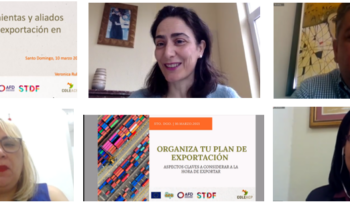
In collaboration with the Dominican Agroenterprise Board (Junta Agroempresarial Dominicana, JAD), COLEACP is organising a series of webinars on market access for processed products in the pineapple, mango and avocado sectors. These are part of the CALIFRUP project “Quality enhancement for the development of MSMEs in the processed fruit value chain”, which aims to support the strategy of value chain development and, specifically, to strengthen the processed fruit value chain.
The first webinar, on “The international market for processed products”,… +
The Ethiopian Horticulture Producer Exporters Association (EHPEA) has announced the opening of a technical and vocational training institute for the horticultural sector, the first of its kind in the country. The focus will be on the competitiveness of the Ethiopian horticultural industry and access to international markets. The institute aims to address the shortage of skilled labour in the sector and to play a role in technology transfer, and plans to offer 3 to 6 month training courses in conjunction… +
As part of COLEACP’s Fit For Market programme, a training in organic implementation systems was organized for a family-owned company SGA Farms, producing papayas in Ghana, in order to build their capacity in organic production methods. This training covered aspects related to certification, setting up an internal control system, drawing up procedures and documentation, maintaining the system, etc. (including technical and financial implications of implementing this production system). The training also aimed at building the capacity of the staff on… +
The UK’s withdrawal from the EU customs union and single market took place on 31 December 2020 on the basis of an agreement concluded between the EU and UK on 24th December 2020. This event has both important implications for the ACP horticultural trade with the UK, particularly for goods delivered to the UK via initial ports of landing in the EU (so called “triangular supply chains”). In order to inform and support its partners, COLEACP has updated its general… +
COLEACP’s STDF-funded project “Improving the sanitary and phytosanitary quality of Penja pepper in Cameroon to facilitate access to international markets” held its biannual steering committee meeting on 28 January at the headquarters of the Penja Pepper Geographical Indication Group (IGPP) and online. The project, which began in October 2019, is now entering its second year. The main activity in year 1 was the finalisation of a good practice guide for the pepper sector. In 2021, actors in the Penja pepper… +
The Avocado Society of Kenya has the honor to have Professor Mary Lu Arpaia to serve on its Board of Directors. Prof Arpaia is a renowned avocado researcher from the University of California. Avocado Society of Kenya promotes efficient production and organised marketing for long-term profitability of avocado agribusinesses in Kenya. It works with public and private stakeholders to provide innovative services that influence agricultural transformation, empowering members and especially smallholder farmers to sustainably increase productivity. COLEACP is looking forward… +
In December 2021, group training was held in Penja, Cameroon on good nursery practices in Penja. The training for member companies of the Penja pepper GI aimed to strengthen the skills of nurserymen and nursery managers so that they can master the management of a nursery, from choosing varieties to an understanding of risk control measures recommended in nurseries.
The training, part of the “Project to improve the sanitary and phytosanitary quality of Penja pepper in order to facilitate its… +
COLEACP’s training-of-trainers in Ethical Production and Corporate Social Responsibility is taking place in two stages.
Over 3 weeks in September 2020, online training was provided for French-speaking experts. Of 19 experts selected, 14 took part and successfully completed the training, which included practical exercises and group presentations. Participants attended from Benin, Burundi, Cameroon, Côte d’Ivoire, Madagascar, Senegal and Togo.
Next, in January–February 2021, the course will be provided in English – over 4 weeks, as the first experience was quite… +
Guidelines for ACP national authorities in response to the new EU Phytosanitary Regulation In 2020 COLEACP began to publish a series of guidelines in response to the new Plant Health Regulation (EU) 2016/2031 that came into operation in December 2019. Under the new regime, special measures have been introduced for crops that are a known pathway into the EU of serious pests that could damage agriculture or the environment in Europe. These include capsicum, mango, Solanum (eggplant and tomato), and… +
Instaveg Ltd is one of the companies that has actively participated in COLEACP’s Fit for Market programme. Besides technical support, leads to financial institutions and grant programmes enabled the company to benefit from a grant from the Agrifi Challenge Fund to set up a new packaging facility that will facilitate food safety compliance with BRCGS and reduce food waste. The combined support and linkages by COLEACP facilitate market access, creation and retention of jobs, and sustainable activities for farmers and… +
COLEACP is providing training in the Caribbean on Implementation of official controls for inspectors, controllers and technical staff involved in phytosanitary control, inspection and certification activities.
This online training for NPPOs will be provided between 25 January and 19 February. Spread over 4 weeks, it requires a daily time commitment of 3–4 hours. It is provided via COLEACP’s online training platform, and will be delivered through web conferencing, quizzes, educational videos and other digital tools. COLEACP’s expert trainers are always… +
Here are some key events scheduled for the first part of 2021. In light of the Covid-19 situation, Biofach eSpecial in February is being held completely online, and most events plan to review the situation as the year progresses.
Trade fairs Event
Theme / organiser
Date
Location Biofach eSpecial
World´s leading trade fair for organic food (including fruit and vegetables – With stand COLEACP)
17–19 Feb
Digital Agritech West Africa 2021
For companies in agricultural technology, agrochemicals, irrigation & systems,… +
GLOBAL
Global Forum for Food and Agriculture goes digital
The 13th Global Forum for Food and Agriculture will be the first to be totally digital. The GFFA, 18–22 January, has the theme “How to feed the world in times of pandemics and climate change?”. The annual Berlin-based meeting, hosted by the German Federal Ministry of Food and Agriculture (BMEL), is held under the umbrella of International Green Week. Around 2,000 international participants from politics, industry, science and civil society will… +