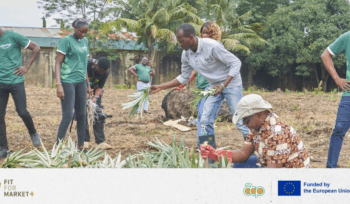
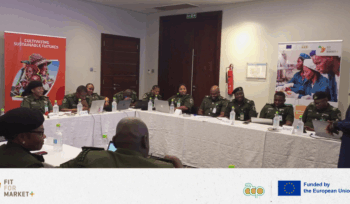
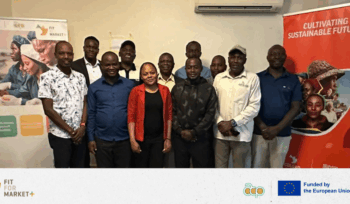
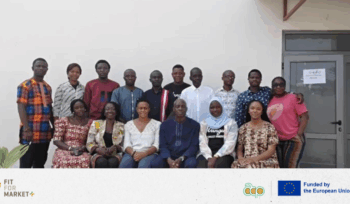
As part of the Fit For Market Plus (FFM+) programme, COLEAD supports agribusinesses in developing bankable business plans, essential tools for growth and long-term sustainability.
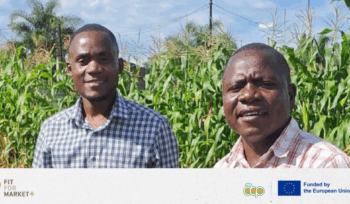
In this context, a post-training support mission was conducted with Produhort Investments Ltd, a horticultural enterprise based in Lilongwe (Malawi). As a participant in the “Develop a Business Plan for Your Agribusiness” training, Produhort received tailored coaching to finalise and strengthen its 2025–2030 business plan.
A business plan to guide growth
The mission’s objective was… +
Thanthwe Enterprises, an innovative agri-food company from Malawi, has benefited from strategic support through the FFM+ programme, aimed at strengthening its competitiveness and structuring its expansion into regional and international markets.
This support provided the company with strategic guidance and in-depth market analysis to inform its approach to market entry in Southern Africa, notably South Africa, Zambia and Mozambique, with a longer-term goal of expanding into the European Union.
The study revealed the strong potential of Thanthwe’s diverse product portfolio,… +
As part of the Fit for Market Plus (FFM+) programme, COLEAD recently carried out a follow-up mission at Chisel Investments Pvt Ltd, a horticultural company based in Headlands, Zimbabwe. The objective was to assess the progress made in implementing the SMETA 4-Pillar standard and to identify the remaining steps required to achieve certification.
Encouraging progress over one year
Since the first assessment in 2024, Chisel Investments has made significant progress, particularly in developing internal policies and procedures that align with… +
As part of the Fit For Market Plus (FFM+) programme, a post-training support mission was conducted for Coldiron, a horticultural company based in Zimbabwe. This support followed the company’s participation in the training “Create a Business Plan for Your Agribusiness.”
Objectives
The overall objective of the post-training mission was to assist Coldiron in reviewing and finalising its business plan so that it reflects its current operations and meets the requirements of financial institutions.
More specifically, the mission aimed to: clarify… +
On 15 June, the European Parliament’s Committee on Agriculture and Rural Development (AGRI) adopted a significant report aimed at strengthening the cooperation of enforcement authorities responsible for implementing the European directive on unfair trading practices (UTPs) within the agri-food supply chain.
COLEAD and the Fair-Trade Advocacy Office (FTAO) welcome this progress, which marks a decisive step towards closing existing gaps and ensuring that every farmer and small agri-food supplier, whether in the EU or not, can benefit from better protection… +
COLEAD participated in the Forum, which took place from 4–5 September 2025 in Nadi, Fiji. This landmark event brought together policymakers, investors, businesses, and development partners with the aim of strengthening economic relations between the EU and the Pacific region, as well as promoting sustainable growth pathways.
COLEAD made a significant contribution, particularly during the thematic session ‘Realising the Blue Pacific Continent: Investing in the Ocean for Sustainable Growth’, which focused on sustainable aquaculture and fisheries. COLEAD’s presentation in the… +
The DeSIRA LIFT programme has recently published several reports that highlight key initiatives aimed at strengthening agricultural innovation and inclusion in Africa.
‘Women and Innovation’: Fifteen case studies illustrate the central role of women in transforming agri-food systems, whether as farmers, entrepreneurs, researchers, or community leaders. Their innovations foster sustainable livelihoods, community resilience, and responsible natural resource management.
From research to business: In collaboration with the RUFORUM network, a study analysed how universities in countries such as Cameroon, Senegal,… +
On 23 July 2025, under the AGRINFO programme, COLEAD organised a hybrid meeting in collaboration with the Indonesian Ministry of Food Affairs and the Delegation of the European Union in Jakarta, bringing together around sixty participants. The objective was to raise awareness among public and private stakeholders about the forthcoming European rules on mineral oil hydrocarbons (MOH) in foodstuffs, which will come into force in January 2027.
COLEAD’s Regulations & Standards team outlined the proposed changes and explained the practical… +
On 4 July, the COLEAD Regulations & Standards team took part in a unique event within the framework of the AGRINFO programme: a breakfast with the embassies of Latin America and the Caribbean, hosted at the official residence of the Argentine Ambassador in Brussels.
In a friendly and open atmosphere, discussions focused on crucial issues for agri-food value chains, including: The European Green Deal and its impact on trade,
regulations on pesticides and organic farming,
phytosanitary rules, and e-certification. Several… +
COLEAD’s eLearning platform continues to grow as part of the FFM+ programme, offering new self-paced training pathways for professionals in the agri-food sector. Since 2024, four additional pathways comprising five courses have been added to the training offer. Business plan (available in English and French since June 2024)
Financial planning (available in English since June 2024 and in French by the end of 2025);
Fruit and vegetable preservation, Processing and Packaging (already available in French and due to be available… +
In Ghana, a young entrepreneur is proving that a committed vision can turn environmental challenges into opportunities for inclusive development. Derrick Sarfo, founder and director of DercolBags Packaging Ltd., has made the fight against plastic pollution a driver of social and economic innovation.
His entrepreneurial journey stems from a tragedy. In 2015, the devastating floods in Accra, worsened by plastic waste clogging drains, left a deep mark on Derrick and pushed him to act. Three years later, he founded DercolBags,… +
In the Dominican Republic, a new generation of entrepreneurs is transforming agricultural value chains. María Elsy Abreu, co-founder and director of Cacao Mae, is one of the movement’s leading figures. With a background in marketing and an in-depth understanding of international markets, she is working to showcase the exceptional quality of Dominican cacao and to leverage it for sustainable and inclusive development.
From agricultural roots to a global vision
Born into a family of farmers who cultivated cacao, tobacco, and… +
The country has just adopted its National Policy on Sanitary and Phytosanitary (SPS) Measures. This major strategic framework is designed to modernise the protection of human, animal and plant health while facilitating agri-food trade and promoting sustainability.
This policy was developed in collaboration with the Ministries of Agriculture, Industry and Trade, Foreign Affairs, and Health (via the SPS Committee). It was developed within the framework of the SIA project (Sanidad e Innovación Agropecuaria), which is being implemented by COLEAD. The… +
In the first half of 2025, the Agriéco project, which is funded by Enabel, took decisive steps to lay the foundations for the agroecological transition in Guinea. Particular focus was given to the pineapple, potato and vegetable value chains.
Local dynamics were structured.
Thirteen agricultural cluster initiatives were identified in the Kindia and Mamou regions. Six of these clusters have been selected as priorities and will receive enhanced support. In partnership with ICRA, the recruitment of cluster coaches is underway… +
In the first half of 2025, the STDF/PG/946 project reached a key milestone in the modernisation of Senegal’s phytosanitary system, which is crucial for strengthening the competitiveness of horticultural exports.
Major legal reforms
A decree and three implementing orders covering surveillance and control, import and export inspections, and fee schedules were validated in May 2025. These new texts replaced legislation dating back to 1960, aligning the framework with international standards and including specific provisions to address the challenges faced by… +
In collaboration with CABI, COLEAD has just completed a series of interactive and insightful sessions as part of the EU-funded SPS Uganda project. The initiative aims to strengthen the country’s sanitary and phytosanitary system, as well as supporting horticultural businesses in accessing international markets, particularly in Europe.
Understanding market access requirements
The first module helped participants to grasp the differences between local, regional and international markets, and the related opportunities and challenges. Discussions focused on the relevant regulations, commercial and… +
As part of the FFM+ programme, COLEAD recently published a groundbreaking study on the potential of the domestic market for organic fruit and vegetables in Rwanda. The report assesses the prospects for developing the organic sector in Rwanda, focusing particularly on the feasibility of a participatory guarantee system that would offer new certification options tailored to small-scale producers.
An emerging market.
The study analyses consumer and hospitality sector demand, current market conditions, and the challenges to be overcome to promote… +
As part of the FFM+ programme, COLEAD took part in a Southern Highlands Development Alliance (SHDA)-organised workshop dedicated to the avocado sector in Njombe, Tanzania. Over 2,000 value chain stakeholders, including producers, exporters, suppliers of inputs, transporters, and farmers’ associations from the Njombe, Iringa, Ruvuma, and Songwe regions, came together to discuss the future of this thriving sector.
A promising sector for smallholders.
With over 25,000 small-scale producers organised within SHDA groups, the Southern Highlands are emerging as a promising… +
In April 2025, COLEAD secured new funding from the French Development Agency (AFD) to provide long-term support to the horticultural sector in sub-Saharan Africa. This three-year project builds on the Fit for Market programmes and broadly aims to reduce poverty and improve food and nutrition security.
The objective is to support agripreneurs in implementing sustainable practices.
The initiative targets smallholders, farmers’ groups and SMEs, aiming to maintain and strengthen their access to national, regional and international horticultural markets. The focus… +
Agriculture plays a critical role in Sub-Saharan Africa (SSA)— the sector employs nearly half of the workforce[1] and drives food security, rural development, and poverty reduction. At the heart of this sector are agricultural micro, small, and medium-sized enterprises (agri-MSMEs)—the backbone of SSA’s rural economy. However, despite their importance, agri-MSMEs face a persistent barrier: access to finance.
With three out of four agri-MSMEs unable to secure bank loans[2], these enterprises struggle to grow, innovate, and contribute to the region’s sustainable… +
Founded in Menagesha in 2004, around 15 km west of Addis Ababa, Jordan River Herbs PLC Ethiopia has become a leading producer and exporter of fresh and processed chives. Located at a high altitude, the farm benefits from optimal growing conditions with minimal disease, virus and pest pressure.
Cultivating 13 hectares under controlled conditions, the company employs 595 people, most of whom are women, and holds key certifications including GLOBALG.A.P., BRCGS, SMETA, LEAF, Tesco and M&S. Its products are exported… +
As part of the Fit For Market Plus programme (FFM+), two Malawian horticultural companies, Thanthwe Enterprises in Lilongwe and Mtengo wa Mizu in Salima, received post-training support in food safety, quality management, and traceability.
This followed a collective training session on the principles of quality and traceability management systems for food safety. The training enabled an assessment of existing systems, including field visits and discussions with management teams, and the formulation of practical, tailored recommendations.
Both companies now have concrete… +
As part of the Fit For Market Plus (FFM+) programme, COLEAD supported the Senegalese company OFRUTTI, specialised in dried mango processing, in setting up concrete tools to structure its quality and traceability management system.
This post-training support followed a collective session on the principles of quality and traceability management for food safety. The goal: to turn the knowledge gained into operational practices tailored to the company.
Tangible results
Thanks to strong commitment from the management team, several key achievements were… +
Within the framework of the Fit For Market Plus (FFM+) programme, COLEAD provided targeted technical assistance to United Pearl Exporters Ltd (UPEL), a Ugandan exporter of fresh fruit and vegetables (chillies, okra, bananas, green beans…) to the European Union and the United Kingdom.
After participating in a COLEAD collective training on HACCP (Hazard Analysis and Critical Control Points) in 2024, UPEL received post-training support to improve its food safety systems and progress towards certification.
Tangible progress
The support enabled: A… +