ALL NEWS

Colombia: 100 private sector representatives mobilised to better understand EU regulatory changes   On 24 September, COLEAD, in collaboration with PROCOLOMBIA, a government agency linked to the Colombian Ministry of Trade, Industry and Tourism, presented the AGRINFO programme to around 100 participants from the Colombian agrifood sector. These representatives of exporting companies in the agricultural sector were given full details of this EU-funded programme, which provides partner beneficiaries with continuously updated information on EU regulatory changes affecting the agricultural sector… +
Yvonne Otieno inspires us and you?   Yvonne Otieno, the dynamic CEO of Miyonga Fresh Greens ENT, has dedicated her career to reducing food waste and empowering smallholder farmers through sustainable agricultural practices. With a background as a journalist, Yvonne transitioned her communication skills into driving social change, accumulating over 16 years of experience in international development and community empowerment. Miyonga Fresh Greens ENT, established in 2015, emerged from Yvonne’s vision to address two pressing issues: the significant waste of… +
Nnaemeka Ikegwuonu inspires us and you?   Nnaemeka Ikegwuonu, is Founder & Executive Director of ColdHubs Limited, in Nigeria. He’s a member of the Agrinnovators.org platform. ColdHubs Limited is a company that brings disruptive innovations to local communities and smallholder farmers. ColdHubs are solar-powered walk-in coolers for 24/7 cold storage of perishable food, extending the shelf life of fruit and vegetables from two to 21 days. Community users and smallholder farmers can store food in the cold room for a… +
Gender mainstreaming in agricultural vocational training: the FAR 2024 leading theme   From 17 to 19 September, COLEAD, through its FFM+ programme, took part in the international seminar “FAR 2024” on gender mainstreaming in agricultural and rural training. It was an opportunity to meet and exchange views with key actors in the agricultural and training sectors, including gender experts, international partners such as the World Bank, members of the FAR network and numerous organisations involved in development in Africa. The… +
Professionals come together to tackle the whitefly problem   A recent webinar organised by COLEAD as part of the FFM+ programme brought together over 140 participants from professional organisations, companies, competent authorities, support structures, projects and international institutions. The presentation and subsequent discussions covered : EU phytosanitary regulations and specific requirements for importing fruit and vegetables into the EU. The impact of whitefly interceptions on exports and supply chains. The tools and resources available from COLEAD to strengthen whitefly control.… +
Optimising your supply system: the example of cassava processor Malakass   Malakass is a company that has set itself the challenge of making cassava a major source of income in the Atsimo Andrefana region of Madagascar, improving thereby the income and standard of living of the local population. How will this be achieved? By processing cassava into high-quality flour and a range of other by-products, which are sold on both local and international markets. As part of the FFM+ programme,… +
Madagascar focuses on the quality of its ginger for export to Europe   In Madagascar, the companies PHAEL FLOR, JACARANDAS and SAHANALA have just received support from COLEAD as part of the FFM+ programme to improve the quality of the ginger they export by boat from Madagascar to Europe. The aim of this support was to review the processes for transporting and handling ginger from harvesting to shipping, with a view to making recommendations for adapting the harvesting and post-harvesting… +
Senegal strengthens its capacity in pest risk analysis   A training course on pest risk analysis (PRA) began in Dakar on 9 September at the plant health training centre run by the Plant Protection Directorate (DPV).This capacity building is part of the STDF/PG/946 Senegal project implemented by COLEAD and is aimed at experts from the Technical Working Group on Pest Risk Analysis. The objectives are to support the setting up of a technical and interdisciplinary working group on pest risk… +
The R-SAT tool at the service of the IPPC assessment system   COLEAD, through the FFM+ programme and as part of its partnership with the IPPC, has recently developed a one-month training session (29 July to 28 August) on its R-SAT tool to meet the specific needs of the IPPC PCE (Phytosanitary Capacity Evaluation). This is in the context of sharing best practices, the successful implementation of RSAT in the target region and the desire to harmonise the capacity building… +
The Global Coalition of Fresh Produce publishes survey results   The Global Coalition of Fresh Produce has published the final results of its second survey into costs and revenues in the global fruit and vegetable industry, conducted in the spring of 2024. “We conducted this survey as a follow-up to the survey conducted by the Coalition in 2023, when producers and traders the world over were facing unprecedented cost hikes,” said Ron Lemaire, chairman of the Coalition and president of… +
New papaya market study   We are pleased to announce the publication of a new market study entitled “Market Profile for Fresh Papaya from West Africa to Regional and European Markets”, which is now available in the COLEAD e-library. This comprehensive study, produced by COLEAD’s Market Insights department through the FFM+ programme, provides valuable analysis and insights into papaya production, export trends and market dynamics, with a particular focus on West African producers. Key highlights of the study include Global… +
Flashback 2005 “ACP Task Force: promoting dialogue between the public sector and private operators”   “To promote dialogue between the public sector and private operators in the fruit and vegetable export sector, PIP provides assistance for the creation of task forces in ACP countries. The task forces are permanent working groups that bring together all those directly concerned by the compliance of fresh fruit and vegetables destined for export, especially public services such as the Ministries of Agriculture and control… +
Improving soil management: the case of Dobi Agrico in Nigeria   Dobi Agrico Limited is a Nigerian agricultural company established in 2013 whose main activity is the production of horticultural crops under greenhouses. It produces tomatoes, cucumbers, peppers, habanero and spinach. Dobi Agrico’s other crops include rice, soya and corn, sesame, butternut, eggplant and bitter gourd. Dobi Agrico is in Dobi local government area, about 85km from the centre of Abuja. The total area of the farm is about 200… +
Inspiring by example, transforming by action     COLEAD regularly highlights inspiring people in its activities, in particular to facilitate the exchange of useful experiences on sustainable development and entrepreneurship in the agri-food sector. In the same spirit, and in order to contribute to the dissemination of positive and exemplary information in this field, COLEAD has decided to make these people visible through its various communication channels. That’s why you will regularly find in this newsletter, on our social networks… +
Do you know Bonolo Monthe, CEO of Maungo Craft in Botswana? Bonolo holds an MBC from the David Eccles School of Business at the University of Utah. She has received many awards for her entrepreneurial career in the agri-food sector: UN Food Systems Champion, Mandela Washington Fellow 2019 and Gogettaz Agripreneur Winner 2019. Maungo Craft processes Morula fruit into award-winning, preservative-free preserves, promoting an indigenous fruit industry for sustainable growth. One of Maungo Craft’s aims is to rehabilitate forgotten crops,… +
Do you know Norbert MONKAM, CEO of AGRO PME in Cameroon?     Norbert Monkam is an agro-economist. He is the founder of AGRO-PME, a Cameroon-based training institute set up in 2002 that stands out for its commitment to rural development and the green economy. Based in two separate centres (Yaoundé and Djombé), AGRO-PME offers a wide range of programmes designed to train skilled professionals and promote the socio-professional integration of young people. Norbert MONKAM was also behind the creation… +
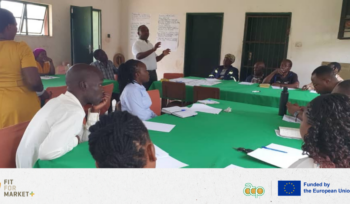
Uganda: Hortifresh association strengthens its training unit   Through its programmes, COLEAD supports professional organisations that are representative of their sector to strengthen their capacity to provide services to their members and with concern for the long-term sustainability of its action. In Uganda, for example, COLEAD recently supported the HortiFresh association through the FFM+ programme as part of its commitment to strengthening local capacity. Hortifresh is the main business membership organisation supporting the horticulture sector in the country. It recently… +
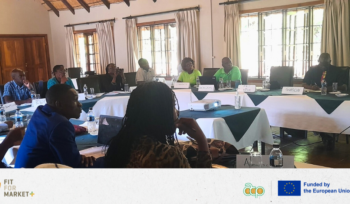
Ethiopia: EHPEA strengthens its training unit   COLEAD recently completed a training session with the Ethiopian Horticulture Producers and Exporters Association (EHPEA) to strengthen the skills and knowledge of its own training unit. This initiative is part of a wider mission to support the sustainability and competitiveness of the horticulture sector. It was launched last May as part of the Fit For Market Plus (FFM+) programme. Established in 2002, EHPEA plays a key role in representing and promoting the interests… +
Integrated pest management in sweetcorn in Burkina Faso   COLEAD, through its FFM+ programme, in collaboration with the Joseph Ki-Zerbo University, is currently conducting a series of trials in Burkina Faso to test integrated pest management strategies against the Fall Armyworm (Spodoptera frugiperda) on sweetcorn during the dry season, which coincides with the export season. The Fall Armyworm (FAW) has been identified by COLEAD as a priority pest, particularly on sweetcorn, following several interceptions of shipments from Africa at EU borders.… +
Integrated pest management for beans and gherkins in Madagascar   COLEAD is working with an exporting company based in Madagascar that is experiencing a drop in yields of green beans and gherkins due to heavy nematode pressure. This problem is since the same crops have been grown for several consecutive seasons without rotation or fallow periods, leading to a deterioration in soil quality. The company has begun to explore solutions, such as crop rotation with cover crops, which have shown… +
Madagascar: future managers trained in SPS quality management   On 12 July, the École Supérieure des Sciences Agronomiques (ESSA) at the University of Antananarivo officially launched the “Management of Quality, Health and Plant Health” (MQSPS) training course. The event was attended by representatives of the Ministry of Higher Education and Scientific Research, the Director of ESSA, the head of the specialisation and the head of the course, the representative of the Directorate of Plant Protection (DPV), the COLEAD national relay,… +
Benin: new fruit wharf and wholesale market on the way   The Government of Benin, with the support of the World Bank, has launched the construction of a new fruit wharf at Cotonou International Airport. The Project to Support the Competitiveness of the Agricultural Sector and the Diversification of Exports (PACOFID) and the Société d’Infrastructures Routières et de l’Aménagement du Territoire (SIRAT) are the developers of this new facility, and the buildings are due to be delivered in September. The… +
Flashback 2004 : “Building the capacity of the horticulture sector’s support structures”   (Source : COLEACP PIP magazine n°3, March 2004) “ACP producing/exporting states are generally endowed with considerable local expertise and knowledge in a variety of areas. However, these countries often lack structures which are adequately informed and trained. While it is important to help companies prove their day-to-day control of the production and export process, it is equally important to improve the quality of the support and services… +
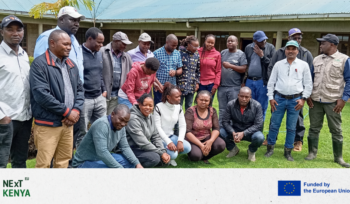
Kenya: FPEAK strengthens its governance   Through its programmes, COLEAD supports professional organisations that are representative of their sector to strengthen their capacity to provide services to their members and with concern for the long-term future of its action. In Kenya, for example, COLEAD recently supported the Fresh Produce Exporters Association of Kenya (FPEAK) through the NExT Kenya programme as part of a governance intervention. The members of FPEAK are involved in the Kenyan fresh produce trade and are therefore… +